Working at height is one of the most critical safety challenges across construction, infrastructure, manufacturing, maintenance and industrial sectors. A small mistake while working on elevated surfaces can result in serious injuries or even fatalities. This is why companies must invest in reliable Fall Protection Equipment that helps protect workers during high-risk activities.
A Safety Harness is one of the most important pieces of personal protective equipment (PPE) for workers who perform tasks at height. It helps secure workers by connecting them to a suitable fall protection system and provides support during accidental falls.
However, selecting the right safety harness is not only about purchasing PPE. Businesses need to understand the type of work, safety requirements, product quality, fitting, compatibility and supplier reliability before making a decision.
A properly designed Full Body Safety Harness provides better body support, improves worker confidence and helps create safer workplaces when used with suitable anchorage systems, lanyards and lifelines, as well as other fall-arrest solutions.
Kawach Safety provides professionally designed fall protection solutions, including Full Body Safety Harnesses, Retractable Fall Arresters, Lifeline Systems and other Construction Safety Equipment for industries requiring dependable protection during work-at-height operations.
Safety equipment selection requires practical knowledge of workplace hazards, worker movement requirements and industry-specific risks. Kawach Safety focuses on developing safety solutions that support real-world industrial applications, including construction projects, infrastructure development, manufacturing facilities, maintenance operations and other work-at-height environments.
The purpose of a safety harness is not only to meet safety requirements but also to provide workers with reliable protection, comfort and confidence while performing challenging tasks.
What is a Safety Harness?
A Safety Harness is a protective device worn by workers who perform tasks at height. It is designed to securely connect the worker to a fall protection system via approved attachment points.
Unlike a traditional safety belt that supports only the waist area, a Full Body Safety Harness distributes the forces generated during a fall across stronger parts of the body, including:
- Shoulders
- Chest
- Thighs
- Upper body support areas
This design helps reduce the impact on a single body area and provides improved protection during fall arrest situations.
A safety harness works together with other Fall Protection Equipment, such as:
- Shock-absorbing lanyards
- Anchorage systems
- Vertical lifelines
- Horizontal lifelines
- Retractable fall arrest devices
It is important to understand that a harness alone is not a complete fall protection solution. A complete safety system requires correct equipment selection, proper installation, worker training and regular inspection.
Why is a Full Body Safety Harness Important?
Working at height involves several risks, including:
- Slipping from elevated surfaces
- Loss of balance
- Equipment failure
- Unsafe movement
- Unexpected falls
A Full Body Safety Harness helps reduce these risks by keeping workers connected to a secure fall protection system.
1. Provides Fall Arrest Protection
The primary purpose of a safety harness is to protect workers during accidental falls.
When connected with compatible fall arrest equipment, the harness helps:
- Keep the worker attached to the safety system
- Distribute fall forces across the body
- Reduce the risk of severe injury
2. Improves Worker Safety and Confidence
Workers who have properly fitted and comfortable safety equipment can perform their tasks more confidently.
A high-quality harness allows:
- Better movement
- Secure fitting
- Reduced discomfort
- Longer working duration
Comfort is especially important because workers may wear harnesses for several hours during construction and industrial activities.
3. Supports Workplace Safety Compliance
For businesses, using appropriate Construction Safety Equipment is an important part of maintaining a safe working environment.
A complete safety approach includes:
- Hazard assessment
- Proper PPE selection
- Worker training
- Equipment inspection
- Emergency rescue planning
Safety harnesses should be considered an investment in protecting workers rather than only a compliance requirement.
How Does a Safety Harness Work?
A safety harness works as a connecting point between the worker and the complete fall protection system.
The process generally involves:
- The worker wears the harness correctly.
- Harness attachment points are connected with approved connectors.
- The connector is attached to an anchorage or lifeline system.
- In the event of a fall, the system activates and helps arrest it.
The effectiveness of the system depends on:
- Correct harness fitting
- Proper anchorage selection
- Compatible accessories
- Regular inspection
- Worker training
Using a high-quality harness with unsuitable accessories can reduce the effectiveness of the entire safety system.
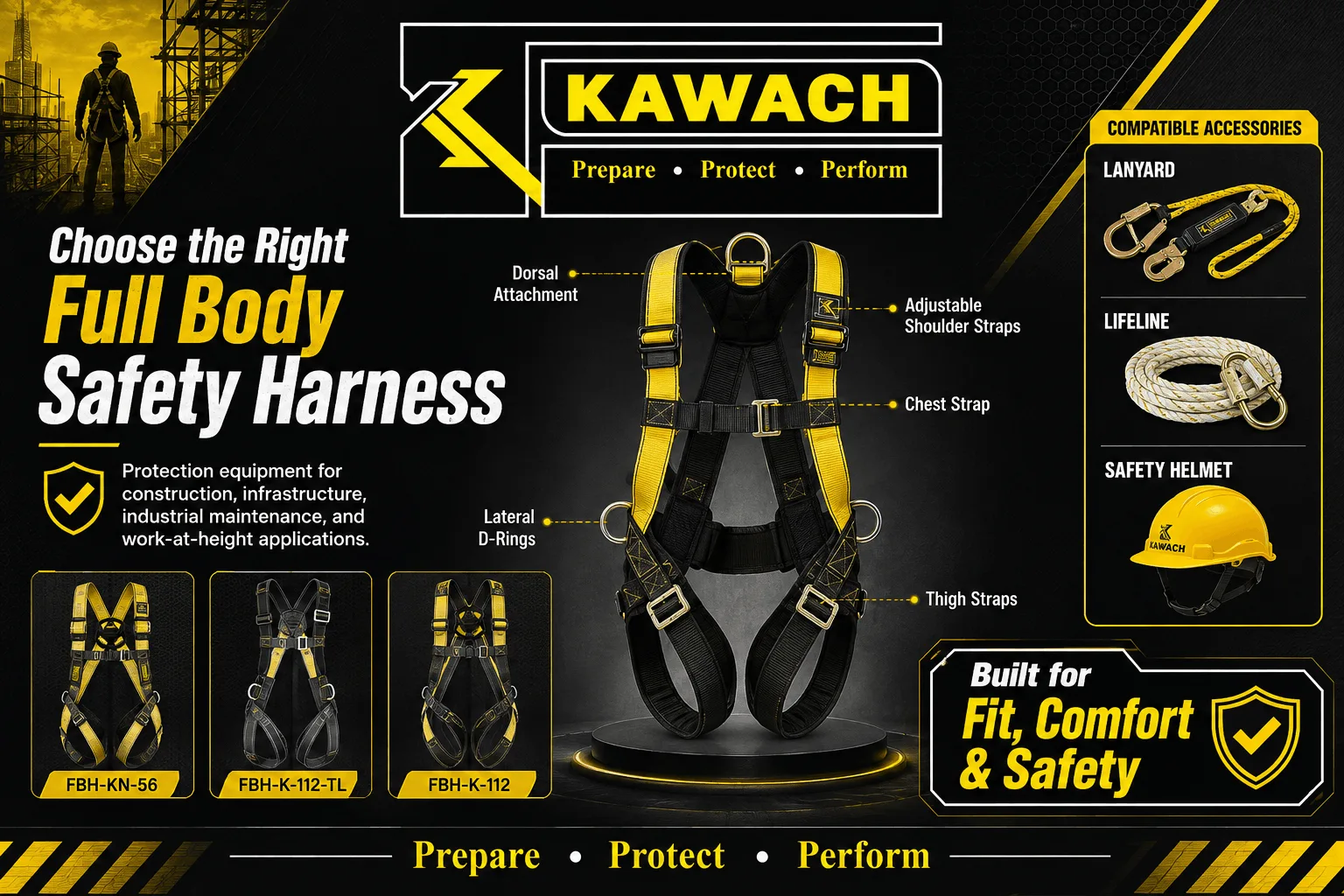
Important Components of a Full Body Safety Harness
Understanding harness components helps businesses and workers select the right equipment.
1. Webbing Straps
Webbing forms the main structure of the harness.
Quality webbing should provide:
- High strength
- Durability
- Resistance against workplace conditions
- Comfortable body support
2. Shoulder Straps
Shoulder straps help distribute body weight and maintain proper positioning during use.
They should be adjustable to provide:
- Secure fitting
- Better comfort
- Freedom of movement
3. Chest Strap
The chest strap helps keep shoulder straps positioned correctly and prevents unwanted movement during work activities.
4. Leg Straps
Leg straps provide additional support and help distribute forces during a fall arrest situation.
Proper adjustment is essential to avoid discomfort and ensure safety.
5. D-Rings and Attachment Points
D-rings are important connection points for attaching fall protection accessories.
Common attachment points include:
Dorsal D-Ring
Located in the back area between the shoulders.
Generally used for fall arrest applications.
Chest Attachment Point
Used in specific applications depending on the harness design.
Lateral D-Rings
Commonly used for work positioning activities.
The correct attachment point depends on the work requirement and the manufacturer’s instructions.
6. Buckles and Adjustment Systems
Quality buckles allow workers to adjust the harness according to their body size.
A properly adjusted harness should:
- Fit securely
- Allow comfortable movement
- Avoid excessive looseness
- Remain stable during work
Types of Safety Harnesses
Different industries require different harness designs based on work activities.
1. Standard Full Body Safety Harness
This is the most commonly used harness type for general work-at-height applications.
Applications include:
- Construction sites
- Building maintenance
- Industrial work
- Installation activities
2. Work Positioning Harness
Designed for workers who need additional support while maintaining a working position.
Common applications:
- Tower maintenance
- Utility work
- Electrical projects
3. Rescue Harness
Used in situations where rescue operations may be required.
Applications include:
- Confined spaces
- Emergency response
- Industrial rescue operations
Safety Harness Applications Across Industries
A reliable Safety Harness is used in several industries where workers perform elevated tasks.
Construction Industry
Construction workers often use safety harnesses for:
- Building construction
- Roofing work
- Scaffolding activities
- Structural installation
- High-rise projects
For contractors searching for dependable Construction Safety Equipment, a complete fall protection system is essential.
Infrastructure Projects
Infrastructure development involves activities such as:
- Bridge construction
- Railway projects
- Elevated structures
- Large-scale installations
Workers require reliable protection while operating at height.
Telecom Industry
Telecom technicians use harness systems during:
- Tower climbing
- Antenna installation
- Equipment maintenance
These activities require equipment that supports movement while maintaining safety.
Manufacturing and Industrial Maintenance
Factories and industrial facilities use safety harnesses for:
- Machine maintenance
- Elevated platform work
- Equipment inspection
- Repair operations
How Kawach Safety Supports Work-at-Height Protection
Kawach Safety focuses on providing dependable safety solutions for businesses requiring professional Fall Protection Equipment and industrial PPE.
The company provides solutions designed for:
- Construction companies
- Industrial facilities
- Infrastructure projects
- Maintenance teams
- Contractors
Kawach Safety understands that every workplace has different risks. Therefore, selecting the right equipment depends on factors such as:
- Working height
- Movement requirements
- Duration of work
- Environmental conditions
- Required fall protection system
Kawach Full Body Safety Harness Products
Kawach Safety offers multiple Full Body Safety Harness solutions designed for professional applications.
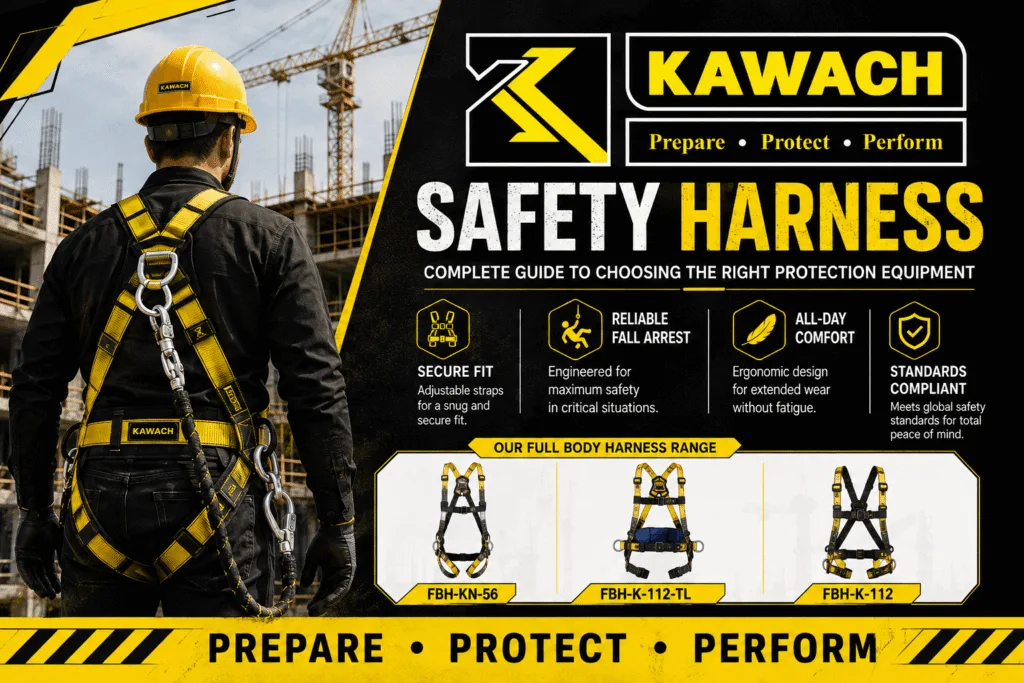
FBH-KN-56 Full Body Harness
Designed for work-at-height applications requiring secure fitting and reliable support.
Features include:
- Strong webbing construction
- Adjustable straps
- Multiple attachment options
- Comfortable workplace usage
Suitable applications:
- Construction activities
- Industrial maintenance
- Height-related operations
FBH-K-112 Full Body Harness
A professional harness solution designed for workers requiring dependable fall protection support.
Suitable for:
- Industrial applications
- Maintenance work
- Construction environments
How to Choose the Right Safety Harness?
Before purchasing a Safety Harness, businesses should consider the following factors:
1. Understand the Work Application
Different jobs require different harness features.
Consider:
- Type of work
- Working height
- Worker movement
- Duration of usage
2. Check Comfort and Fit
Workers should wear harnesses correctly for maximum protection.
Look for:
- Adjustable straps
- Comfortable design
- Proper body fitting
- Freedom of movement
3. Verify Safety Standards
Before purchasing, check:
- Product specifications
- Testing information
- Applicable safety standards
- Manufacturer details
4. Select a Reliable Safety Equipment Supplier
Choosing the right supplier is as important as choosing the product.
Professional Safety Equipment Suppliers provide:
- Product guidance
- Technical support
- Quality assurance
- Application-based recommendations
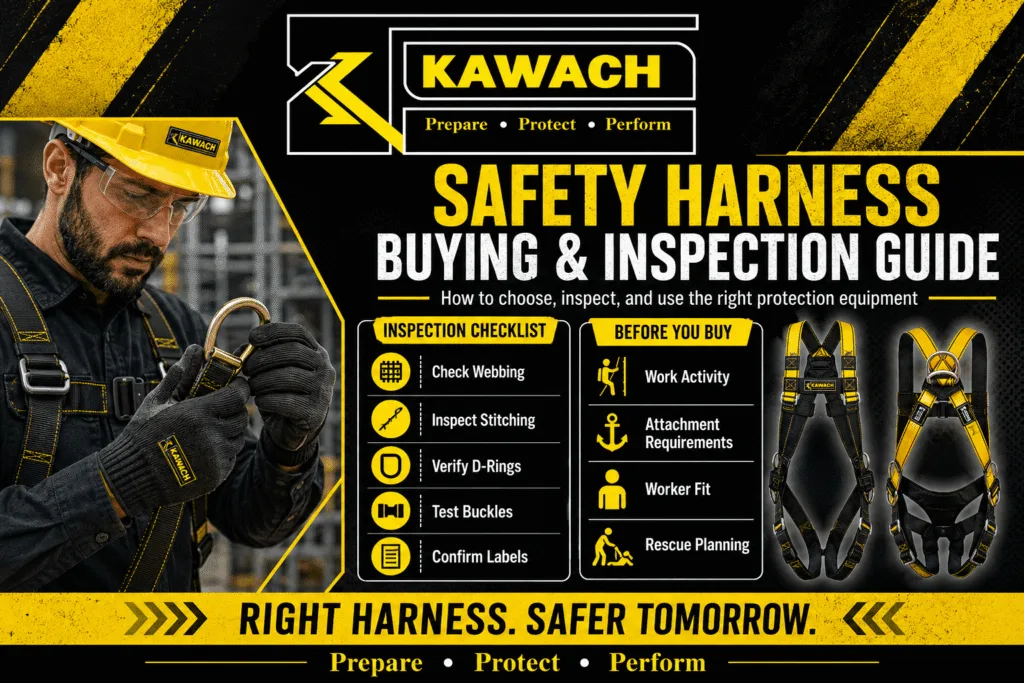
Safety Harness Inspection Checklist
A harness should be inspected before every use.
Check:
Webbing
Look for:
- Cuts
- Tears
- Burning marks
- Chemical damage
Hardware
Inspect:
- Buckles
- Hooks
- D-rings
- Connectors
Stitching
Check for:
- Loose threads
- Damaged stitching
- Wear signs
Labels
Ensure safety information and identification labels are visible.
A harness that has been involved in a fall should not be reused until it has been properly inspected.
Common Safety Harness Mistakes to Avoid
Many accidents occur because equipment is not used correctly.
Avoid:
❌ Wearing an incorrectly adjusted harness
❌ Using damaged equipment
❌ Connecting to unsafe anchorage points
❌ Ignoring regular inspection
❌ Using incompatible accessories
❌ Not providing worker training
Even the best safety equipment cannot protect if it is not used properly.
Why Choose Kawach as Your Safety Equipment Supplier?
Businesses looking for reliable safety solutions need suppliers who understand workplace requirements.
Kawach Safety helps customers with:
✔ Quality safety products
✔ Industry-focused solutions
✔ Professional guidance
✔ Complete fall protection systems
✔ Construction and industrial safety requirements
By providing reliable Industrial Safety Equipment, Kawach helps companies create safer working environments.
Frequently Asked Questions About Safety Harness
1. What is a Safety Harness used for?
A safety harness is used to protect workers performing tasks at height by connecting them to a fall protection system.
2. Why is Full Body Safety Harness better than a safety belt?
A full-body harness provides support across multiple body areas and is designed for fall-arrest applications, whereas a traditional belt provides limited support.
3. Which Safety Harness is best for construction work?
The best harness depends on the application, working conditions, height requirements and compatible fall protection system.
4. How often should a Safety Harness be inspected?
A harness should be checked before every use and regularly maintained according to manufacturer recommendations.
5. What other equipment is required with a Safety Harness?
A complete fall protection system may include:
- Lanyards
- Lifelines
- Anchorage systems
- Retractable fall arresters
6. How do I choose the right Safety Equipment Supplier?
Choose suppliers that provide high-quality products, technical support, safety information and solutions tailored to your workplace requirements.
Final Thoughts
A Safety Harness is a critical part of workplace protection for anyone working at height. Choosing the correct Full Body Safety Harness helps businesses protect workers, improve safety practices and reduce workplace risks.
From construction sites to industrial facilities, the right Fall Protection Equipment combined with proper training and inspection creates a safer working environment.
Kawach Safety provides reliable safety solutions designed for modern workplace challenges, helping industries select dependable Construction Safety Equipment and Industrial Safety Equipment for professional applications.
When safety depends on every decision, choosing the right harness and the right safety partner makes all the difference.