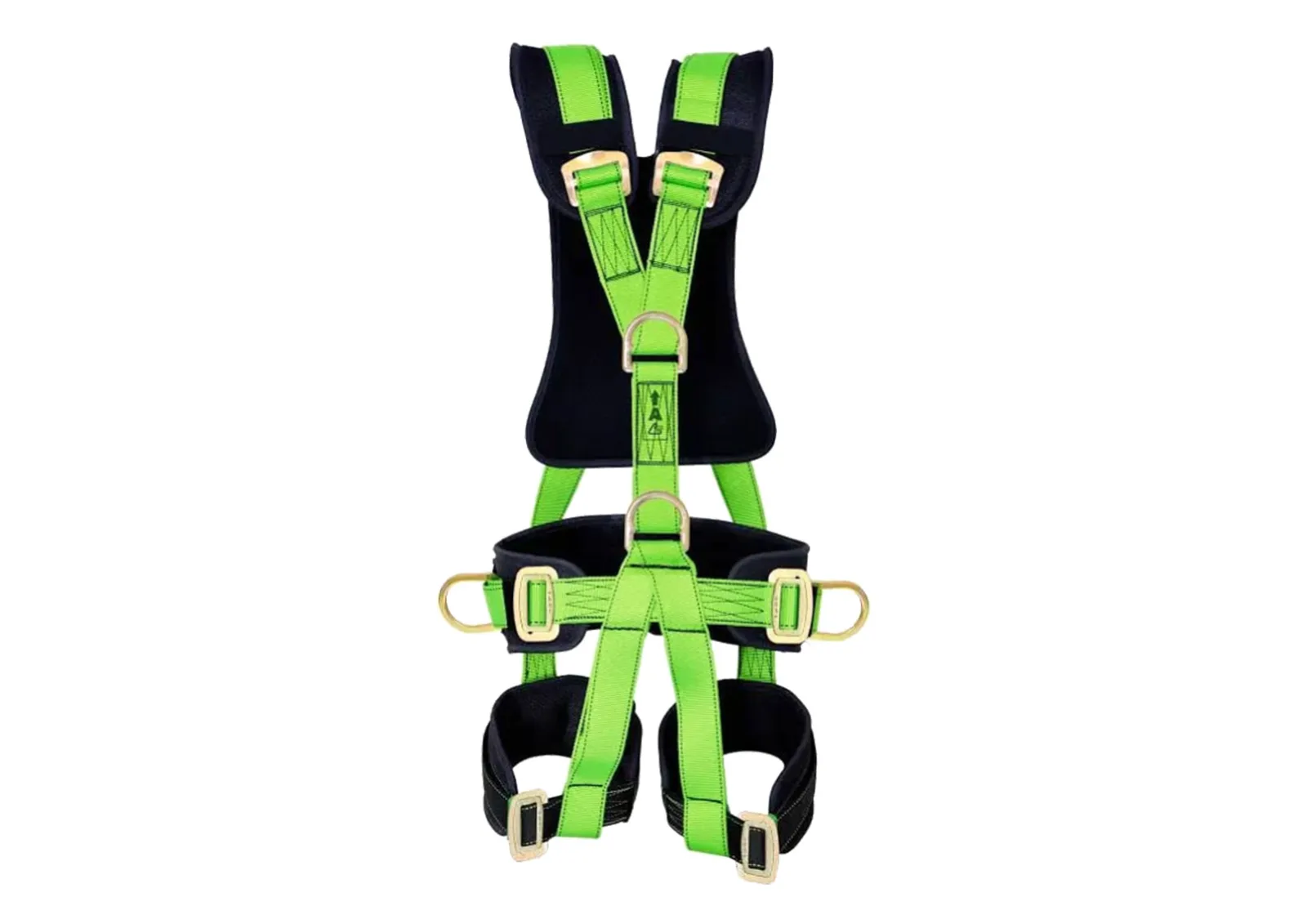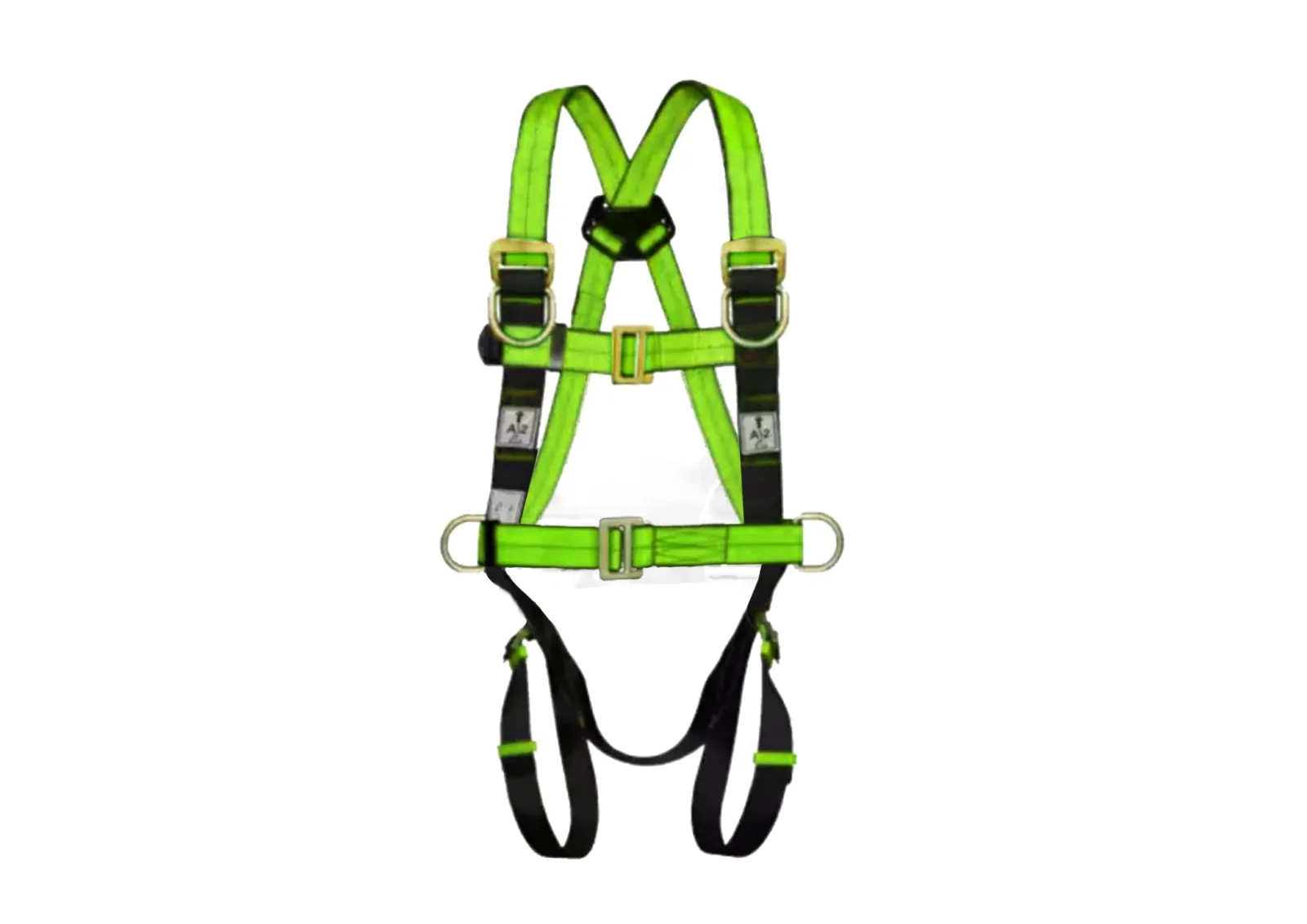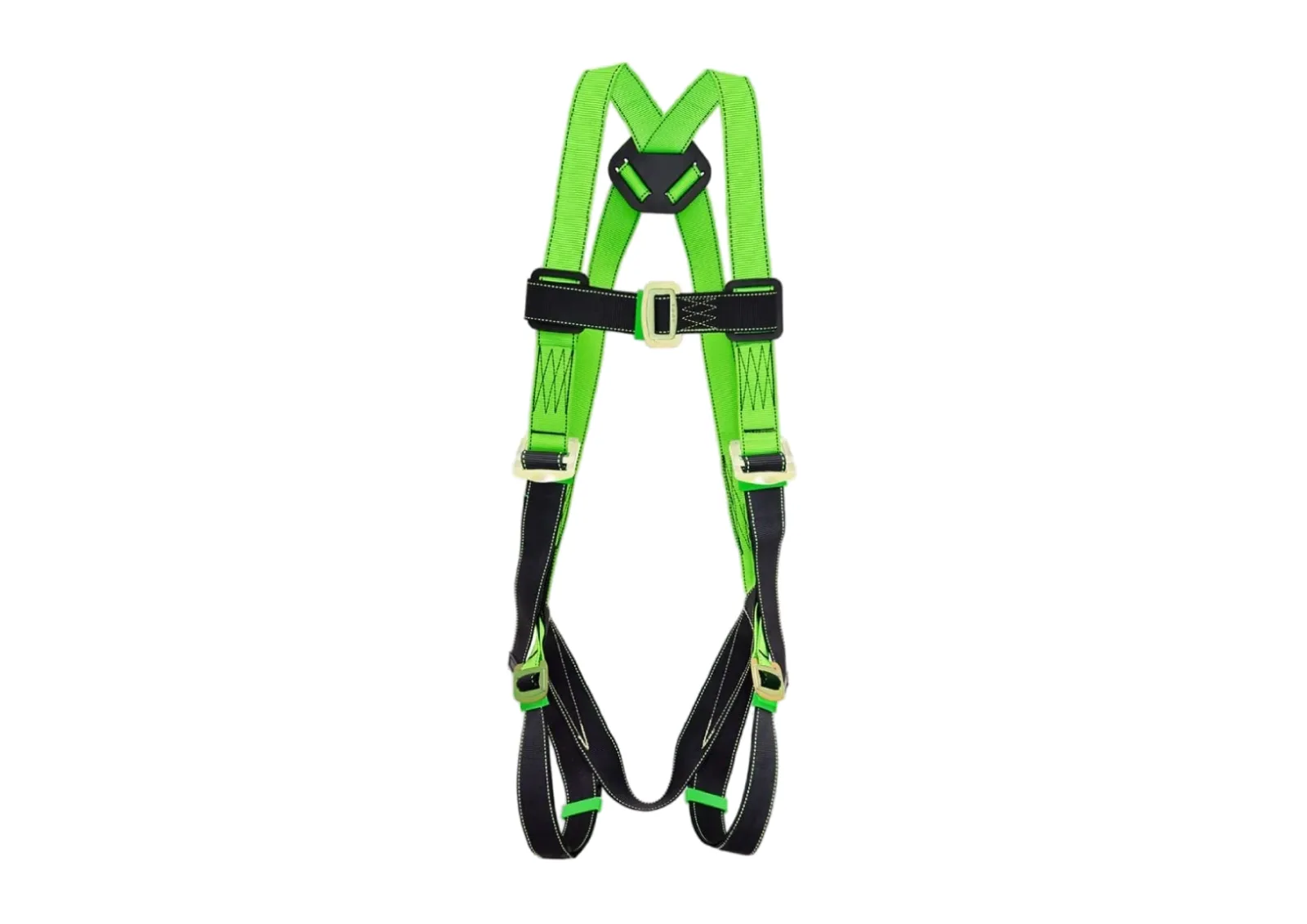
Ergonomically designed full body safety harnesses that deliver superior comfort, optimal weight distribution, and reliable fall arrest performance for all-day use.
Kawach manufactures and supplies dependable Safety Harness solutions for construction, infrastructure, industrial maintenance and other work-at-height applications. Our range of Full Body Safety Harness models is developed to support secure fitting, practical movement and compatibility with appropriate fall-protection equipment.
A safety harness is one component of a complete fall-protection system. When correctly selected, inspected, fitted and connected to a suitable anchorage, lanyard, lifeline, or fall arrester, it can help arrest a fall and distribute fall-arrest forces across stronger areas of the worker’s body. The harness must always be chosen according to the work activity, attachment-point requirement, worker fit, connecting equipment and actual site conditions.
Located in Bawana, Delhi, Kawach supports contractors, construction companies, industrial facilities, safety teams and procurement professionals with project-based and bulk safety equipment requirements across India. Our team can assist with product specifications, model selection, technical documentation and correct-use guidance.
Kawach also provides practical training support to customers purchasing its safety equipment.
Compare the Kawach harness models below based on attachment points, adjustment options, intended applications and technical specifications. Contact our team when you need help selecting an appropriate Fall Arrest Safety Harness for your workforce or project.
No products found.
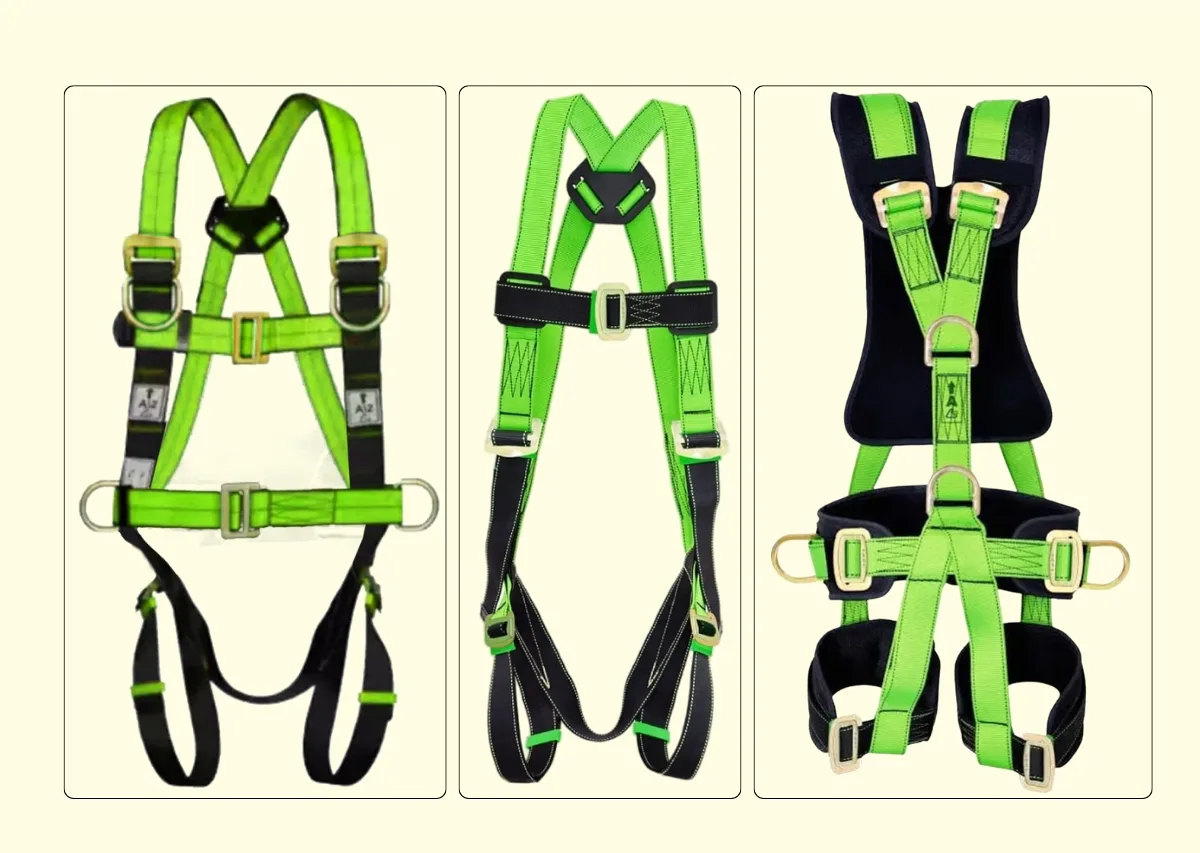
The correct safety harness should be selected based on the work being performed-not on price alone. Scaffolding, roofing, tower climbing, steel erection, façade work, vertical lifeline access, maintenance and work positioning can require different harness designs and attachment arrangements.
Before selecting a model, consider:
1. The type and duration of the work
2. The available anchorage system
3. The lanyard, lifeline, or fall arrester being used
4. Required dorsal, sternal, or lateral attachment points
5. Worker size and adjustment range
6. Expected environmental exposure
7. Required product standard or client specification
8. Rescue arrangements following an arrested fall
Kawach currently displays the FBH-KN-56, FBH-K-112-TL and FBH-K-112 models in this category. The individual product pages identify adjustable shoulder, chest and thigh straps, dorsal and chest attachments and model-dependent lateral D-rings for work positioning.
They also state conformance with EN 361:2002 and IS 3521, along with an overall breaking strength specification of 15 kN. Buyers should verify the certificate, test report, user capacity, lanyard configuration and complete technical datasheet for the exact model being ordered.
A Safety Harness is wearable personal protective equipment that fits around the shoulders, chest and thighs. It connects the user to other components of a fall-protection system through designated attachment points.
In a personal fall-arrest application, the system may include:
1. A full body harness
2. Energy-absorbing lanyard or retractable fall arrester
3. Compatible connectors
4. Vertical or horizontal lifeline, where applicable
5. Suitable anchorage
6. Adequate fall clearance
7. Rescue procedure
8. Trained and supervised users
A harness should not be treated as a substitute for good work-at-height planning. Where practical, collective protection such as properly designed guardrails, working platforms, or safety nets should be considered before relying solely on personal fall-arrest equipment. Personal fall-arrest systems are one of several recognised methods used to protect workers from falls.
Workers at height may be exposed to unprotected edges, floor openings, incomplete structures, unstable surfaces, scaffolds, roofs, ladders and elevated platforms. A brief loss of balance or footing can create a serious fall hazard.
A properly selected Full Body Safety Harness supports safer work by helping to:
When used as part of a properly designed fall-arrest system, the harness provides the body support needed to arrest a fall.
The shoulder, chest, pelvic and thigh straps help distribute forces across stronger areas of the body rather than concentrating them around the waist.
Adjustable straps allow the harness to fit different users while supporting the movement needed for climbing, positioning and performing site activities.
A harness that fits correctly and is practical to wear is more likely to be adjusted and used properly throughout the working period.
Correct harness selection, inspection, training, supervision and rescue planning demonstrate a more responsible approach to managing work-at-height risks.
Depending on model suitability and the overall fall-protection plan, safety harnesses may be used for:
1. Construction and civil engineering projects
2. Scaffolding erection and dismantling
3. Roofing and façade maintenance
4. Telecom and transmission towers
5. Steel-structure installation
6. Industrial plant maintenance
7. Warehouses and elevated work platforms
8. Power and infrastructure projects
9. Vertical ladder and lifeline access
10. Confined-space entry and retrieval
11. Work positioning
12. Inspection, repair and cleaning at height
The same harness configuration may not be suitable for every activity. A harness intended mainly for dorsal fall arrest may differ from one designed for work positioning, vertical access, or retrieval.
Because a harness is safety-critical equipment, procurement teams should carefully evaluate the product’s construction and documentation.
The webbing should be suitable for the intended industrial environment and free from cuts, burns, excessive abrasion, or chemical deterioration.
Load-bearing stitching should be secure, clearly visible and free of loose, damaged, or missing threads.
The location and number of D-rings or attachment loops must match the intended system. Dorsal attachments are commonly associated with fall arrest, while sternal and lateral attachments may support specific vertical-access or work-positioning applications.
Buckles should connect securely and permit proper adjustment without slipping during normal use.
The harness should fit the intended user correctly. The adjustment range, strap layout, weight, padding and expected wear time should be reviewed before bulk purchasing.
The product label should remain legible and provide the information needed to identify the manufacturer, model and applicable instructions.
Ask for the exact model’s technical datasheet, user instructions, test documentation and applicable certificate. Do not rely only on a general catalogue statement.
The BIS overview of IS 3521 Part 1:2021 addresses Full Body-harness materials, design, construction, static and dynamic testing, corrosion resistance, flammability, user instructions, classification and marking.
Before requesting a quotation, provide the supplier with clear project information.
Explain whether the harness will be used for general construction, climbing, maintenance, work positioning, confined-space access, or another specialised application.
Confirm whether dorsal, chest, or lateral attachment points are required and how each one will be used.
Identify the lanyard, energy absorber, vertical lifeline, horizontal lifeline, or retractable fall arrester that will connect to the harness.
Consider worker size, clothing, tools and other equipment that may be carried while working.
The complete system must provide enough clearance to arrest a fall without allowing the worker to contact a lower surface or obstruction.
Review exposure to heat, moisture, dust, chemicals, welding sparks, sharp edges, electricity and corrosive conditions.
Confirm the standard, client specification and project documentation required before placing the order.
The site should have a defined system for recording inspections, isolating damaged equipment and controlling replacement stock.
An arrested fall can leave a worker suspended. A prompt, practical and site-specific rescue procedure is therefore essential.
The user should inspect the harness before every use in accordance with the manufacturer’s instructions. Check:
1. Webbing for cuts, burns, fraying and abrasion
2. Stitching for pulled, broken, or missing threads
3. D-rings for cracks, distortion, corrosion, or sharp edges
4. Buckles and adjusters for damage or improper operation
5. Labels for legibility and product traceability
6. Attachment points for wear or deformation
7. Fall indicators, where fitted
8. Contamination from paint, chemicals, oil, or other substances
9. Evidence that the harness has been involved in a fall
A defective harness should be removed from use immediately. Equipment subjected to fall-arrest impact loading should also be removed from service and managed in accordance with the manufacturer’s authorised procedure.
Do not make informal repairs, restitch load-bearing webbing, or replace safety-critical parts with unapproved components.
Kawach’s journey in workplace safety began in 2011, with the Kawach brand formally launched in 2013. The company states that its Bawana, Delhi manufacturing operation provides control over material sourcing, production and final quality checks.
Businesses choose Kawach for:
1. Manufacturer-led product support
2. Safety equipment developed for Indian worksites
3. Multiple Full Body harness configurations
4. Assistance with model selection
5. Model-specific technical information
6. Support for bulk and project requirements
7. Practical usage and inspection guidance
8. Training support for purchasing clients
9. After-sales assistance
10. Supply support from Delhi to projects across India
Kawach is an enquiry-led safety-equipment business rather than a general online marketplace. This allows our team to understand the application before recommending a product.
Tell us about your work activity, required quantity, project location, connecting equipment and applicable specification. The Kawach team will help you review the available Safety Harness, Full Body Safety Harness and Fall Arrest Safety Harness options.
For faster assistance, include:
1. Required model or application
2. Quantity
3. Project city
4. Attachment-point requirement
5. Applicable standard
6. Required delivery date
7. Training or demonstration requirement
Contact Kawach for technical details, model-specific certification documents, bulk-supply assistance and a project quotation.
A safety harness provides support to the body within a personal fall-protection system. When correctly fitted and connected to compatible equipment and a suitable anchorage, it helps arrest a fall and distribute fall-arrest forces across the body.
A safety belt mainly surrounds the waist and may be intended for restraint or positioning. A full body harness supports the shoulders, chest and thighs and is generally used as the body-support component in appropriate fall-arrest applications.
The correct model depends on the work activity, anchorage, connection system, required attachment points, worker fit and environmental conditions. The selection should follow a site risk assessment and the harness manufacturer’s instructions.
It should fit snugly without restricting normal movement. Shoulder, chest and thigh straps should be adjusted correctly and the dorsal attachment should be positioned according to the product’s fitting instructions.
Yes. The user should inspect the harness before every use. Formal inspections should also be conducted by a competent person at intervals determined by the manufacturer, frequency of use, site conditions and applicable requirements.
Equipment involved in an arrested fall should be removed from service immediately. It should not be reused unless an authorised assessment and the manufacturer’s procedure explicitly permit it.
No. A harness is only the body-support component. It must be connected to compatible equipment and an appropriate anchorage as part of a correctly planned fall-protection system.
Kawach supports bulk and project-based enquiries from contractors, construction companies, infrastructure projects, industrial facilities and safety procurement teams across India.
Yes. Buyers can share their application, attachment requirements, connecting equipment, quantity and project location so the Kawach team can provide relevant product information.
Kawach’s head office and manufacturing operation are located in the DSIIDC Industrial Area, Sector 2, Bawana, Delhi. The company supports customers and projects across India in meeting safety equipment requirements.
WhatsApp us