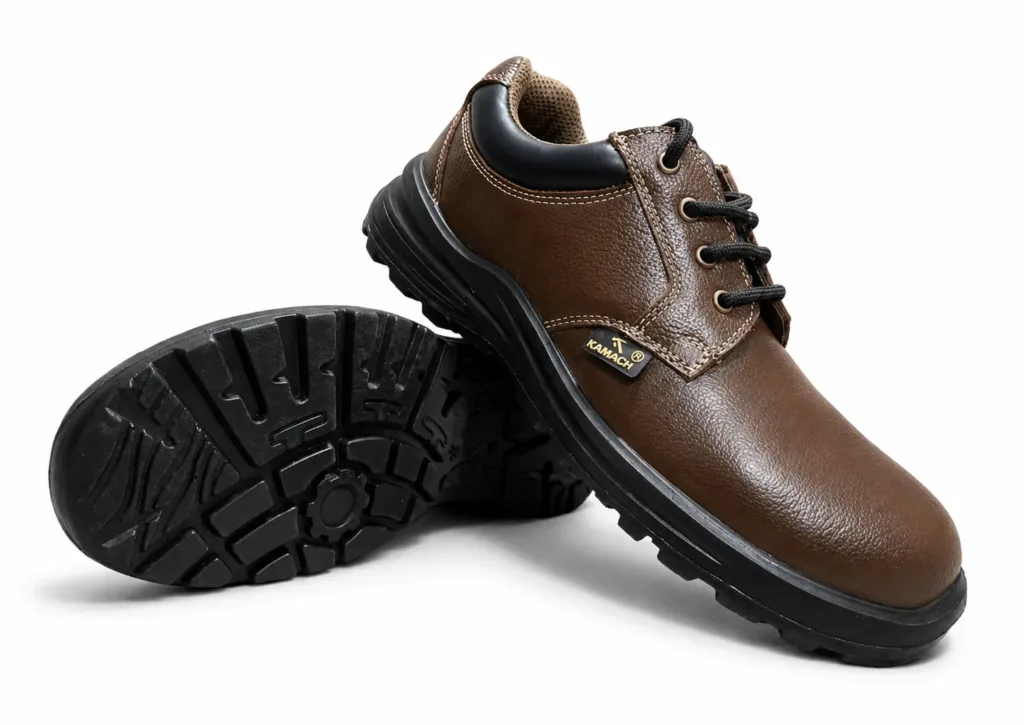
What Makes Safety Shoes Lightweight?
The total weight of industrial protective footwear depends on the combination of materials and design.
1. Toe-Cap Material: Steel vs Fibre
Protective toe caps are important components of industrial safety shoes. Different models may use steel, fibre, composite or other suitable materials.
Steel toe caps are metallic protective components used in footwear designed for specified impact and compression protection.
Fibre and composite toe caps use non-metallic materials and may allow different component-weight designs. However, total footwear weight cannot be predicted from toe-cap material alone. A protective shoe must be evaluated as a complete product.
Are Fibre Toe Safety Shoes Always Lighter?
Not necessarily. The fibre toe cap may differ in weight from a steel cap, but the upper, outsole, insole, lining, padding and shoe height also contribute to the final weight. Compare complete footwear of the same size before making a purchasing decision.
2. PU Outsole Construction
Polyurethane is commonly used in industrial safety footwear. Depending on its formulation and design, PU construction can provide cushioning, flexibility and practical wearing characteristics.
Both single- and double-density PU systems are used in the safety-footwear industry. However, a PU sole does not automatically make a shoe lightweight, nor does a double-density construction automatically provide superior protection.
The complete footwear should be assessed for its weight, flexibility, traction, wear performance and the specific workplace environment.
3. Breathable Fabric and Leather Uppers
The upper material influences the structure and wearing characteristics of the shoe.
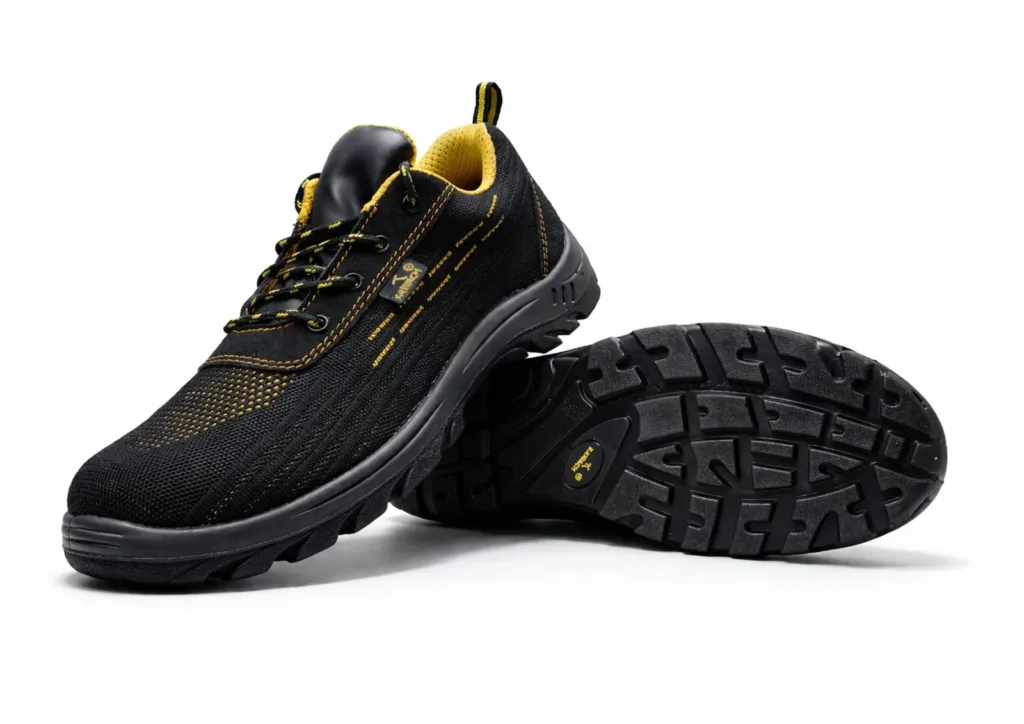
Fabric uppers may provide different airflow and flexibility characteristics from conventional leather footwear.
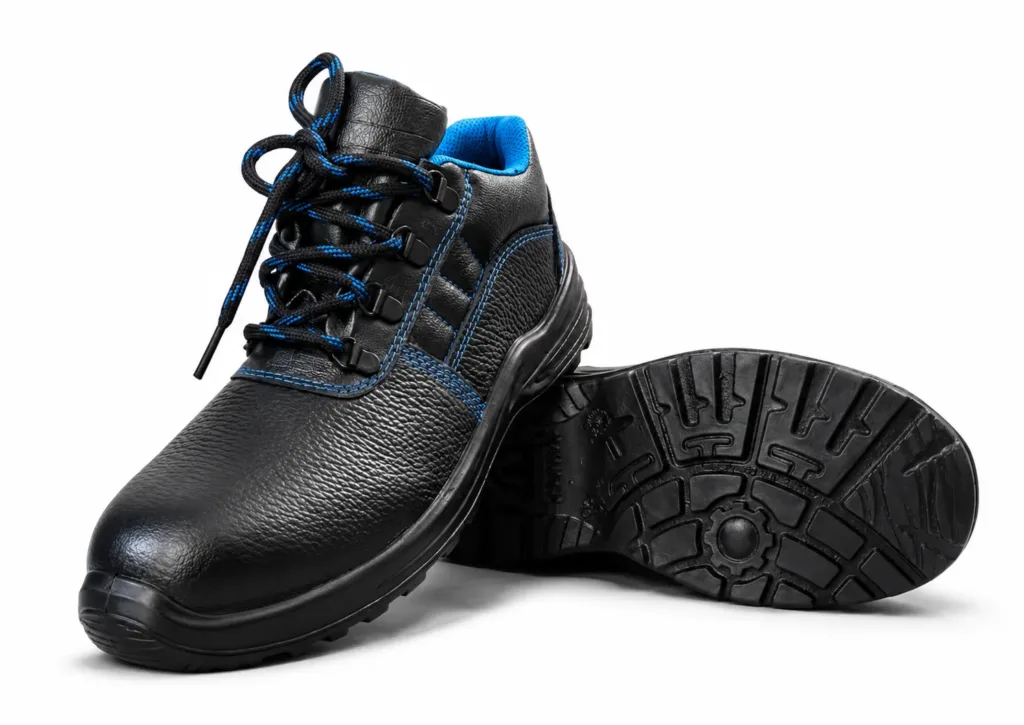
Leather uppers are commonly selected for their substantial material construction and suitability for particular industrial uses.
Neither is universally better. For work involving significant abrasion, sparks, chemicals or other specialist hazards, the upper material must be matched to the actual job.
4. EVA Cushioning
Ethylene-vinyl acetate (EVA) is used in shoe insoles and other cushioning components. An EVA insole can contribute to the wearing experience during standing and walking.
However, cushioning performance depends on the actual design, thickness and fit. An EVA insole does not independently establish that a safety shoe is lightweight.
5. Lining, Collar and Tongue
Mesh linings and padded collars are included in many safety footwear designs. They may affect interior comfort, airflow, pressure distribution and the feel of the shoe.
For workers wearing footwear throughout a shift, these details can be relevant alongside measured weight.
6. Shoe Height and Overall Design
Low-ankle and high-ankle footwear can have different constructions. Low-ankle footwear may be considered where greater ankle movement is desirable and extra coverage is not required.
High-ankle footwear provides additional coverage and may be appropriate for certain outdoor or uneven-ground activities. Ankle height should be selected according to workplace hazards and fitting requirements, not weight alone.