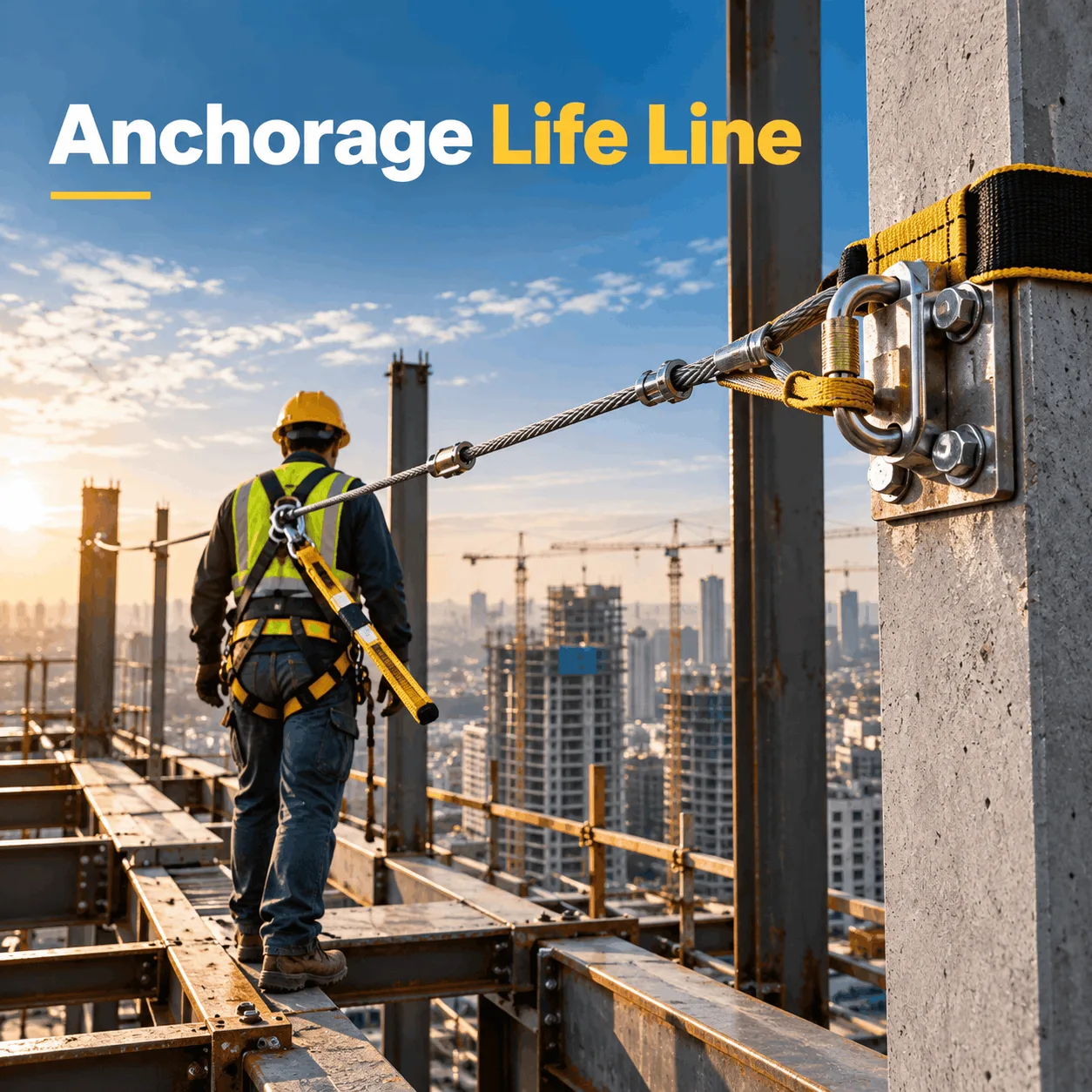
Heavy-duty anchorage life line solutions that create secure connection points, ensuring stability and safety in demanding work environments.
An Anchorage Life Line is a critical component of a properly planned fall-protection system for workers exposed to height-related hazards. It provides a defined lifeline that can be used with compatible fall-arrest equipment to help protect workers while climbing, descending, maintaining elevated structures or carrying out industrial work at height.
Kawach Safe Gears India Pvt. Ltd. provides Anchorage Life Line solutions for construction, industrial maintenance, infrastructure, oil & gas, utilities and other demanding work-at-height environments across India.
Kawach currently offers K-GFA-2003 and K-GFA-2004 Anchorage Life Lines, providing different rope constructions and length options for varying workplace requirements. Kawach also supports customers through work-at-height guidance, equipment inspection awareness, fall-hazard training and height-rescue demonstrations through its Training Cell.
A lifeline, however, should never be selected only based on rope length or price. The anchorage, harness, fall arrester, connectors, working height, fall clearance, environmental conditions and rescue plan must work together as a single, compatible fall-protection system. Consider environmental factors such as weather, corrosion and UV exposure when selecting the lifeline.
An Anchorage Life Line, also called an anchorage lifeline, anchorage line, flexible anchorage line, or vertical lifeline in relevant applications, is a safety line that forms part of a personal fall-protection arrangement.
It can provide a path along which a compatible guided fall arrester or rope-grab device moves as the worker changes position.
A typical fall-arrest arrangement can include:
A safety harness alone does not create a complete fall-arrest system. Regular inspection and compatibility checks are vital to reassure safety trainers and workers of system dependability.
Kawach currently lists two Anchorage Life Line models: K-GFA-2003 and K-GFA-2004.
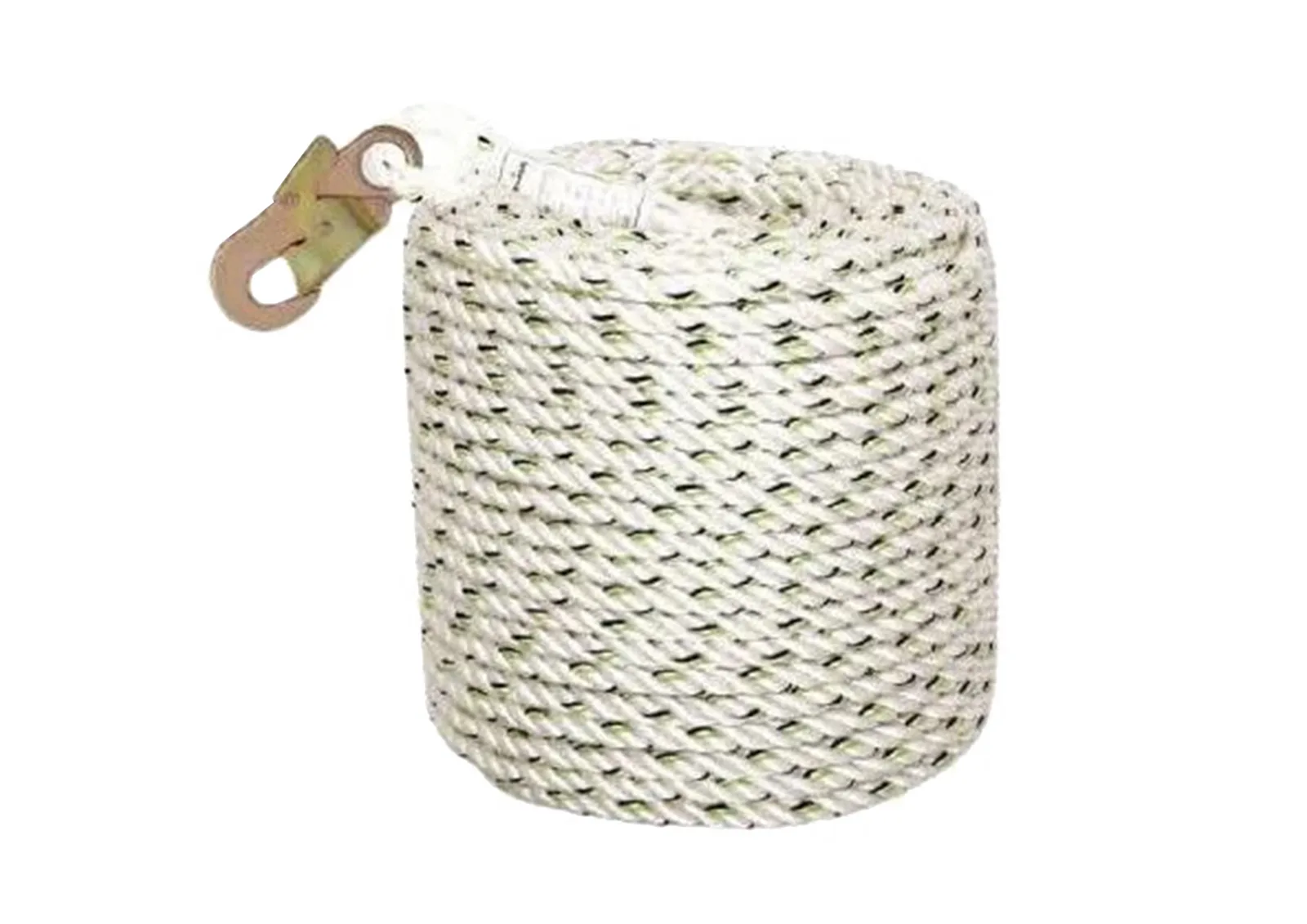
The K-GFA-2003 uses a durable polyamide rope and is intended for work-at-height applications requiring a flexible anchorage line.
Current length variants include:
After assessing the complete fall-protection setup, regularly inspect and maintain the Anchorage Life Line to ensure ongoing safety and compliance in construction, maintenance and industrial applications.
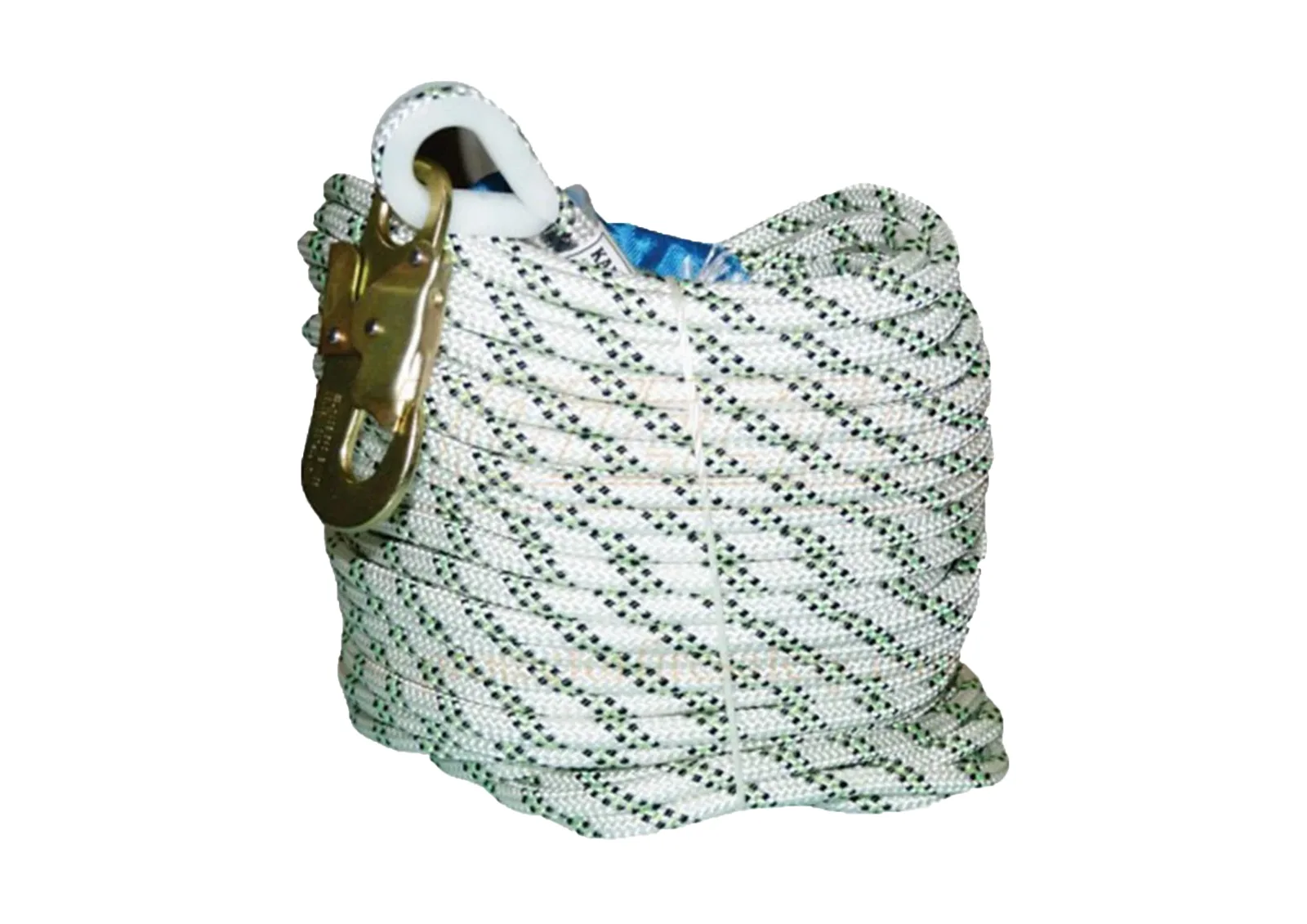
The K-GFA-2004 uses 10–12 mm kernmantle rope and is available in various lengths to support a range of work-at-height requirements.
Available variants currently include:
Kawach identifies applications for this model, including construction, oil & gas, elevated maintenance and emergency scenarios.
|
Feature |
K-GFA-2003 |
K-GFA-2004 |
|
Product Type |
Anchorage Life Line |
Anchorage Life Line |
|
Rope Construction |
Polyamide rope |
Kernmantle rope |
|
Rope Diameter |
Confirm from current technical datasheet |
10–12 mm |
|
Available Lengths |
30, 40, 50, 60, 80, 100 m |
30, 50, 60, 80, 100 m |
|
Typical Use |
Work-at-height and industrial applications |
Construction, maintenance, oil & gas and emergency applications |
|
Fall Arrester Compatibility |
Must be verified before use |
Must be verified before use |
|
Technical Documentation |
Request latest Kawach documentation |
Request latest Kawach documentation |
Important: Rope diameter, compatible devices, user limits, anchorage requirements, certifications and other safety-critical specifications should always be confirmed from the latest model-specific Kawach technical documentation before procurement or use.
A flexible Anchorage Life Line generally works together with a compatible guided fall-arrest device.
During normal movement, the worker can move along the approved working path while the guided device travels with them. If a fall occurs, the compatible fall arrester is designed to react according to its operating mechanism and the complete system configuration.
Actual performance depends on factors including:
For this reason, it is unsafe to assume that any rope grab or guided fall arrester will operate correctly on any rope.
An easy way to understand a personal fall-protection system is through the ABC approach.
The anchorage forms a secure connection to the supporting structure.
Its location, suitability and configuration can significantly affect system performance, fall distance and swing-fall exposure.
A properly fitted full body safety harness distributes fall-arrest loads across appropriate areas of the body.
The harness must be compatible with the connection arrangement and used in accordance with its instructions.
This can include:
A rescue plan is an essential part of work-at-height planning. Clear rescue procedures help safety managers and workers feel prepared and secure in emergency situations.
Anchorage lifelines are relevant across industries where employees must perform work above ground level or other lower surfaces.
Applications may include:
Technicians working around elevated machinery, process structures, platforms or access points may need compatible fall-protection systems.
Refineries, terminals, plants and other industrial facilities may include elevated structures where workers require controlled access and maintenance.
Tower, pole and structural access can create vertical movement hazards that require properly selected height-safety equipment.
Work on transmission structures, engineering projects, bridges, large facilities and other elevated structures may require specialized fall protection.
Flexible lifelines can also form part of appropriately designed rescue arrangements when used by trained personnel with compatible rescue equipment.
A technician climbing an elevated structure may require a flexible anchorage line, a compatible guided fall arrester and a full-body harness.
Before work begins, the employer should consider the anchor position, climbing path, clearance, rescue access and possible structural obstructions.
A maintenance worker accessing equipment at height may encounter pipes, platforms, hot surfaces, sharp edges or restricted movement.
The lifeline system should therefore be chosen according to the actual work environment rather than simply selecting the longest available rope.
Short-duration work at height may require a temporary fall-protection arrangement.
Before installing it, a competent person should assess whether the anchorage, line, fall arrester and harness are appropriate for the structure and the required movement.
Choosing the right Anchorage Life Line in India requires more than comparing product prices.
Determine whether workers will:
Select a sufficient length for the authorized movement area.
A longer lifeline is not automatically a safer lifeline.
Check:
Never assume that components from different manufacturers can be combined automatically.
The anchor point should be suitable for the intended system and located to minimize unnecessary fall distance and the risk of swing-fall.
There must be sufficient unobstructed distance below the worker for the complete fall-arrest system to operate before the person can contact a lower level, structure or equipment.
Use the calculations and instructions specific to the equipment rather than relying on a generic formula.
Assess exposure to:
Fall arrest only stops the fall. It does not automatically recover the suspended worker.
An effective height-rescue procedure should therefore be prepared before workers enter the fall-risk area.
A strong safety culture includes understanding what not to do.
Avoid:
The user should visually inspect the lifeline and associated equipment before work.
Check for:
If the equipment’s condition or history is uncertain, remove it from service until appropriately assessed.
Formal inspection frequency should follow applicable manufacturer instructions, organizational procedures and regulatory requirements.
Although both are part of fall-protection systems, they perform different functions.
An Anchorage or Vertical Life Line is commonly associated with vertical or controlled movement during climbing or descent.
A Horizontal Life Line provides movement along a horizontal working path such as a roof, platform or elevated structure.
Kawach also offers horizontal lifeline systems within its fall-protection range, together with harnesses, retractable fall arresters, rescue equipment and other height-safety products.
Some workplaces may require both vertical and horizontal protection at different stages of the same job.
Kawach’s approach combines safety-product manufacturing with practical user guidance.
The company’s current website states that its journey toward improving workplace safety began in 2011, while the KAWACH brand was formally launched in 2013 with a focus on certified manufacturing and quality control.
Kawach states that it manages material selection, production processes and quality checks as part of its manufacturing approach.
Kawach describes its products as being developed around real Indian worksite conditions, including industrial, construction, power, manufacturing, oil & gas and chemical environments.
The Kawach Training Cell covers:
Kawach states that practical demonstrations and on-site sessions form part of this training approach.
Kawach’s certification page currently lists company-level credentials relating to ISO, BIS/ISI, CE and testing through an NABL-accredited laboratory.
For Anchorage Life Lines, customers should still request the model-specific certificate, test documentation and technical datasheet applicable to the exact product being purchased.
A company certification should not automatically be interpreted as certification of every individual product model.
Kawach supports industrial safety requirements from its Bawana, Delhi base and markets its fall-protection solutions for customers across India.
Organizations can enquire about Anchorage Life Line requirements for projects in:
Delhi NCR, Gurugram, Noida, Ghaziabad, Faridabad, Jaipur, Chandigarh, Ludhiana, Ahmedabad, Surat, Vadodara, Mumbai, Pune, Hyderabad, Bengaluru, Chennai, Coimbatore, Kochi, Kolkata, Bhubaneswar, Lucknow and other industrial locations across India.
For multi-site companies, using consistent equipment specifications, inspection records, training procedures and procurement documentation can help standardize work-at-height safety practices.
For a stronger procurement and safety process, request relevant documentation for the exact Anchorage Life Line model, where available:
These records help safety managers, EHS teams, contractors and procurement departments verify that the selected equipment is appropriate for their application.
An Anchorage Life Line should be treated as one part of a wider work-at-height solution.
Depending on the task, the complete system may include:
Anchorage + Anchorage Life Line + Compatible Fall Arrester + Full Body Harness + Connectors + Safety Helmet + Rescue Equipment + Trained User
Every component should be compatible and selected for the real hazards present at the worksite.
Share the following information with the Kawach technical team before finalizing your requirement:
Kawach can then help identify which product configuration to evaluate for your application.
An effective height-safety system begins with understanding the worksite rather than simply purchasing individual PPE products.
Working height, anchor position, rope construction, compatibility with a fall arrester, fall clearance, environmental exposure, inspection, training and rescue planning all influence the final solution.
For Anchorage Life Line, vertical lifeline, flexible anchorage line, fall protection equipment and complete work-at-height safety requirements across India, contact Kawach Safe Gears India Pvt. Ltd.
Request the latest technical specifications and model-specific documentation for K-GFA-2003 or K-GFA-2004 before finalizing your project requirement.
An Anchorage Life Line is a flexible line used in a fall-protection system. When combined with compatible anchorage, fall-arrest equipment and a full-body harness, it can help protect workers performing approved work-at-height activities.
Kawach currently lists K-GFA-2003 and K-GFA-2004 in its Anchorage Life Line range.
K-GFA-2003 uses polyamide rope, while K-GFA-2004 uses 10–12 mm kernmantle rope. Their available length combinations also differ. Final selection should be based on system compatibility and the application.
K-GFA-2003 is available in 30-, 40-, 50-, 60-, 80- and 100-metre variants. K-GFA-2004 is currently listed in 30-, 50-, 60-, 80- and 100-metre variants.
No. The fall arrester must be suitable for the specific rope diameter, rope construction and approved system configuration. Always verify compatibility before use.
No. An anchorage or vertical lifeline generally supports vertical or controlled movement, whereas a horizontal lifeline is intended for movement along an approved horizontal working area.
A pre-use inspection should be carried out before work. Formal inspection intervals should follow manufacturer instructions, applicable requirements and workplace procedures.
Equipment involved in a fall should be removed from service and handled in accordance with the manufacturer’s instructions and the organization’s competent inspection procedure.
Yes. Kawach’s Training Cell lists fall-protection guidance, equipment inspection, fall-hazard awareness, height rescue and practical demonstrations among its training activities.
Kawach markets and supplies industrial safety and fall-protection solutions for requirements across India from its Delhi manufacturing base. Availability, quantity and project support should be confirmed for the required destination.
WhatsApp us