Selecting workplace safety shoes involves more than choosing a tough-looking shoe. Industrial employees may work around tools, materials, machinery, dust, oils and frequently used floors.
Requirements vary from job to job, even within the same factory or construction project.
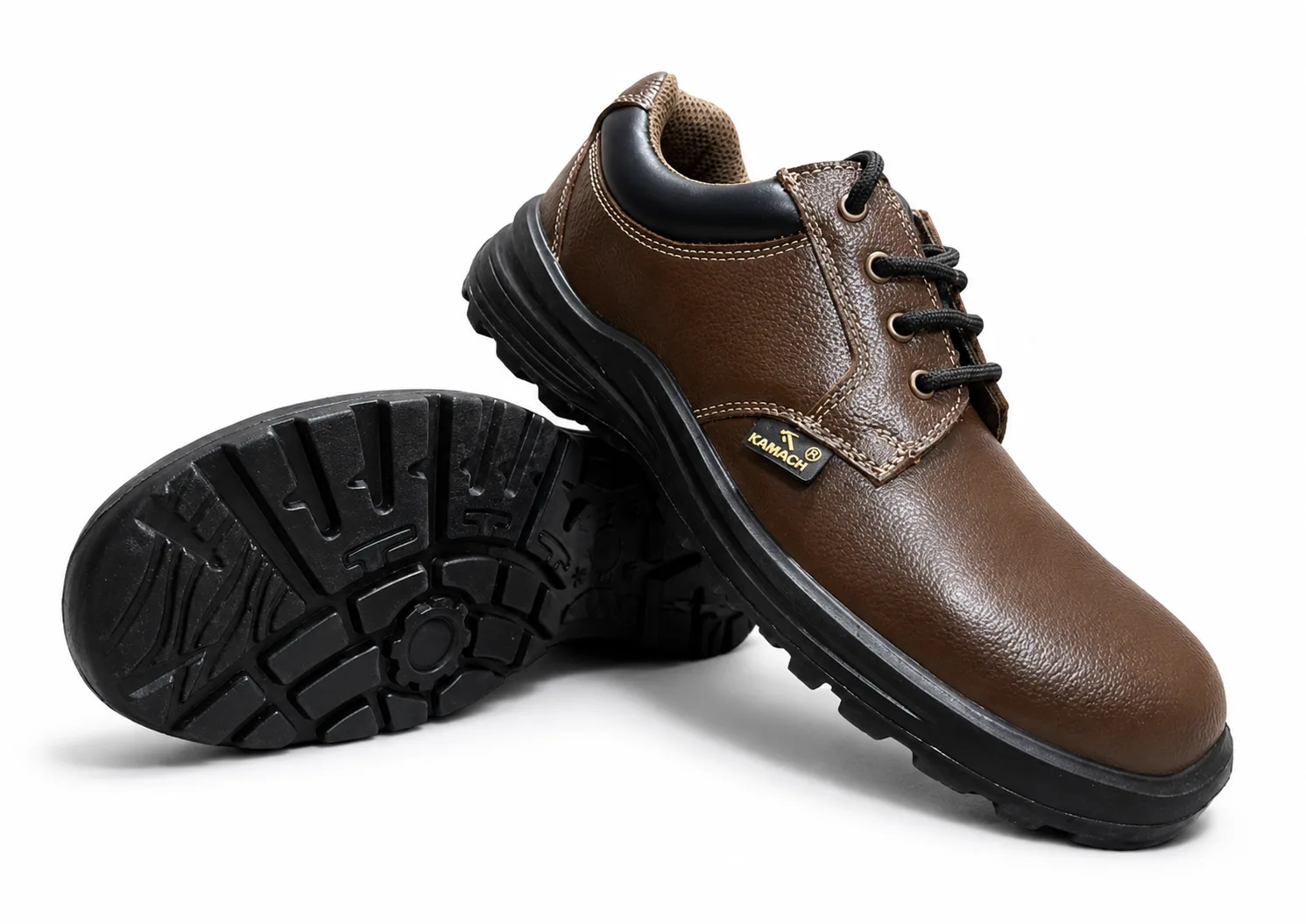
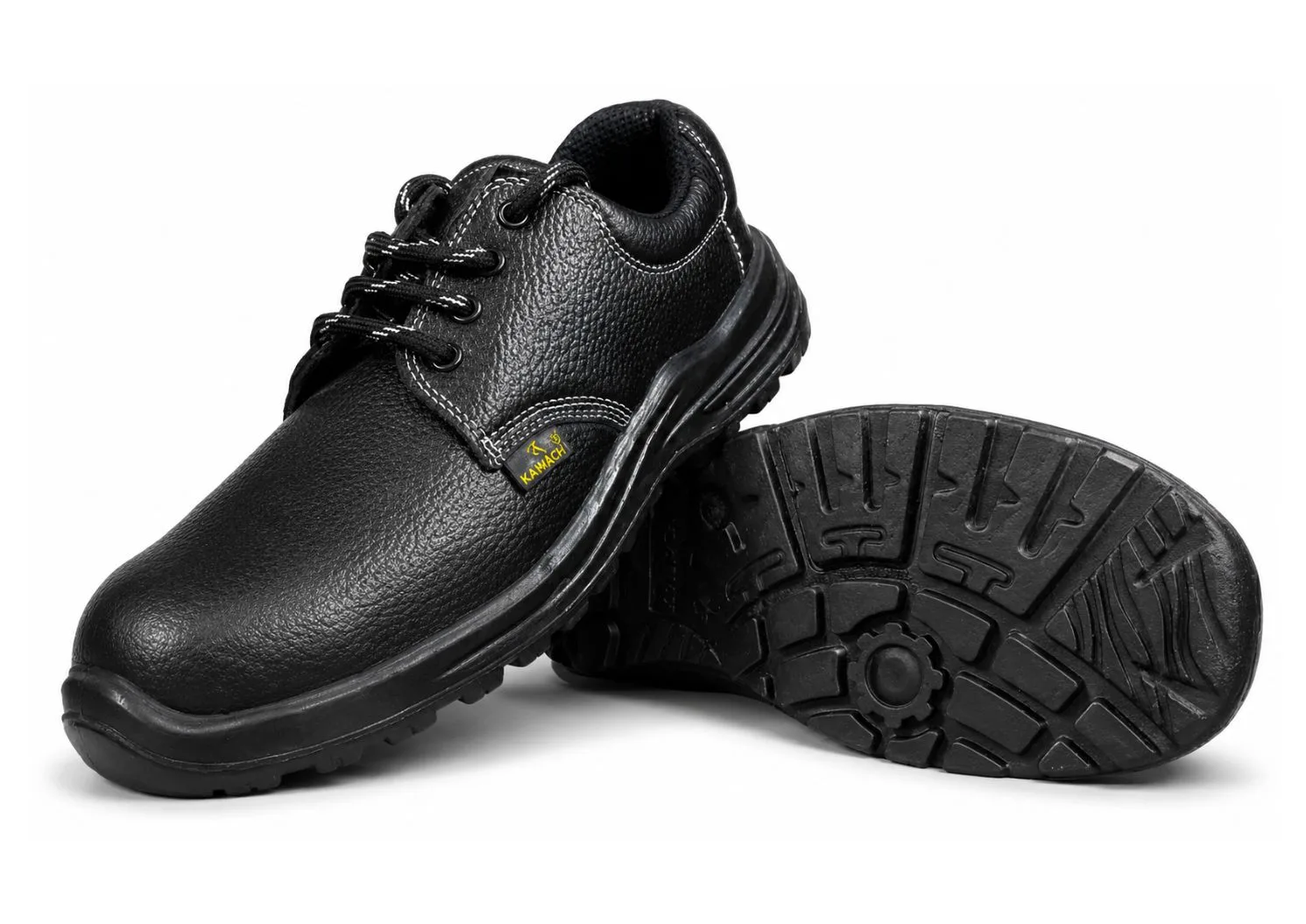
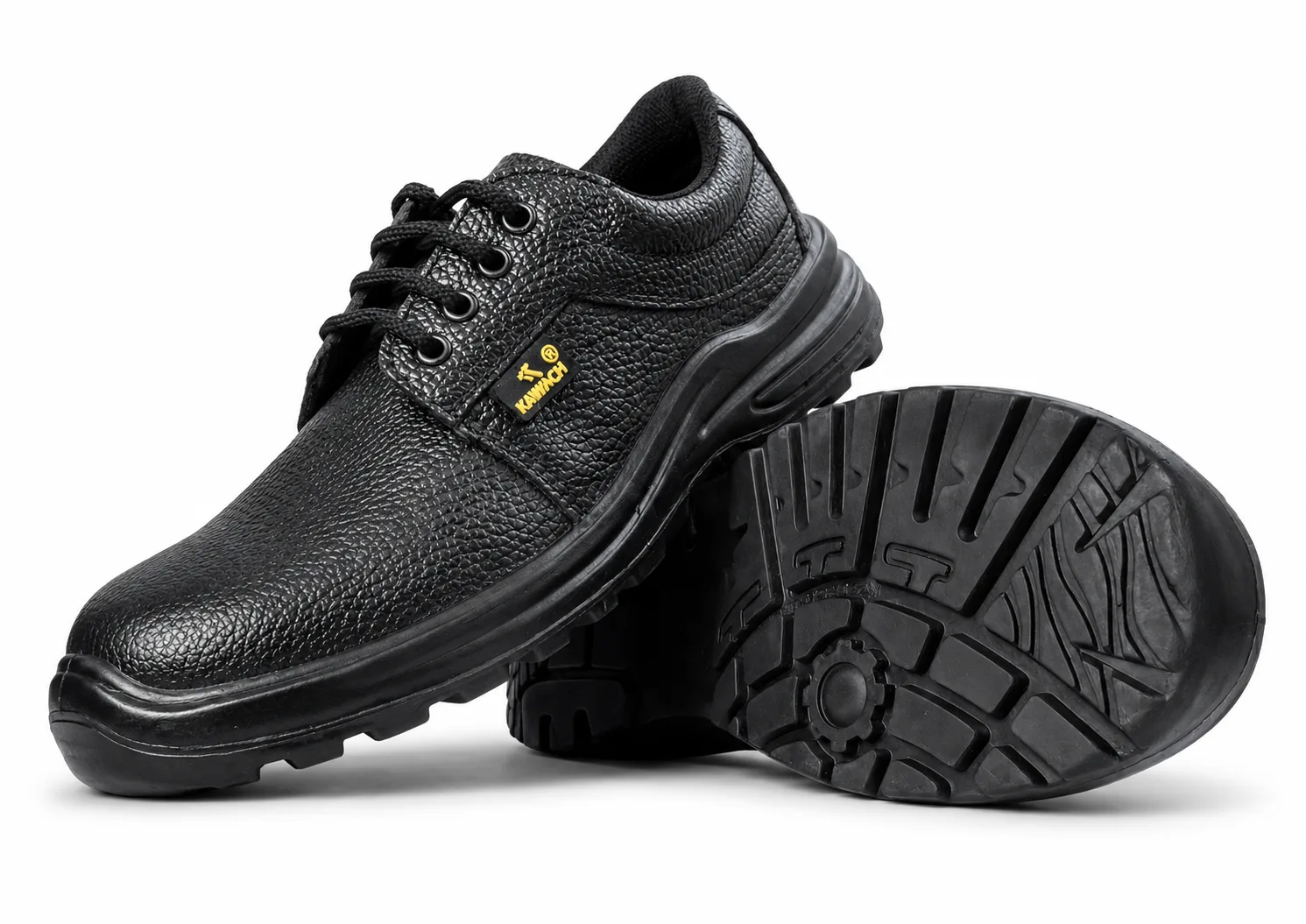
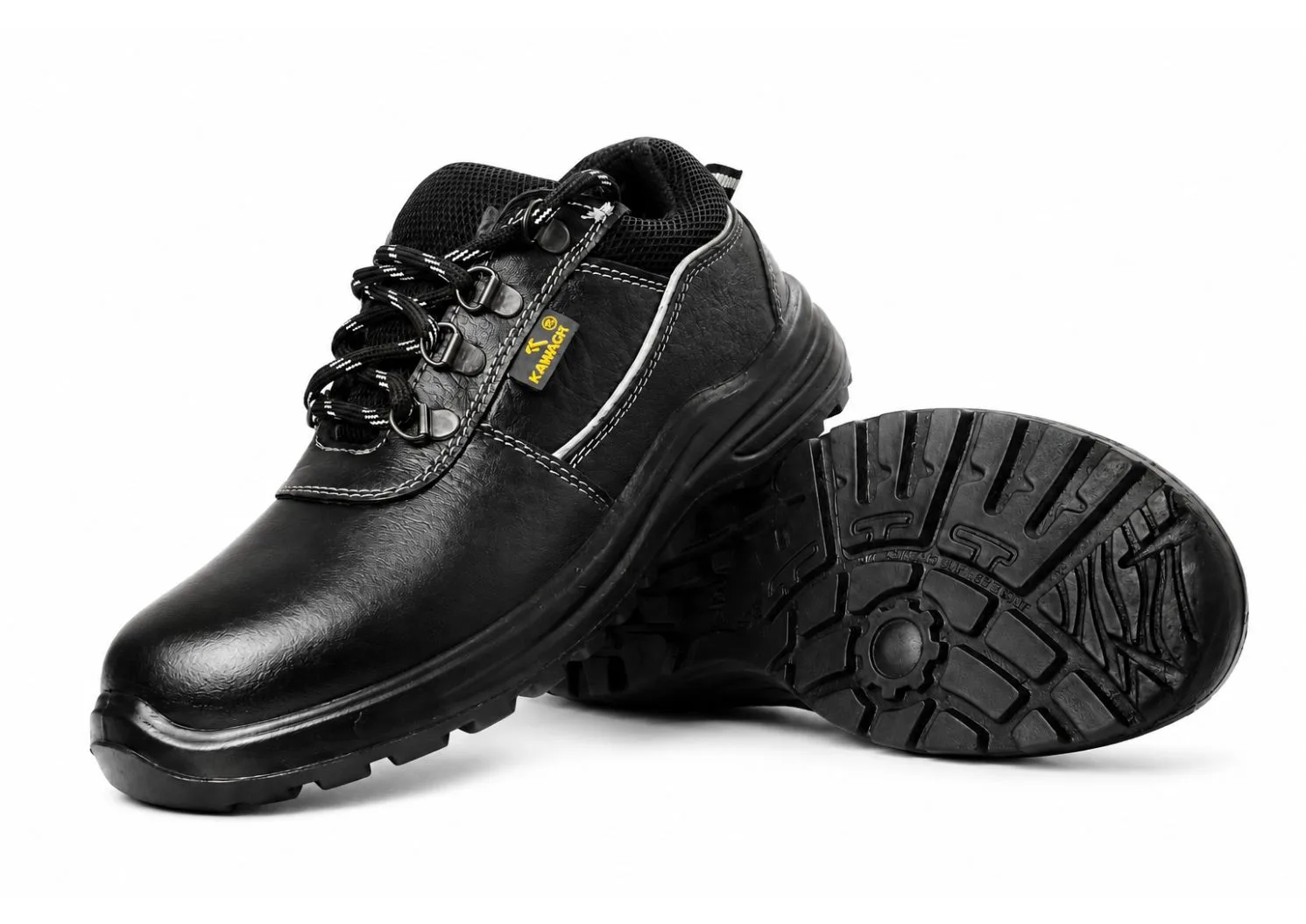
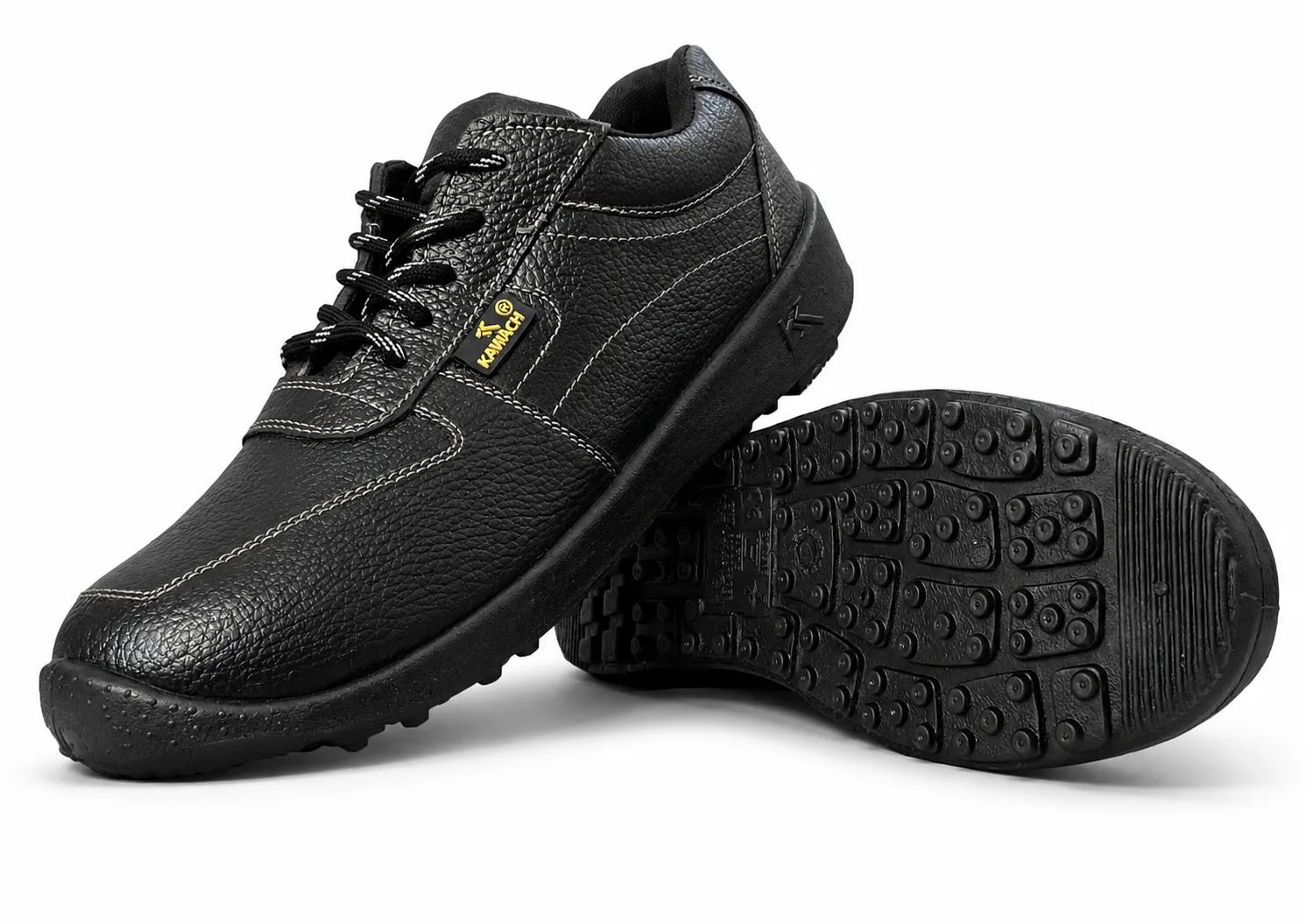
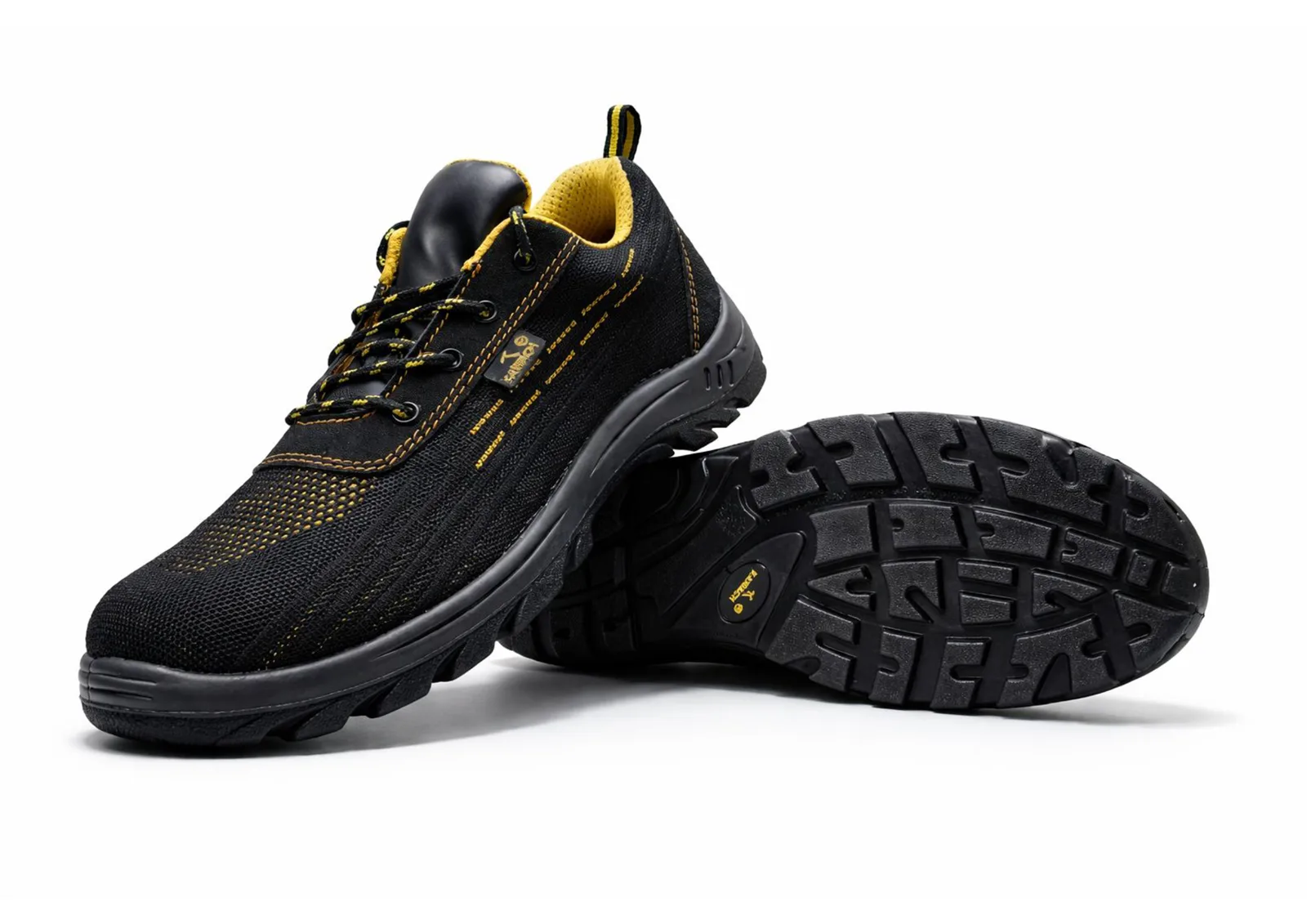
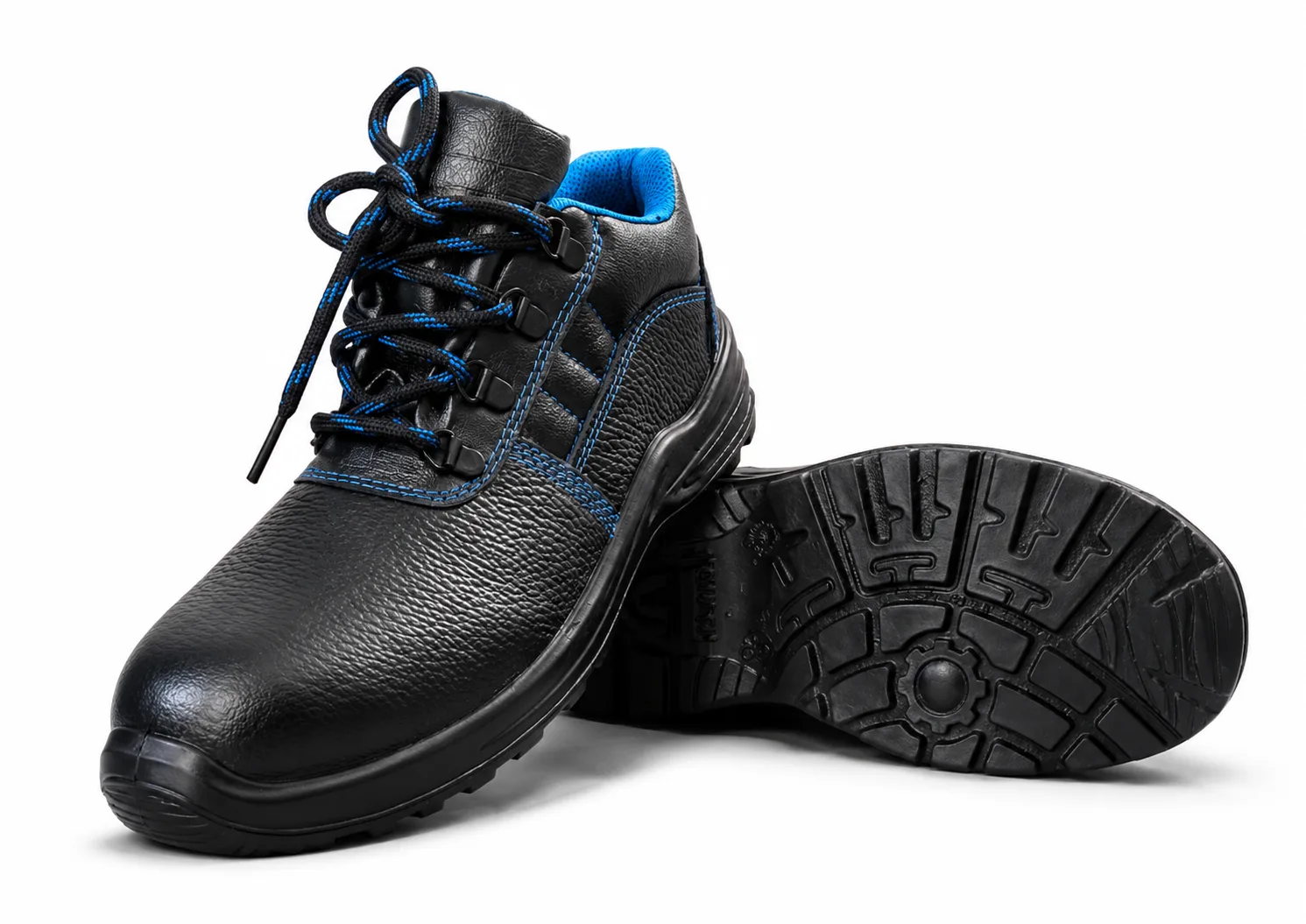
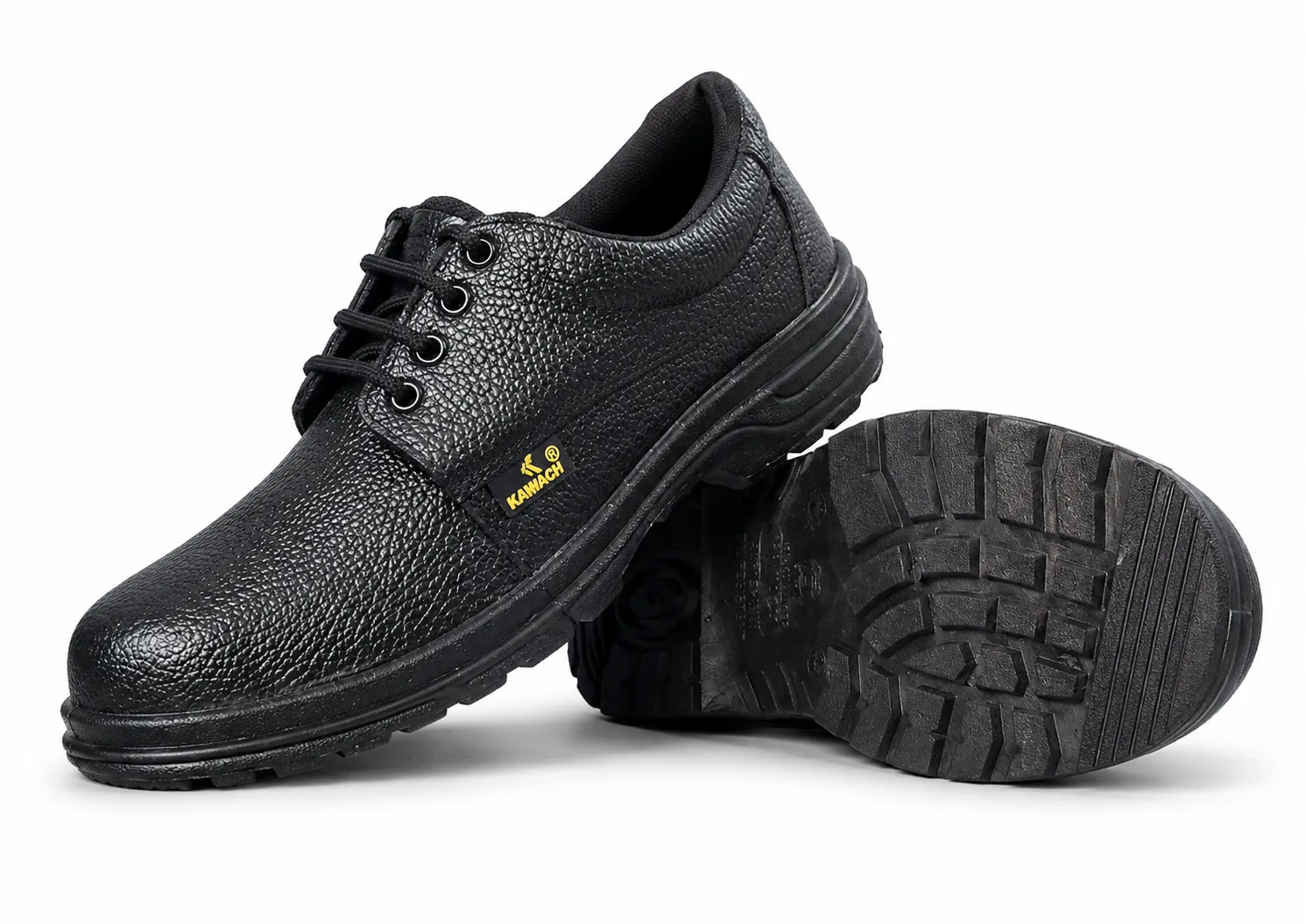
Boss is a steel-toe safety shoe in the Kawach range, specified with a 200J protective toe, full-grain leather upper and single-density PU sole. The details below explain what the specifications mean, their limitations and when extra evidence or specialist protection may be necessary.
What Does the 200J Steel Toe Rating Mean?
A protective steel toe cap is positioned at the front of the shoes to protect the toe area against specified impact hazards. Boss is listed with a 200-joule (200J) toe-impact rating. This number describes a laboratory impact-energy requirement used for safety shoes; it is not a promise that every workplace impact will be harmless.
Toe protection may matter for workers handling tools, production components, structural materials and equipment. However, the severity of a real incident also depends on the object, its shape and movement, the worker’s position and shoes condition. A 200J impact rating is not equivalent to a 200 kg weight-bearing rating, and it does not automatically establish puncture-resistant or specialist electrical protection.
Why Use Full-Grain Leather in Boss Safety Shoes?
Kawach lists a full-grain leather upper measuring 1.8-2.0 mm thick. Leather provides the main external structure of the shoe and can be a practical upper material for routine industrial use. A properly maintained upper may help withstand everyday scuffing and dust, but performance and service life depend on construction, care and actual workplace exposure.
Full-grain leather does not automatically mean complete water or chemical protection. Boss separately lists a water-repellent upper. This means limited moisture resistance may be part of the model’s performance; it should not be equated with a completely waterproof shoe for prolonged immersion.
How Does a Single-Density PU Sole Help?
The sole is the primary contact surface between the shoe and the floor. Boss uses single-density polyurethane (PU). PU is common in protective shoes because a suitable formulation can contribute cushioning and flexibility, although actual performance depends on tread design, wear and the complete sole construction.
A PU sole should not be judged on material name alone. It matters whether the site has smooth indoor flooring, loose outdoor ground, dust, water or oil contamination. When the job demands specific traction or resistance properties, obtain the appropriate model-specific test information.
Oil Resistance and Slip Resistance Are Not the Same
Boss lists oil-resistant and slip-resistant outsole features. These address different questions. Oil resistance concerns how an outsole material responds to specified oil exposure. Slip resistance concerns traction under specified surfaces and conditions.
An oil-resistant outsole is not necessarily slip-proof on an oily floor. Housekeeping, spill management, walking practices and appropriate shoes selection all remain important. Do not treat a general slip-resistant description as guaranteed traction on every wet, dusty or oily surface.
What Does Chemical Resistance Cover?
Chemical resistance appears in the model’s published feature list, but the source does not specify the chemicals, concentrations or durations tested. Industrial solvents, detergents, oils, acids and other chemicals affect shoes differently.
Before selecting Boss for chemical-exposure areas, provide the actual substance, likely contact duration and whether only the outsole or the complete shoe may be exposed. A general chemical-resistance claim should not replace compatibility data. Significant splash or immersion hazards may call for specialised shoes.
Is Boss Suitable for Electrical Work?
The published product features include antistatic properties. Antistatic shoes is designed for controlled dissipation of static charge under relevant conditions. This is not the same as electrical insulation or protection from electric shock.
The fact that Boss has a steel toe cap does not establish electric-shock protection. For electrical maintenance or specialist electrical-risk tasks, choose shoes assessed and documented for the applicable hazard. Do not rely on the toe-cap material or a general antistatic statement alone.
What Supports Comfort During Industrial Shifts?
Boss includes a moulded EVA insole with mesh, mesh lining and PU foam-padded collar and tongue. These materials are intended to help make the shoes comfortable during regular walking and standing. The PU sole also contributes to the shoe’s underfoot feel.
Comfort remains individual. Fit, foot shape, work socks, shift length, movement pattern and flooring all matter. A representative fitting trial may be useful before a large company purchase, especially for employees who stand or walk for extended periods.
Steel Toe vs Composite Toe – What Is the Difference?
Steel caps are metallic, while composite caps use suitable non-metallic materials. Both can be components of shoes designed to meet relevant protective-toe requirements. Boss uses a steel toe cap.
The right choice should be based on the complete shoe’s tested performance, fit, weight and task. Neither toe-cap material by itself establishes whether the shoe is electrically insulating.
Boss vs Ordinary Work Shoes
Ordinary shoes may provide basic coverage or comfort but does not necessarily include a tested industrial protective toe. Boss has a specified 200J steel toe cap and listed industrial resistance and comfort features. For a worksite that requires PPE, choose the exact protective-shoes classification and tested features required by its risk assessment.
When Might a Different Safety Shoe Be Needed?
Boss should not be assumed appropriate for every industrial role. Other shoes might be necessary for underfoot puncture hazards, energised electrical work, significant heat exposure, high chemical exposure, prolonged water exposure or specialist ankle/foot coverage. A puncture-resistant insert, insulating electrical performance and hot-contact rating are not established in the publicly available Boss specification reviewed for this page.
For other specifications, compare models in the Kawach Industrial Safety Shoes range and contact the team with your risk requirements.
Routine care helps maintain shoes condition and can reveal problems that affect protection. Remove loose dirt and dust from the leather and outsole after use. Clean using methods suitable for the upper finish, allow damp shoes to dry naturally and keep the tread free from trapped debris.
Avoid placing shoes against excessive direct heat.
Inspect laces, eyelets, stitching, the upper, the protective toe area and the outsole. Watch for cracks, heavy tread wear, separation between sole and upper, chemical damage and loss of secure fit.
Follow the care instructions supplied with the product.
When Should Boss Safety Shoes Be Replaced?
Withdraw shoes when its protective performance may have been compromised. Signs can include serious toe-area damage, sole separation, excessive wear, upper deterioration, major chemical exposure or a substantial impact. Protective components may be affected even when outside damage is not obvious.
There is no universal replacement interval for all workplaces. The decision should account for condition, severity of work and manufacturer guidance. Damaged shoes should not continue to be used solely because it still looks wearable.
The published Boss product page references IS 15298 (Part 2) for safety shoes. The Bureau of Indian Standards revised this to IS 15298 (Part 2):2024. For compliance-driven procurement, request the current model-specific BIS licence information, scope, classification, product markings and relevant test reports before relying on a certification claim.
BIS Certification, NABL Testing and ISO 9001 – What Is the Difference?
BIS product certification addresses conformity of the product within the relevant certification scheme and licence scope. A general mention of a standard or a logo is not a substitute for verifying the Boss model’s own status.
NABL-accredited laboratory testing provides evidence about tests carried out by a laboratory within its accredited scope. A laboratory report is not automatically the same as a BIS product licence.
ISO 9001 certification relates to a quality-management system within its certificate scope. It does not independently prove every safety feature of an individual shoe model.
What Should Industrial Buyers Request?
- Approved Boss technical datasheet and current product label
- Applicable BIS licence, marking, safety classification and covered design/size
- Protective-toe impact and relevant compression
- Tests supporting antistatic, slip, oil, water and energy-absorption claims where these are
- Substance-specific chemical-resistance records for chemical-risk
- Official size chart and manufacturer care
For tenders, safety audits or high-risk tasks, the documents should be checked against the actual model and variant supplied.
What Is the Price of Boss Safety Shoes?
For an accurate current price, request a quotation from Kawach Safe Gears India Pvt. Ltd. The final commercial offer may depend on quantity, size breakdown, delivery location and agreed purchasing conditions. The public product listing reviewed here does not establish a fixed model price, minimum order quantity or current stock position.
Bulk Boss Safety Shoes for Industrial Teams
Boss may be considered by construction contractors, manufacturing organisations, engineering companies, industrial maintenance teams and PPE purchasing departments whose hazards match its documented features.
To help us respond to your enquiry, please share:
- Company or organisation name and contact
- Total quantity required and number of pairs in each
- Delivery city/state and expected purchasing
- Intended worksite application and its specific
- Any technical specifications or certification documents
Please confirm delivery terms, freight, applicable taxes, payment arrangements, size availability and any minimum quantity requirements with our sales team.
Boss Safety Shoes Enquiries Across India
Businesses in Delhi-NCR and other industrial centres in India can contact the company to discuss delivery and supply requirements. Availability in a particular location must be confirmed with the sales team rather than assumed from a city list.
Request a Boss Safety Shoes quotation: Contact Kawach | Phone: +91 97118 70298 | Email: info@kawach.org
Practical Industrial Shoes Guidance from Kawach Safe Gears India Pvt. Ltd.
At Kawach Safe Gears India Pvt. Ltd., we believe that selecting industrial safety shoes requires more than comparing product images, prices or short catalogue claims. A useful product description should help workers and purchasing teams understand what a shoe is designed to do and where additional protection may be required.
Our approach focuses on the realities of industrial work: the hazards present, the protective materials selected, the wearer’s comfort and fit, and the documents needed to support a responsible decision. Construction teams, manufacturing employees and maintenance professionals can face very different risks, even within a single project or factory.
When presenting Boss Safety Shoes, we explain the stated 200J steel toe protection, full-grain leather upper, single-density PU sole, moulded EVA insole and listed resistance features in practical terms. We also explain important differences, including water repellency versus waterproofing, oil resistance versus slip resistance, and antistatic properties versus electrical insulation.
We have prepared this product information using our understanding of industrial safety shoes requirements to help workers, contractors, EHS managers, safety officers and procurement professionals make informed purchasing decisions. Our aim is to communicate product specifications clearly, encourage proper hazard assessment and help customers request the right documents before selecting shoes.
For current product data, sizing information or industrial bulk enquiries, please contact our team.
Kawach Safe Gears India Pvt. Ltd. | Phone: +91 97118 70298 | Email: info@kawach.org | EnquireNow