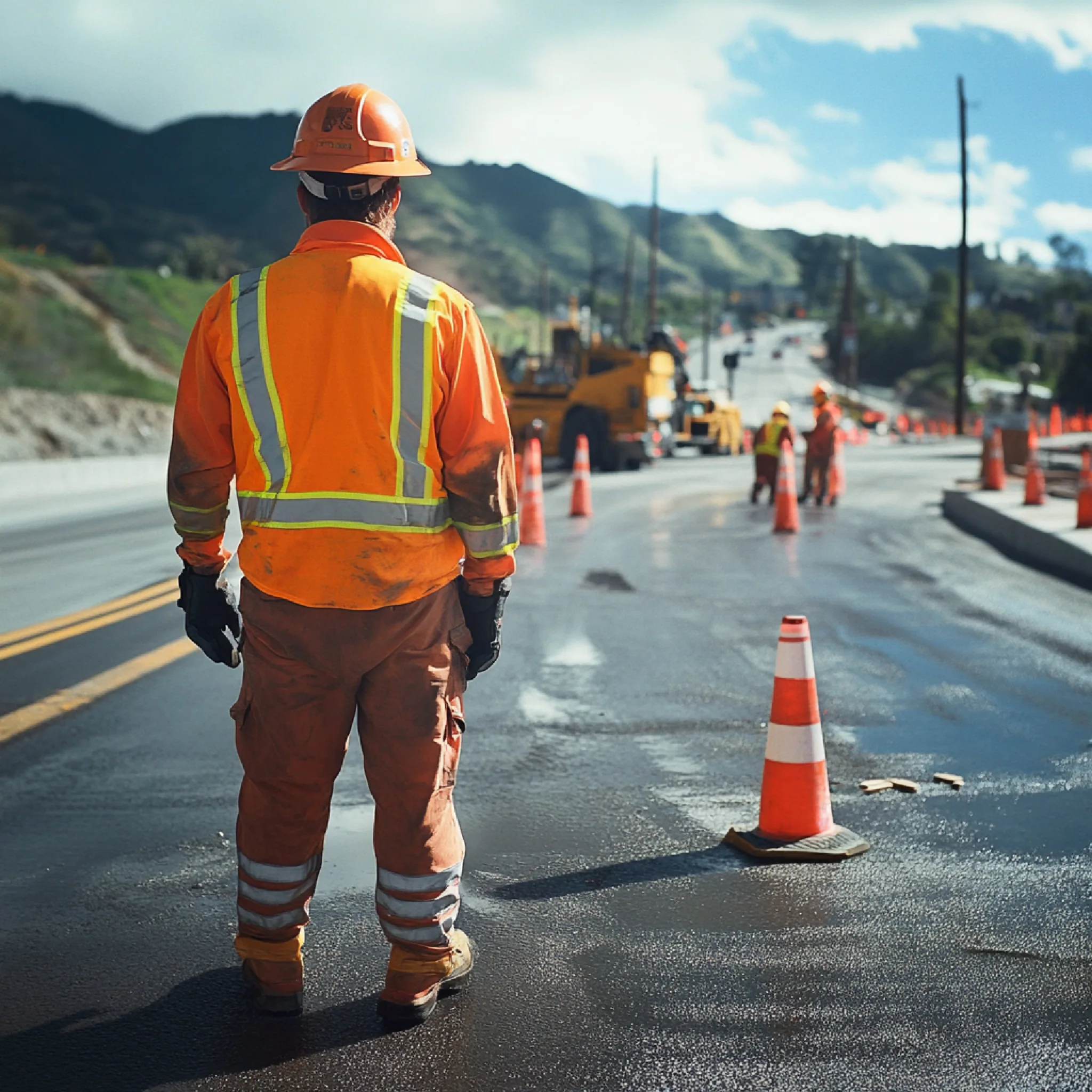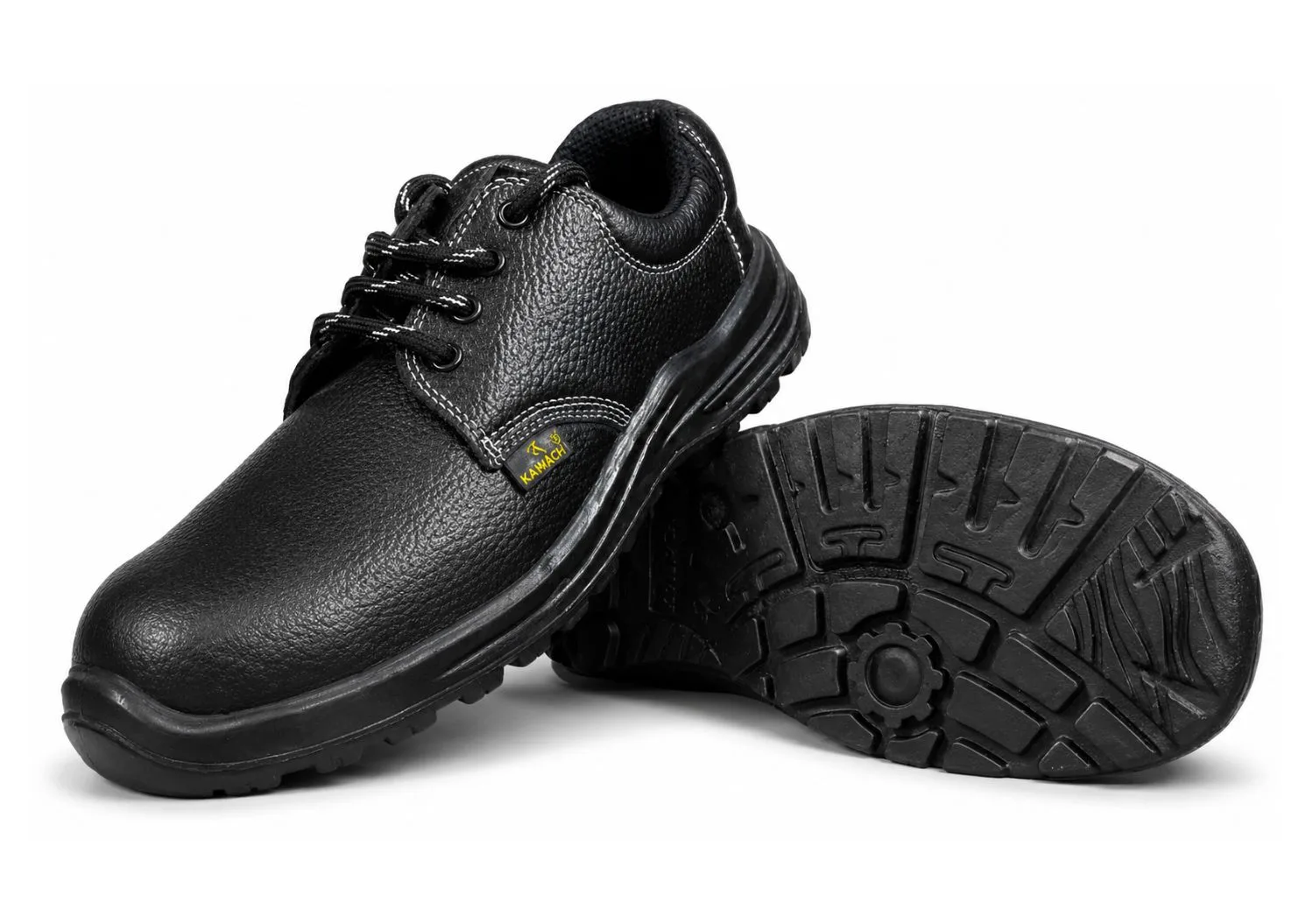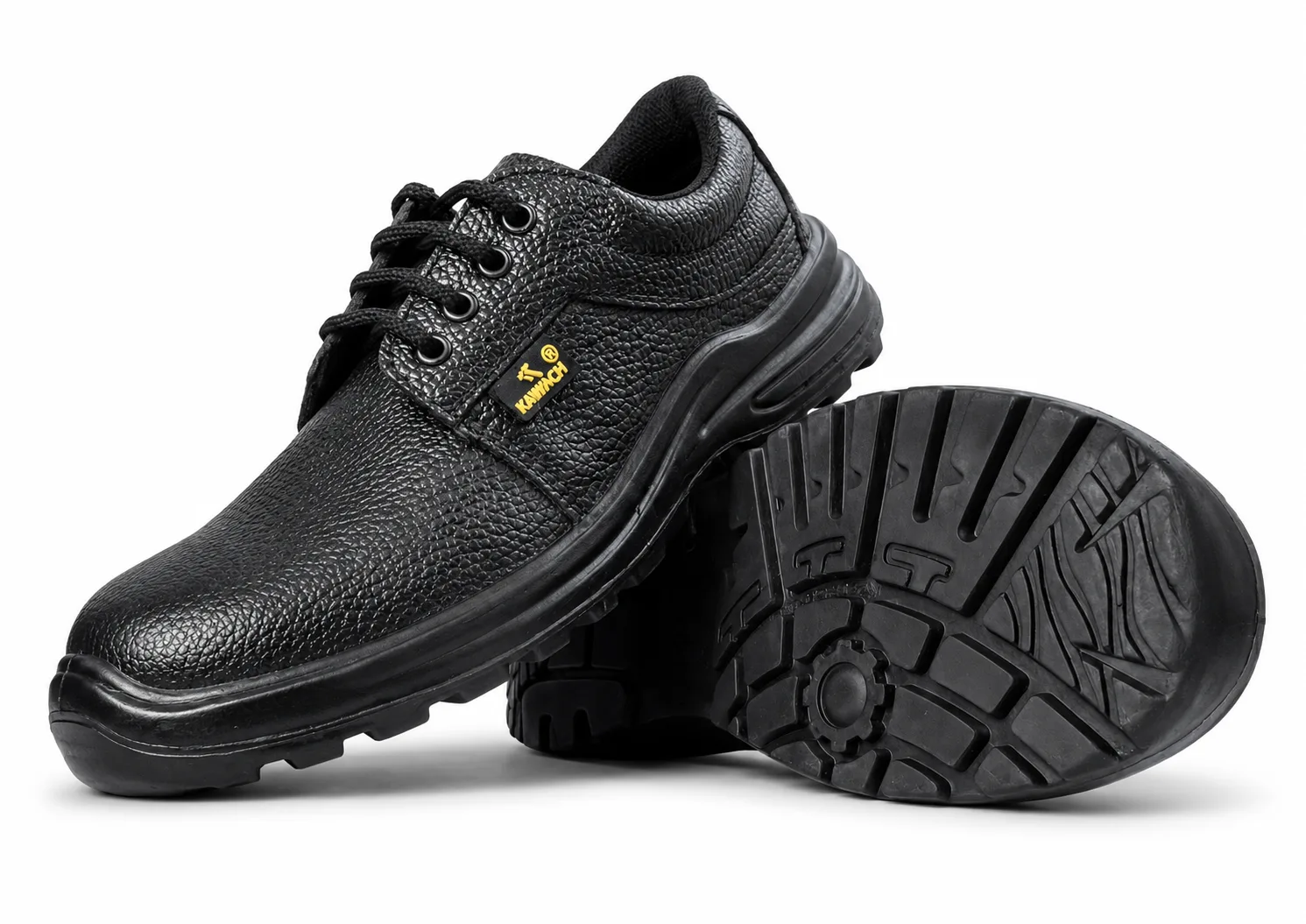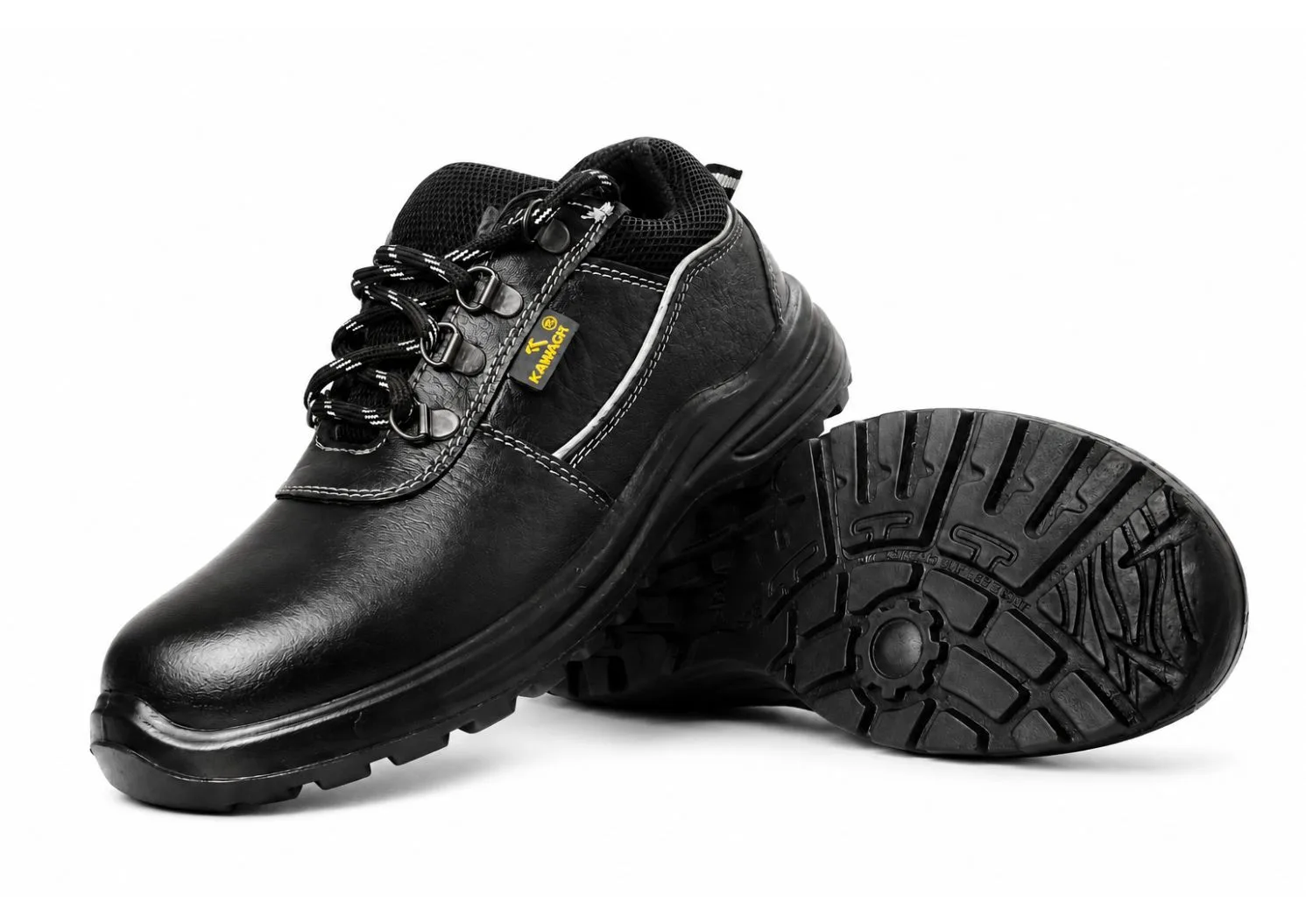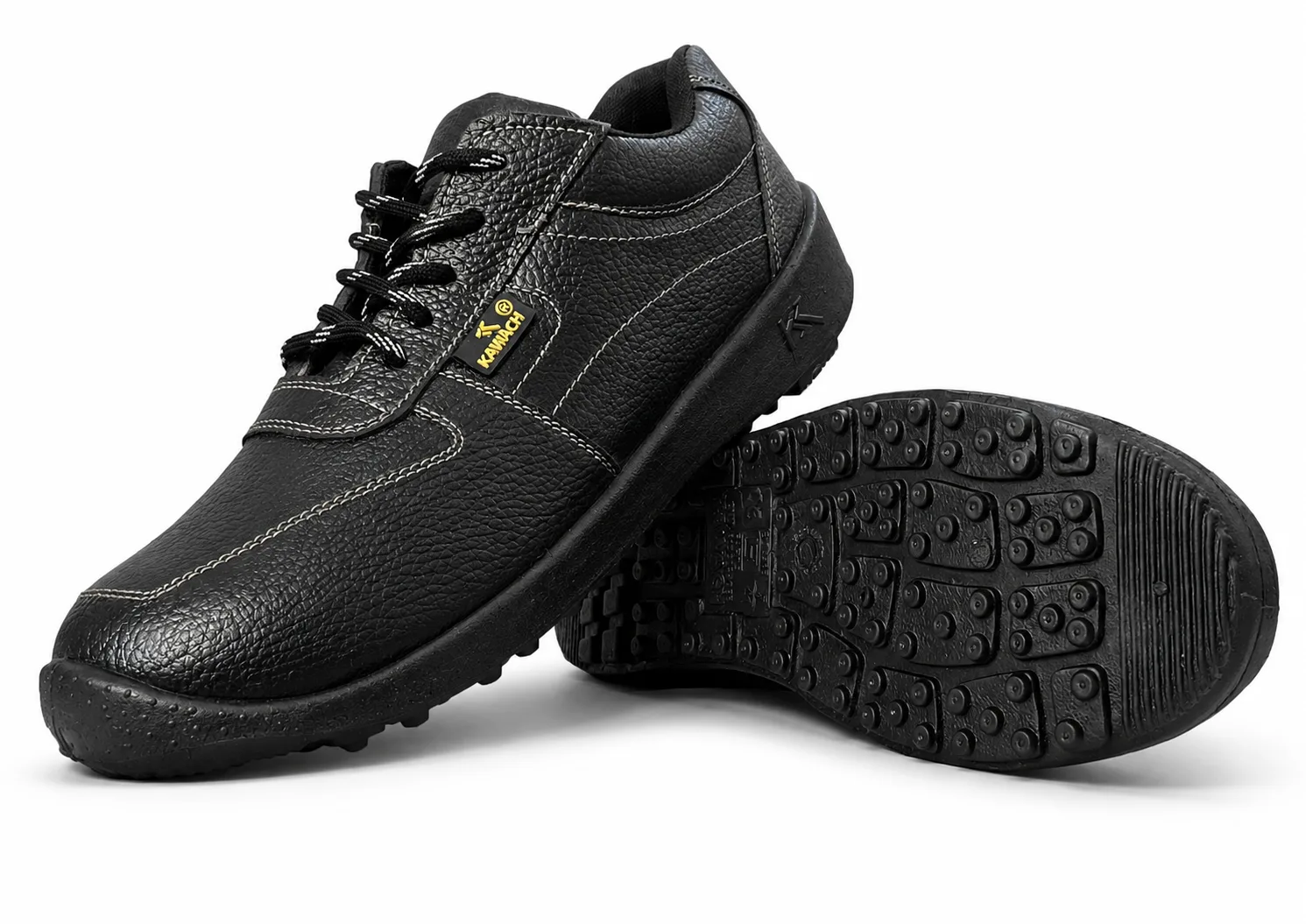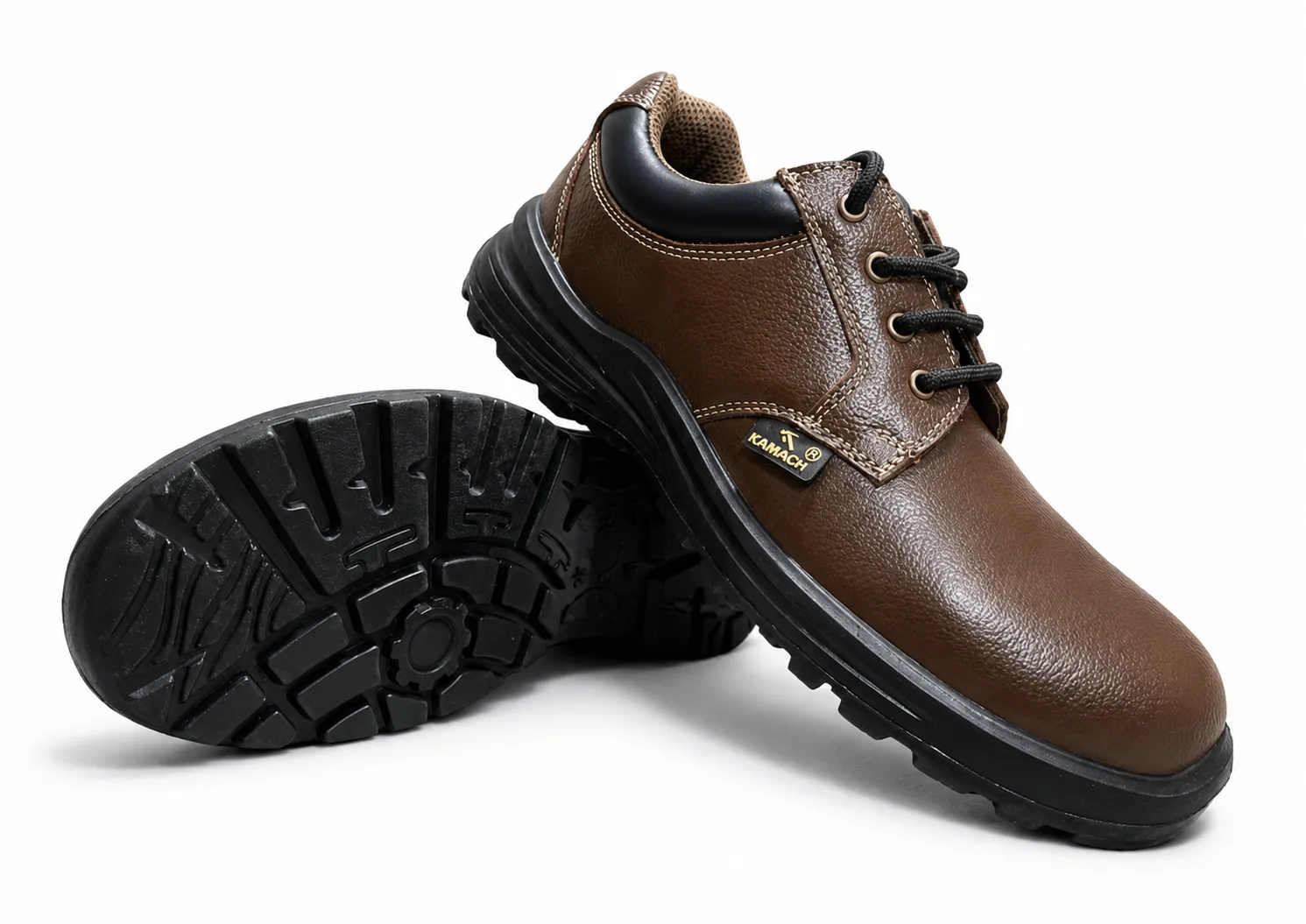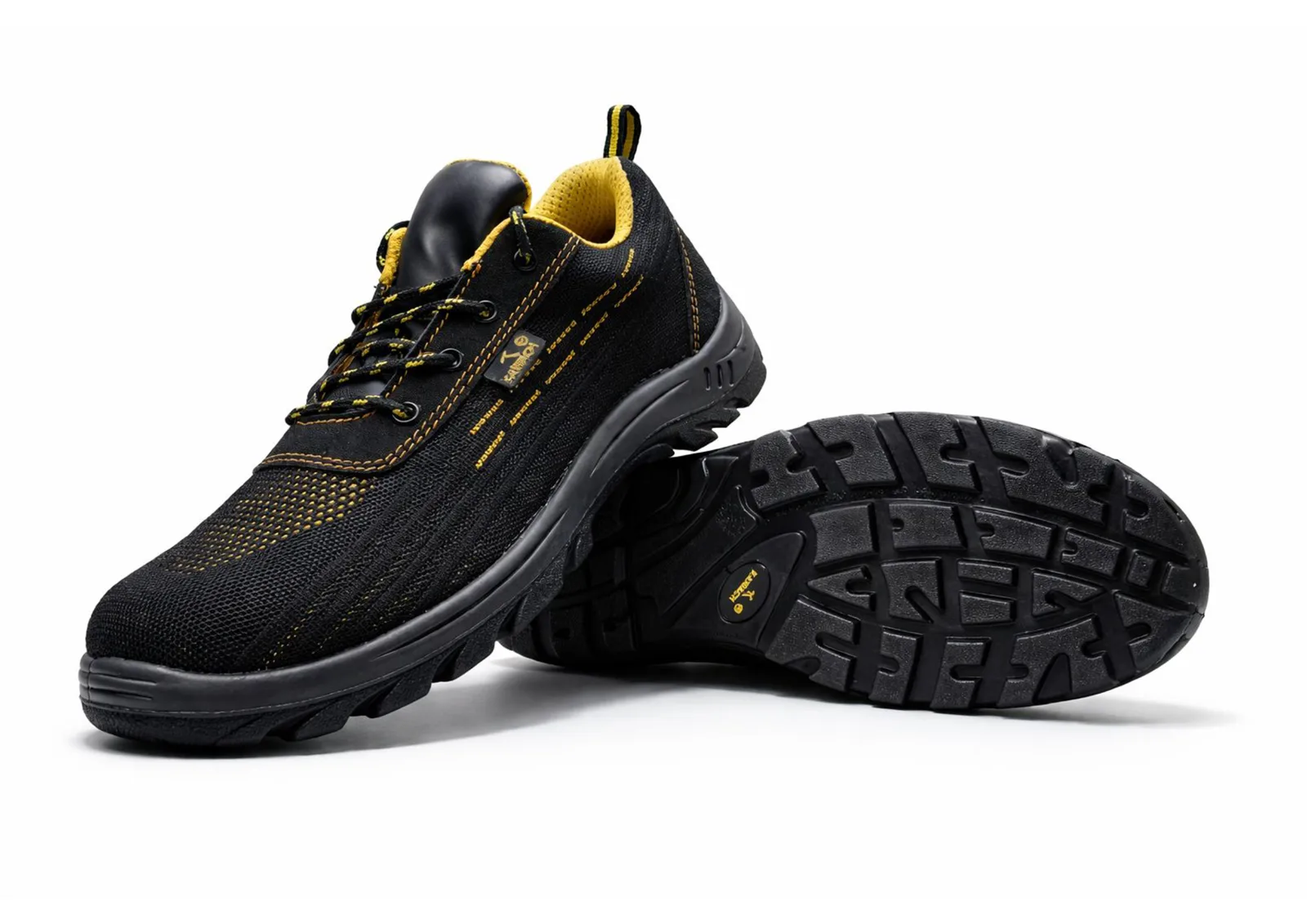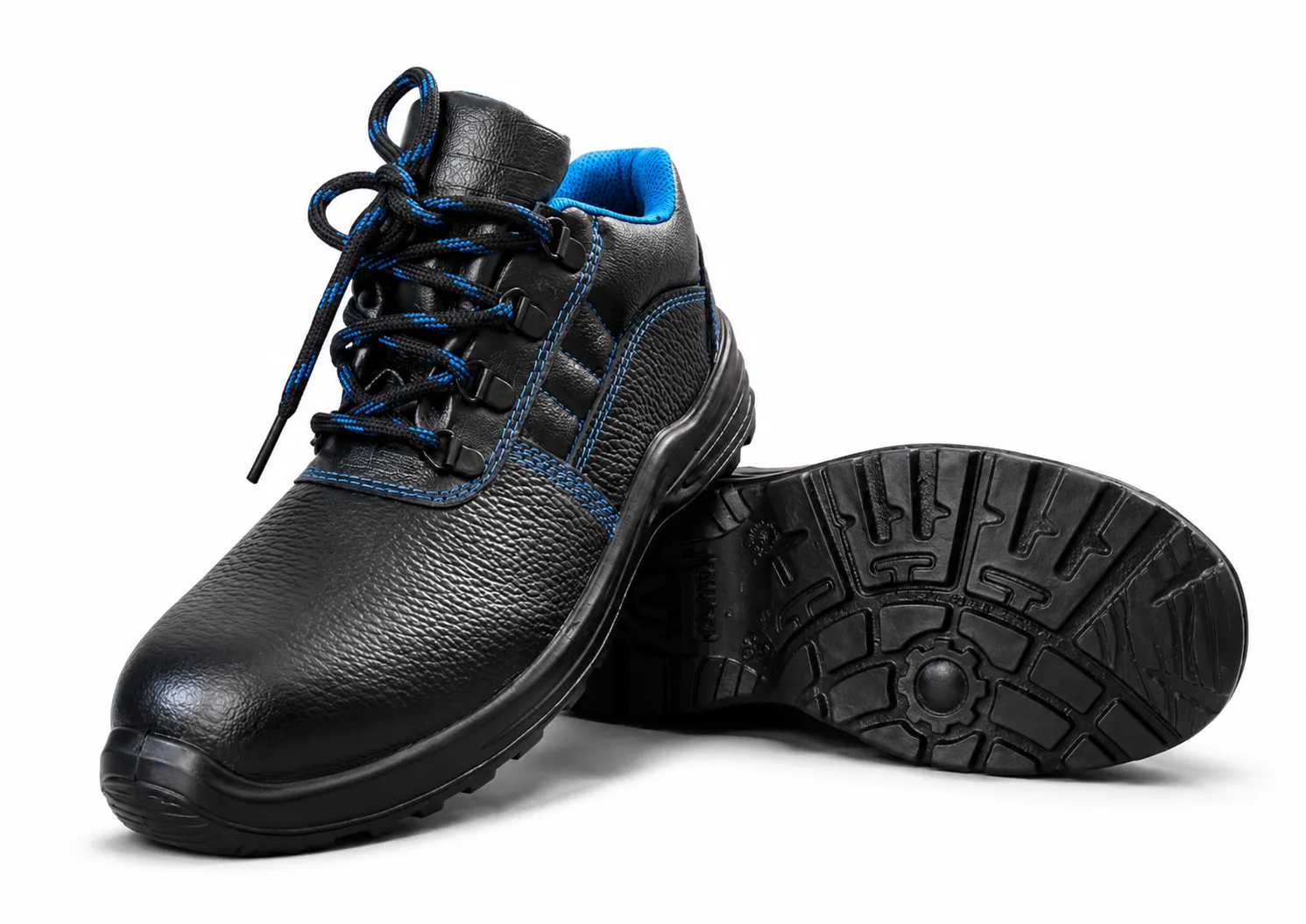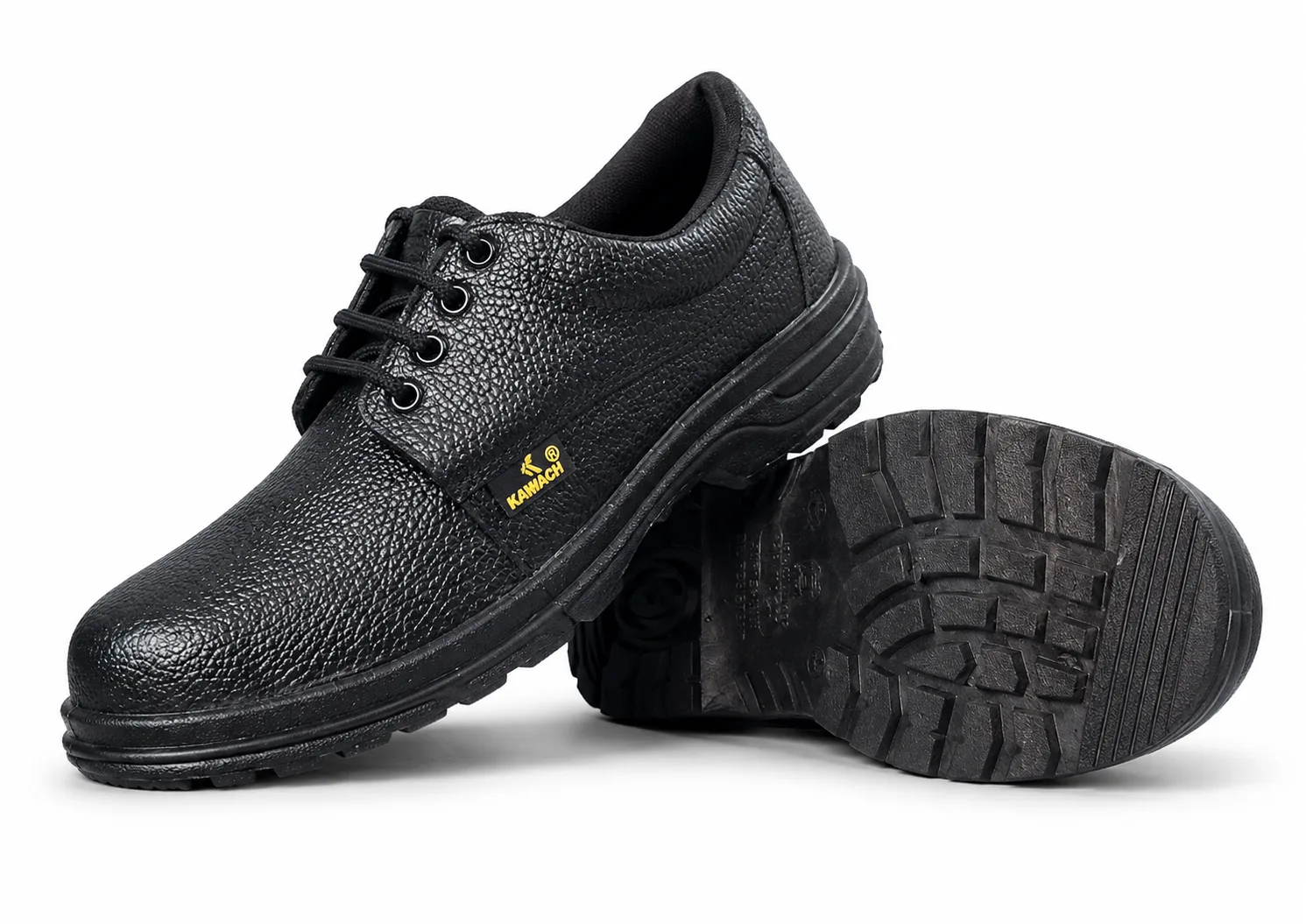
Industrial Safety Shoes

Work-ready safety footwear combining strength, safety and ergonomic comfort for every industrial need.

Kawach manufactures and supplies Industrial Safety Shoes for construction sites, factories, warehouses, engineering facilities and other demanding workplaces. Our safety footwear is designed to help protect workers from job-specific risks while supporting grip, mobility, stability and comfort throughout the working day.

The Kawach Safety footwear range includes products for different workplace requirements, working surfaces and activity levels. Depending on the selected model, available features may include protective toe caps, durable uppers, cushioned insoles, PU or PVC sole constructions, ankle support and resistance properties suited to particular industrial conditions.

Businesses can contact Kawach for product specifications, model selection support and bulk safety shoe requirements in Delhi-NCR and across India.

Need help selecting safety footwear? Share your industry, worksite hazards, required quantity and delivery location with our team.

What Are Industrial Safety Shoes?

Industrial safety shoes are protective footwear designed for workplaces where employees may be exposed to falling objects, rolling materials, slippery surfaces, sharp debris, oils, moisture, uneven flooring, or other occupational hazards.

Unlike ordinary shoes, safety footwear is designed around workplace protection and performance requirements. Depending on its intended use, a safety shoe may include a protective toe cap, a slip-resistant outsole, an energy-absorbing heel, antistatic properties, a water-resistant upper, or resistance to selected oils and chemicals.

The correct safety shoe must always be selected according to the actual hazard. A shoe intended for a dry warehouse may not be appropriate for electrical maintenance, chemical handling, construction work, or a wet production area.

Send Us a Message

Share your safety shoes requirements. Our team will review your message and get back to you.

Why Are Safety Shoes Needed at Work?

Workers in industrial environments spend a large part of their shift standing, walking, climbing, lifting, or working near equipment and materials. Their feet may remain exposed to hazards throughout the day.

Suitable safety footwear can help:

1. Reduce the risk of toe injuries from falling or rolling objects.

2. Improve traction on dusty, oily, wet, or uneven floors.

3. Support workers who stand or walk for extended periods.

4. Provide additional stability during routine industrial movement.

5. Protect the feet from minor cuts, abrasions and workplace debris.

6. Encourage better compliance with workplace PPE requirements.

7. Reduce disruption from preventable foot-related incidents.

Safety shoes are part of a complete workplace safety system. They should be used together with risk assessments, safe operating procedures, housekeeping, worker training, machine guarding and other required PPE.

Workplace Hazards and Suitable Safety-Footwear Features

Workplace condition

Safety footwear features to consider

Buyer’s precaution

Falling tools or materials

Protective toe cap

Confirm the model’s documented impact rating

Oily or slippery flooring

Slip- and oil-resistant outsole

Match the tread to the actual floor condition

Long-standing or walking shifts

Cushioning, lower weight and supportive fit

Trial the size and fit before bulk ordering

Wet or damp work areas

Water-repellent upper and suitable outsole

Water resistance varies by model

Uneven construction sites

High-ankle design and stable outsole

Ankle height does not replace correct walking practices

Electrical work

Model-specific electrical properties

Never assume that all non-metallic shoes are electrically protective

Chemical exposure

Material suited to the identified chemical

Confirm resistance against the particular substance

Hot surfaces

Heat-resistant sole where required

Review the documented temperature and contact-time limits

Types of Safety Shoes for Industrial Use

Steel-Toe Safety Shoes

Steel-toe footwear is widely used in construction, fabrication, manufacturing and material-handling environments. The toe cap is intended to protect against defined impact and compression risks.

Steel-toe shoes can be a practical choice for heavy-duty work, but buyers should still review the shoe’s weight, fit, outsole, upper material and model-specific test information.

Fibre or Composite-Toe Safety Shoes

Fibre or composite toe caps may offer a lower-weight, non-metallic alternative for selected applications. They can be useful where mobility or reduced footwear weight is an important consideration.

However, a non-metallic toe cap does not automatically make a shoe suitable for electrical work. Electrical properties must be confirmed from the technical documentation of the exact model.

Low-Ankle Safety Shoes

Low-ankle shoes provide greater ankle movement and may be suitable for warehouses, assembly units, inspection teams and general factory applications where the work surface is relatively even.

High-Ankle Safety Shoes

High-ankle footwear provides additional ankle coverage and may be considered for construction, maintenance, engineering and outdoor work. The design should still allow comfortable movement without rubbing or excessive pressure.

Lightweight Safety Shoes

Lightweight Safety Shoes can improve mobility and wearer acceptance, particularly for employees who walk long distances or remain on their feet for extended shifts.

A lightweight design may use a breathable upper, a PU sole, a cushioned insole, or a fibre toe cap. Nevertheless, protection must come before weight. The best lightweight option is the lightest practical shoe that still meets the job’s hazard and performance requirements.

How to Choose the Best Safety Shoes

The Best Safety Shoes are not necessarily the most expensive, heaviest, or most heavily advertised. The right choice is the footwear that matches the worker, workplace and identified risk.

1. Start with a workplace risk assessment

Identify the main hazards before comparing products. Consider impact, compression, slips, sharp materials, water, oils, chemicals, heat, electrical exposure and the condition of the working surface.

2. Select the correct toe protection

Determine whether a protective toe cap is required and which construction is suitable. Ask the supplier for the toe-cap material, impact rating and model-specific test documentation.

3. Check the outsole carefully

The sole affects grip, flexibility, cushioning and durability. PU soles are often chosen for their flexibility and relatively low weight, while PVC- or rubber-based constructions may be suitable for other working conditions.

There is no universally superior sole material. Selection depends on floor type, contamination, abrasion, temperature and chemical exposure.

4. Consider ankle height

Low-ankle shoes provide easier movement, while high-ankle options offer additional coverage. The correct choice depends on the work activity and surface.

5. Prioritise fit

Poorly fitting footwear can cause heel movement, pressure on the toes, blisters and fatigue. It may also discourage workers from consistently wearing safety shoes.

Before finalising a large order, confirm:

1. Size availability.

2. Internal width.

3. Toe room.

4. Heel fit.

5. Sock thickness.

6. Insole cushioning.

7. Ankle comfort.

8. Flexibility during walking.

6. Review comfort for long shifts

Comfort is not a cosmetic feature. Workers may wear safety shoes for eight hours or longer. Breathability, cushioning, flexibility and weight can influence user acceptance and daily PPE compliance.

7. Verify certification and specifications

Ask for the technical datasheet, applicable standard and current model-specific test documentation. Safety footwear in India may be evaluated against applicable requirements under IS 15298 (Part 2):2024. Certification or test coverage must be confirmed for the exact product being purchased rather than assumed across an entire range.

8. Evaluate total value

A low initial price does not always produce the lowest long-term cost. Compare expected durability, replacement frequency, worker comfort, technical support, size availability and consistency of supply.

9. Conduct a sample trial

For larger requirements, test a sample with a representative group of workers. Collect feedback about fit, grip, weight, heat, flexibility and comfort before finalising the complete size distribution.

Quality Factors to Check Before Buying Safety Footwear

Reliable industrial footwear should be assessed as a complete system rather than by a single feature.

Important quality factors include:

1. Correct placement and coverage of the toe cap.

2. Strong bonding between the upper and sole.

3. Consistent stitching and finishing.

4. Appropriate tread depth and outsole pattern.

5. Stable heel construction.

6. Comfortable lining and insole placement.

7. Flexibility at the natural bending point.

8. Size consistency between pairs.

9. Upper material suited to the work environment.

10. Clear identification, marking and product documentation.

Businesses searching for the Best Safety Shoes in India should request technical information and application guidance rather than relying only on appearance, price, or generic claims.

Benefits of Proper Safety Footwear for Workers

Better protection

The primary benefit is protection against identified workplace hazards. Suitable footwear can reduce the likelihood or severity of certain foot injuries when used correctly.

Improved grip and stability

An outsole selected for the workplace surface can help workers maintain more secure contact with the ground.

Greater comfort during long shifts

Correctly fitted and cushioned footwear can reduce pressure and discomfort during prolonged standing and walking.

Better PPE acceptance

Workers are more likely to wear footwear consistently when it fits correctly, feels practical and does not unnecessarily restrict movement.

Increased confidence at work

Appropriate PPE allows employees to perform routine tasks with greater confidence, although it should never encourage unsafe behaviour or replace established controls.

More consistent workforce presentation

Standardised safety footwear can support a professional site appearance and make PPE compliance easier to supervise.

Industries That Use Industrial Safety Shoes

Kawach safety footwear can be considered for applications across:

1. Construction and infrastructure.

2. Manufacturing and assembly.

3. Engineering and fabrication.

4. Warehousing and logistics.

5. Automotive service and production.

6. Facility management.

7. Utilities and electrical maintenance.

8. Oil and gas support operations.

9. Mining and heavy industry.

10. Government and institutional projects.

The recommended model will depend on the risks within each department. One organisation may require different footwear for warehouse employees, electricians, maintenance personnel and outdoor workers.

How Kawach Approaches Industrial Safety Footwear

Kawach’s experience in industrial safety began in 2011, with the KAWACH brand launching in 2013. From its manufacturing unit in Bawana, Delhi, the company remains involved in material selection, production and final quality checks.

Our approach is based on a practical principle: industrial footwear should perform under the conditions in which workers actually use it. Indian worksites can involve long shifts, high temperatures, dust, moisture, rough surfaces and heavy equipment. These conditions influence how footwear should be selected and evaluated.

For business enquiries, the Kawach team can review:

1. Industry and application.

2. Working surface.

3. Impact and compression risks.

4. Exposure to moisture, oil, or chemicals.

5. Required ankle height.

6. Shift duration.

7. Quantity and size distribution.

8. Delivery location.

Need for product guidance or worker instruction.

Kawach also supports bulk requirements, product guidance, delivery training and after-sales assistance. Product features and certifications should always be confirmed against the exact model selected.

Why Businesses Choose Kawach Safety

Manufacturer-controlled processes

Kawach operates from a manufacturing facility in Bawana, Delhi, allowing the company to remain involved in material sourcing, production and final checks.

Designed for Indian working conditions

The product approach considers practical challenges such as heat, dust, moisture, extended shifts and demanding industrial use.

Product-selection guidance

Businesses can discuss the workplace application rather than choosing a product based solely on an image or a catalogue name.

Bulk-supply support

Production and inventory planning support ongoing and larger industrial requirements.

Training and after-sales assistance

Kawach provides product guidance and support intended to help customers understand correct use and product limitations.

PAN-India enquiry support

Kawach receives enquiries for industrial safety equipment from Delhi-NCR and other locations across India.

Safety-Shoe Maintenance and Replacement

Safety footwear should be inspected regularly. Clean the upper and outsole according to the material, remove trapped debris from the tread and allow wet footwear to dry naturally in a ventilated area.

Replace a safety shoe when:

1. The outsole tread has become excessively worn.

2. The sole separates from the upper.

3. Stitching has failed.

4. The upper has torn or cracked.

5. The toe area is visibly damaged or deformed.

6. The shoe no longer fits securely.

7. Water, oil, or chemicals have damaged the material.

8. The footwear has had a significant impact.

9. Its protective performance is uncertain.

There is no single replacement period for every worker. Service life depends on usage, working surface, maintenance, exposure and product construction.

Request a Bulk Safety-Shoe Recommendation

Choosing industrial safety footwear for an entire workforce requires more than selecting a size and price. Share your application with Kawach, so our team can help you identify relevant options.

Please provide your Company name, Industry, Worksite location, Main workplace hazards, Required quantity, Size range, Low- or high-ankle preference, and Expected delivery schedule with any required standard or specification.

Contact Kawach Safety

Pocket O, Plot No. 169, DSIIDC Industrial Area, Sector 2, Bawana, Delhi 110039

Phone: +91 97118 70298

Email: info@kawach.org

Enquire Now for Industrial Safety Shoes, Lightweight Safety Shoes and bulk safety footwear requirements across India.

Frequently Asked Questions About Safety Shoes

1. What are industrial safety shoes?

Industrial safety shoes are protective footwear designed for workplaces where employees may encounter falling objects, slippery floors, sharp debris, moisture, oil, or other hazards. Their features vary according to the intended application.

2. Which are the best safety shoes for industrial workers?

The best safety shoes are those selected through a workplace risk assessment. Consider toe protection, outsole grip, upper material, ankle height, comfort, applicable standards and the conditions in which the worker will use them.

3. Are lightweight safety shoes safe for industrial use?

Lightweight safety shoes can be suitable when their documented protection matches the workplace hazard. Lower weight should not come at the cost of the required impact, slip, electrical, chemical, or other protection.

4. What is the difference between steel-toe and fibre-toe shoes?

Steel toe caps use metal construction, while fibre or composite toe caps use non-metallic materials. Their weight and other characteristics may differ. Buyers should compare the documented protection of the exact footwear model.

5. Can safety shoes prevent slips?

Slip-resistant footwear can reduce risk, but no shoe can prevent every slip. Floor contamination, tread wear, walking behaviour and housekeeping remain important.

6. Are all safety shoes suitable for electrical work?

No. Do not assume that a steel-free or fibre-toe shoe provides electrical protection. Select only footwear with model-specific electrical properties appropriate to the identified hazard.

7. How do I choose safety-shoe sizes for a bulk order?

Prepare a confirmed employee size list and consider conducting a sample fitting. Check toe space, width, heel movement and comfort with the socks workers normally wear.

8. How often should safety shoes be replaced?

Replace them when the tread, upper, stitching, bonding, or toe area is damaged, or when protective performance is uncertain. Replacement frequency depends on usage and working conditions.

9. Does Kawach supply industrial safety shoes in bulk?

Yes. Kawach supports ongoing and bulk industrial-safety requirements. Buyers can share their quantity, size distribution, application and delivery schedule for a commercial quotation.

10. Is Kawach a safety-shoe manufacturer in Delhi?

Kawach operates a manufacturing unit in the Bawana Industrial Area of Delhi and supports business enquiries from Delhi NCR and other parts of India.

11. Can one safety-shoe model be issued to every department?

Not always. Different departments can face different hazards. Electrical maintenance, warehousing, fabrication and outdoor construction may require different footwear features.

12. How can I request a quotation from Kawach?

Share your company, industry, required quantity, size range, worksite hazards and delivery location by phone, email, or the website enquiry form. The Kawach team can then recommend relevant options.