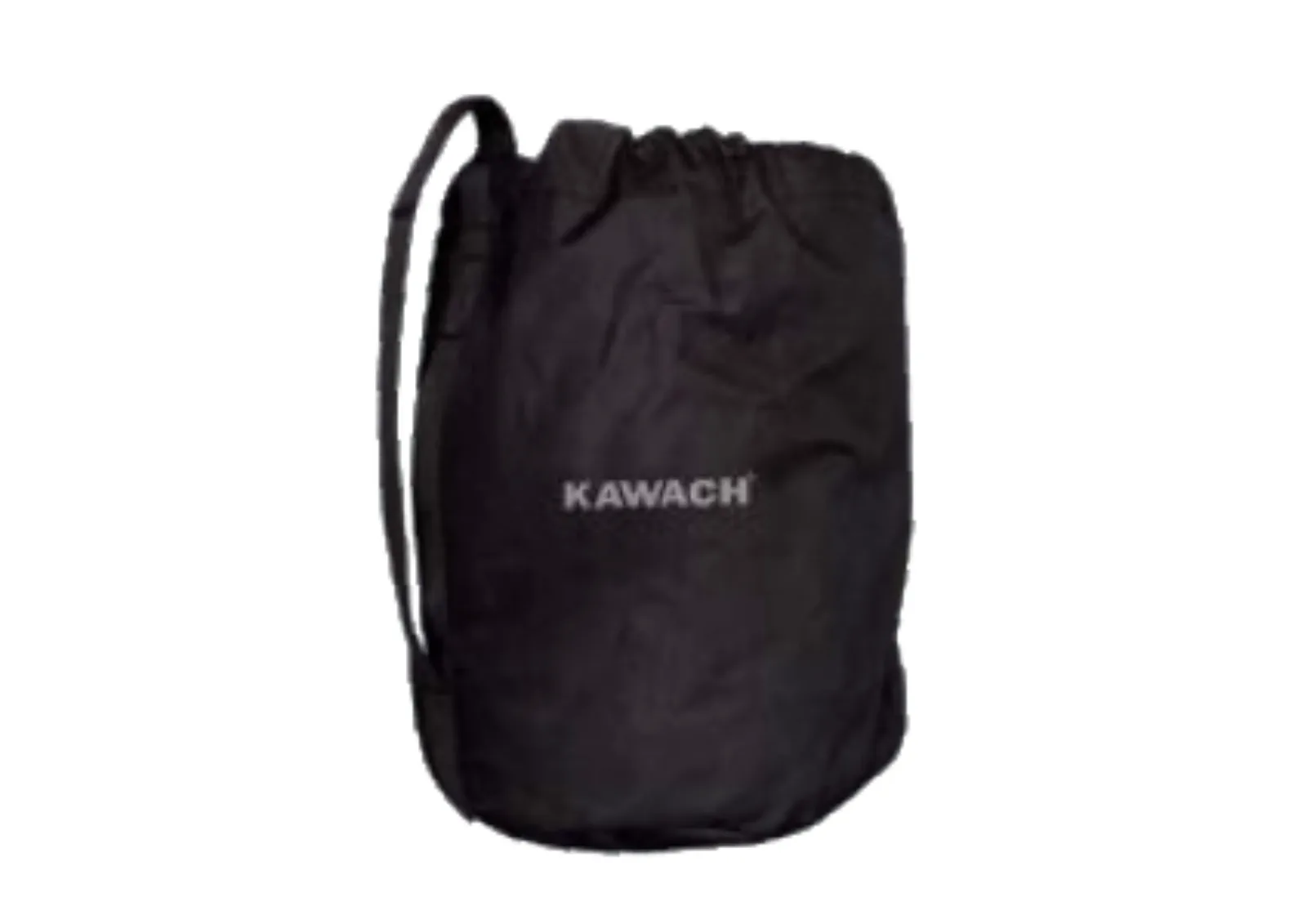
Complete rescue kits built for quick deployment, enabling safe, efficient, and controlled recovery during critical height emergencies.
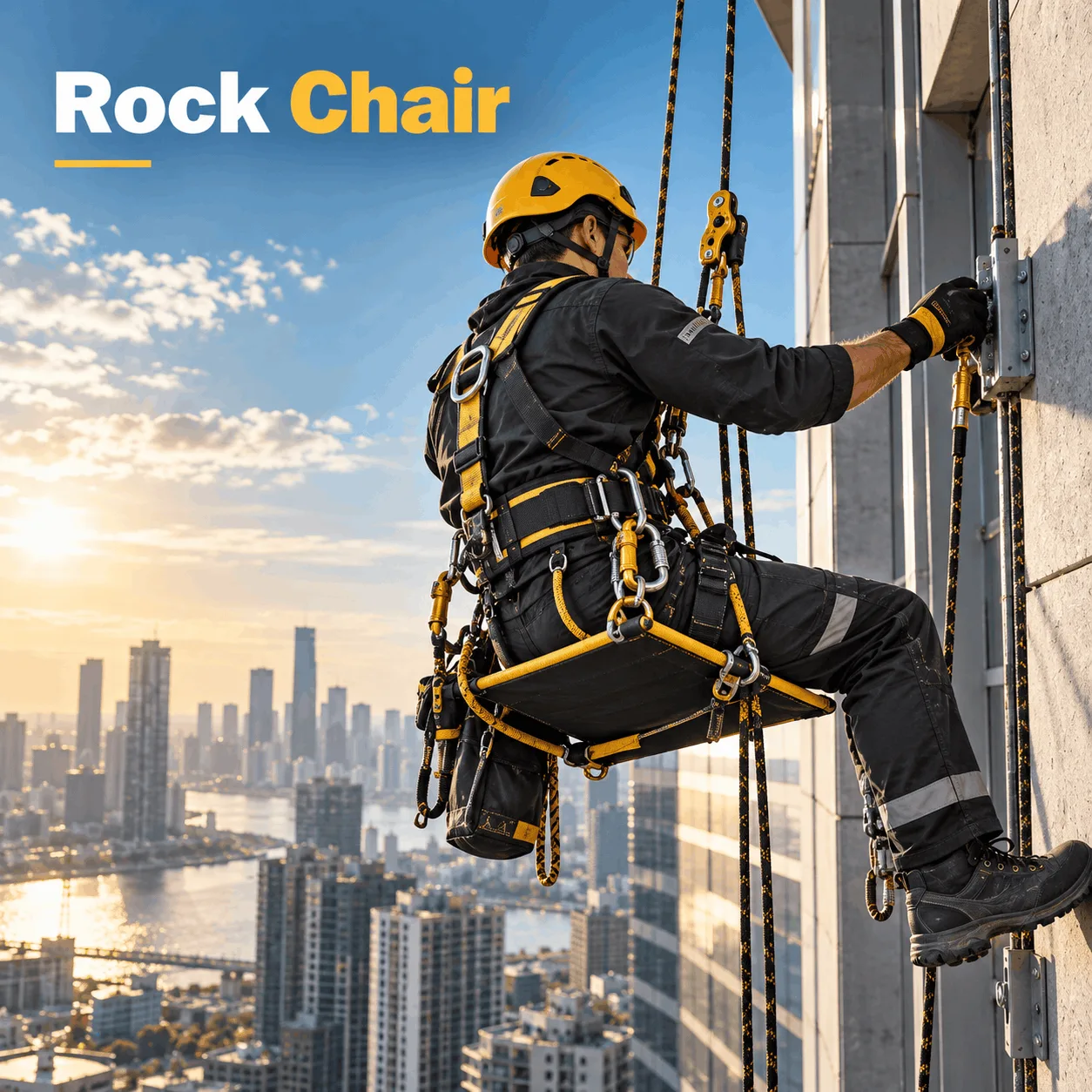
When employees work at height, preventing a fall is only one part of an effective safety strategy. A workplace also needs a planned method for recovering a worker if a fall occurs or if someone becomes stranded or suspended at height.
A Rescue Kit provides specialised equipment to support emergency recovery during work-at-height operations, helping safety managers feel assured about preparedness in high-risk environments.
Kawach Safe Gears India Pvt. Ltd. provides industrial safety and fall protection solutions designed around practical workplace requirements. The KAWACH Rescue Kit range currently includes the K-10 Rescue Kit, developed around rope-access and emergency rescue applications where trained personnel may need to reach a casualty and move the person upward or downward in a controlled manner.
KAWACH also supports users through fall-protection guidance, PPE inspection awareness and height-rescue training, empowering safety professionals to handle emergencies confidently.
A Height Rescue Kit is a collection or system of rescue equipment used to support the recovery of a person during an emergency at height.
It is different from ordinary PPE, which is used only to arrest a fall. A fall arrest system is intended to prevent a worker from continuing to fall, whereas rescue equipment addresses what happens after the fall has been arrested.
For example, a worker may remain suspended in a full body harness after a fall. Depending on the location, the worker may be unable to return to a platform or safe surface without assistance.
A properly planned Work at Height Rescue Kit enables trained personnel to follow an established rescue procedure rather than improvise equipment and techniques during an emergency.
Rescue planning should be considered before work starts-not after an incident occurs-to ensure teams feel prepared and in control of emergencies.
|
Product Detail |
Information |
|
Product |
K-10 Rescue Kit |
|
Category |
Fall Protection Equipment |
|
Primary Application |
Work-at-height and rope-access rescue |
|
Rescue Approach |
Self-extraction where appropriate or assisted rescue |
|
Casualty Movement |
Controlled upward or downward recovery |
|
Recommended Use |
With an appropriate fall protection system |
|
Suitable Users |
Trained and authorised rescue personnel |
|
Support |
Product guidance and height-rescue training |
|
Supply Coverage |
PAN India |
The KAWACH K-10 Rescue Kit is designed around rope-access rescue requirements and is suitable for scenarios such as stranded workers or suspended rescue, ensuring safety managers understand its targeted applications.
Rope-access movement may be considered in situations where conventional access arrangements cannot be installed or used in practice. However, rope-access equipment should be part of an appropriate fall protection strategy rather than a substitute for it.
A height-rescue situation may involve:
The exact rescue method depends on the site, structure, anchorage arrangement, working height, access route and approved rescue plan.
One of the biggest mistakes in work-at-height planning is assuming that a safety harness alone eliminates all fall-related risks.
A Full Body Safety Harness helps form part of a fall protection system, but it does not automatically return a suspended worker to safety.
After a fall arrest, the worksite may still need to answer several critical questions:
Who will perform the rescue?
Only appropriately trained and authorised personnel should conduct technical height rescue.
Where is the rescue equipment stored?
Emergency equipment should be readily accessible to the designated team.
Which anchorage will be used?
The rescue system requires an appropriate anchorage arrangement for the intended procedure.
Will the worker be raised or lowered?
The method must be determined based on the actual structure and the safe recovery area.
Does the rescue team know the procedure?
A rescue plan should be communicated and practised under controlled conditions.
A Rescue Kit, therefore, works most effectively as part of an established emergency-response system rather than simply as equipment stored on site.
Construction activity frequently involves work on:
These environments can create challenging rescue scenarios if a worker falls into a suspended state.
A Construction Rescue Kit should be selected based on the actual structure, maximum working height, potential fall location, anchorage options and proposed recovery route.
Project safety teams should also consider whether obstructions, sharp edges, incomplete floors or restricted access could affect a rescue.
Telecom tower technicians frequently operate at considerable height, where access can be more difficult than on a conventional building.
A Tower Rescue Kit or rope rescue system can become an important part of an emergency plan for:
Before climbing begins, the team should understand the possible casualty position, available anchorage points, rope route, rescue direction and safe transfer area.
The objective should be to establish the method before an emergency rather than trying to design the rescue while a worker is already suspended.
Industrial workplaces may contain elevated maintenance zones that are difficult to reach during emergencies, including:
An Industrial Rescue Kit can complement other fall protection equipment, such as a Full Body Harness, Retractable Fall Arrester, Horizontal Lifeline and Anchorage Lifeline.
However, every rescue environment must be assessed independently.
Equipment intended for ordinary-height rescue should not be automatically assumed suitable for confined-space rescue. Confined spaces can involve additional hazards and may require specialised retrieval systems, atmospheric monitoring, ventilation and dedicated procedures.
Rescue equipment can be relevant for organisations operating in:
The requirement should always be based on a site-specific risk assessment and rescue plan.
Selecting a Rescue Kit only by price or number of included components can lead to an unsuitable system.
Professional selection should consider several factors.
Identify what could realistically happen if a worker fell.
Determine whether the casualty would need to be raised, lowered, transferred or accessed from another position.
The working height and possible casualty location help determine the required equipment configuration.
Never assume a particular rope length is suitable for every project.
The rescue equipment must interact with an appropriate anchorage system.
Site teams should identify intended anchorage locations during rescue planning.
Ropes, connectors, harnesses, descenders, fall-arrest devices and anchorage equipment should only be combined in configurations approved or recommended for the intended system.
Evaluate exposure to:
These factors can affect both equipment selection and inspection requirements.
Before specifying equipment, request and review the current product documentation that covers applicable limitations, instructions, inspection requirements and certifications.
A Rescue Kit cannot replace training.
Personnel expected to carry out a rescue should understand the selected equipment and practise the planned procedure.
The exact contents depend on the rescue system and manufacturer-approved configuration.
Depending on the application, height rescue systems may use equipment such as:
These are general examples of equipment used in height rescue systems and should not be interpreted as the confirmed contents of the KAWACH K-10.
For the K-10, buyers should obtain the current specification and component information directly from KAWACH before placing a project order.
Understanding the difference helps organisations build a complete height-safety system.
|
Equipment |
Primary Purpose |
|
Full Body Safety Harness |
Supports the worker as part of a fall protection system |
|
Retractable Fall Arrester |
Allows movement while responding to a fall |
|
Anchorage Lifeline |
Provides a suitable connection arrangement |
|
Horizontal Lifeline |
Supports protected movement across a horizontal work area |
|
Rescue Kit |
Supports recovery during a height emergency |
These products should not be selected independently, without considering how the entire system will function.
Emergency equipment must be ready when an emergency actually occurs.
A Rescue Kit should therefore be inspected by a person with appropriate knowledge or competence in accordance with the manufacturer’s instructions.
Typical inspection points may include:
If there is doubt about the condition of safety-critical equipment, it should be isolated from service and assessed in accordance with the manufacturer’s procedure.
Inspection records can further improve product traceability on large industrial projects.
Rescue equipment should be stored so it remains protected yet accessible to authorised personnel.
Follow the equipment manufacturer’s instructions and avoid unnecessary exposure to conditions that may damage ropes, webbing or metal components.
After training or deployment:
A Rescue Kit should never be allowed to become an unverified collection of miscellaneous equipment.
Before starting work at height, the responsible safety team should be able to answer:
This type of planning converts rescue equipment from a purchasing item into an operational safety measure.
Safety equipment performs best when personnel understand how to select, inspect and use it.
KAWACH’s Training Cell focuses on practical workplace safety and includes areas such as:
Training can help organisations become more familiar with equipment before an emergency occurs.
KAWACH also states that its approach considers actual worksite risks when recommending safety solutions and that usage guidance and hands-on training are provided with deliveries.
KAWACH states that its safety-product approach has developed from observing real industrial worksite conditions and gaps in equipment quality, compliance and practical support.
The company reports control over sourcing, manufacturing processes and quality checks to improve consistency and product durability.
Instead of treating every work-at-height project the same, KAWACH considers working conditions and potential hazards when recommending safety solutions.
Equipment selection can be complemented by practical height-rescue training and live demonstrations.
In addition to Rescue Kits, KAWACH offers products across categories including:
This makes it possible to assess rescue requirements within a broader fall-protection strategy.
KAWACH publishes company-level information on ISO, BIS/ISI, CE and testing conducted through an NABL-accredited laboratory.
For a safety-critical product such as the K-10, procurement teams should still request the specific documentation applicable to the individual product and supplied configuration before project approval.
Kawach Safe Gears India Pvt. Ltd. supports industrial safety requirements across India.
Businesses searching for a Rescue Kit supplier in India, a Height Rescue Kit supplier, industrial rescue equipment, a Fall Protection Rescue Kit, a Rope Rescue Kit, or other work-at-height safety equipment can contact KAWACH for project requirements and product guidance.
Supply enquiries can be supported across key industrial markets including:
Delhi NCR: Delhi, Gurugram, Noida, Ghaziabad and Faridabad
North India: Haryana, Punjab, Rajasthan and Uttar Pradesh
West India: Maharashtra and Gujarat
South India: Karnataka, Telangana and Tamil Nadu
East India: West Bengal and surrounding industrial regions
For large projects, EPC contractors, factories, infrastructure companies, dealers and institutional buyers, share the quantity, application, working height and project location with KAWACH so the requirement can be evaluated more accurately.
For better product guidance, provide:
Providing this information helps avoid selecting rescue equipment without understanding the actual work environment.
A Rescue Kit should be selected before an emergency-not during one.
If your personnel work on towers, high-rise construction, elevated industrial structures, power infrastructure, or other work-at-height locations, include rescue planning in your fall-protection assessment.
Contact Kawach Safe Gears India Pvt. Ltd. for the K-10 Rescue Kit, work-at-height rescue solutions, industrial fall protection equipment, technical product information, bulk requirements and PAN-India supply support.
Before ordering, share your working height, application, structure, anchorage conditions and rescue requirements so the appropriate configuration and current product documentation can be reviewed.
A Rescue Kit is used to support planned emergency recovery during work-at-height incidents. Depending on the rescue system, it can help trained personnel access, raise, lower or recover a suspended or stranded worker.
The KAWACH Rescue Kit category currently includes the K-10. It is positioned for rope-access and height-rescue applications where a casualty may need controlled upward or downward movement.
No. A Full Body Safety Harness forms part of the worker’s fall protection system. A Rescue Kit is intended to support recovery after an emergency occurs.
Technical rescue equipment should be used only by appropriately trained and authorised personnel, following a planned procedure and the manufacturer’s instructions.
KAWACH states that rescue intervention may, under appropriate conditions, be performed by a conscious user with the necessary equipment for self-extraction or by a helper. The actual procedure must match the approved rescue plan.
Height Rescue Kits can form part of emergency planning for telecom and tower applications. Selection should take into account tower geometry, anchorage, rescue distance and access conditions.
Do not assume that a standard Height Rescue Kit is suitable for confined-space rescue. Confined spaces may require dedicated retrieval and additional safety equipment. Conduct a separate hazard assessment.
Inspection frequency should follow the manufacturer’s instructions, organisational procedure and applicable safety requirements. Equipment should also be checked before use and after an event that may have affected its integrity.
Consider the rescue scenario, working height, anchorage, rescue distance, site environment, compatibility, trained personnel, current specifications and applicable product documentation.
Yes. KAWACH supports industrial safety and fall-protection requirements across India. Buyers can submit their application, quantity, project location and working height details for product guidance.
WhatsApp us