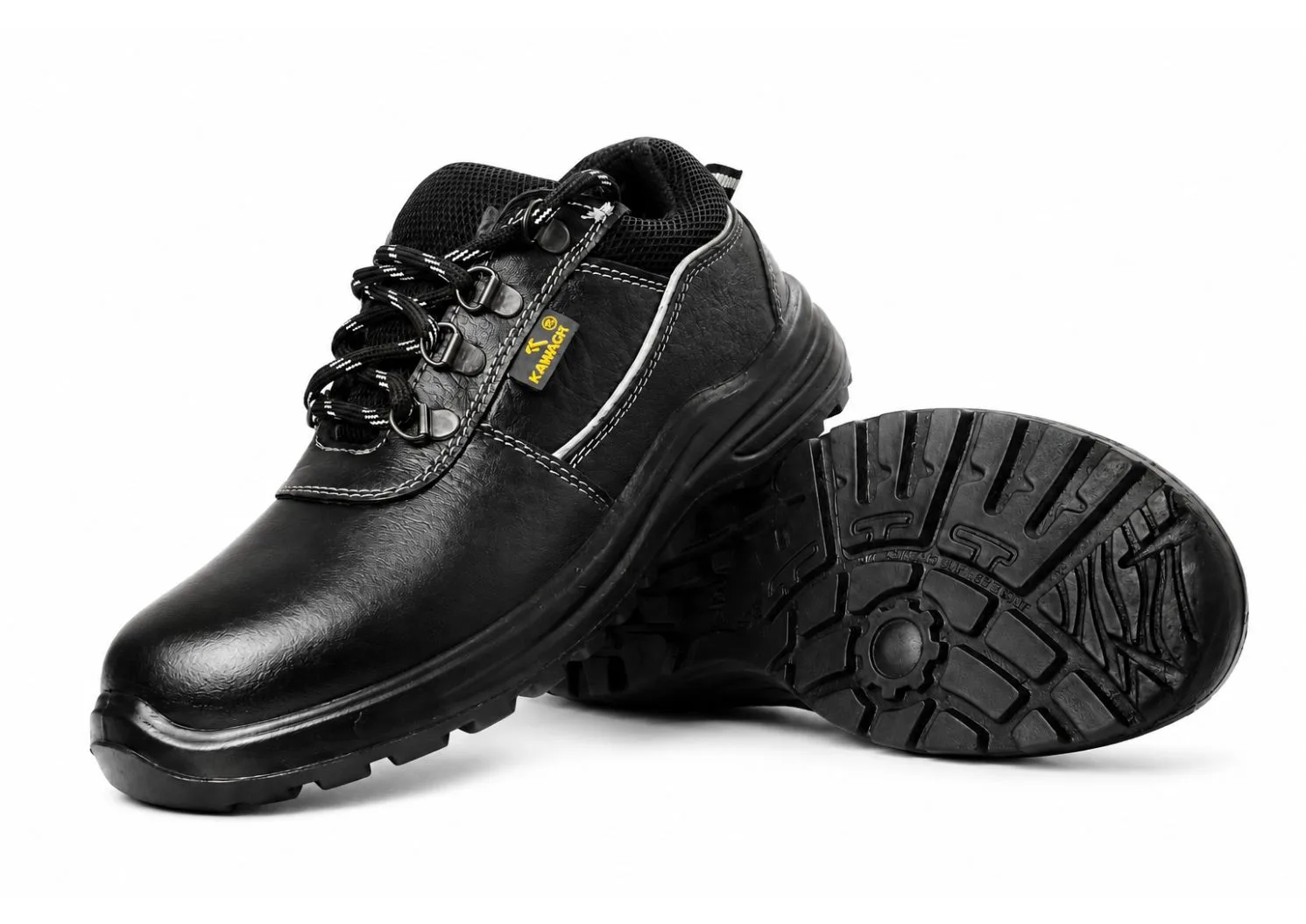
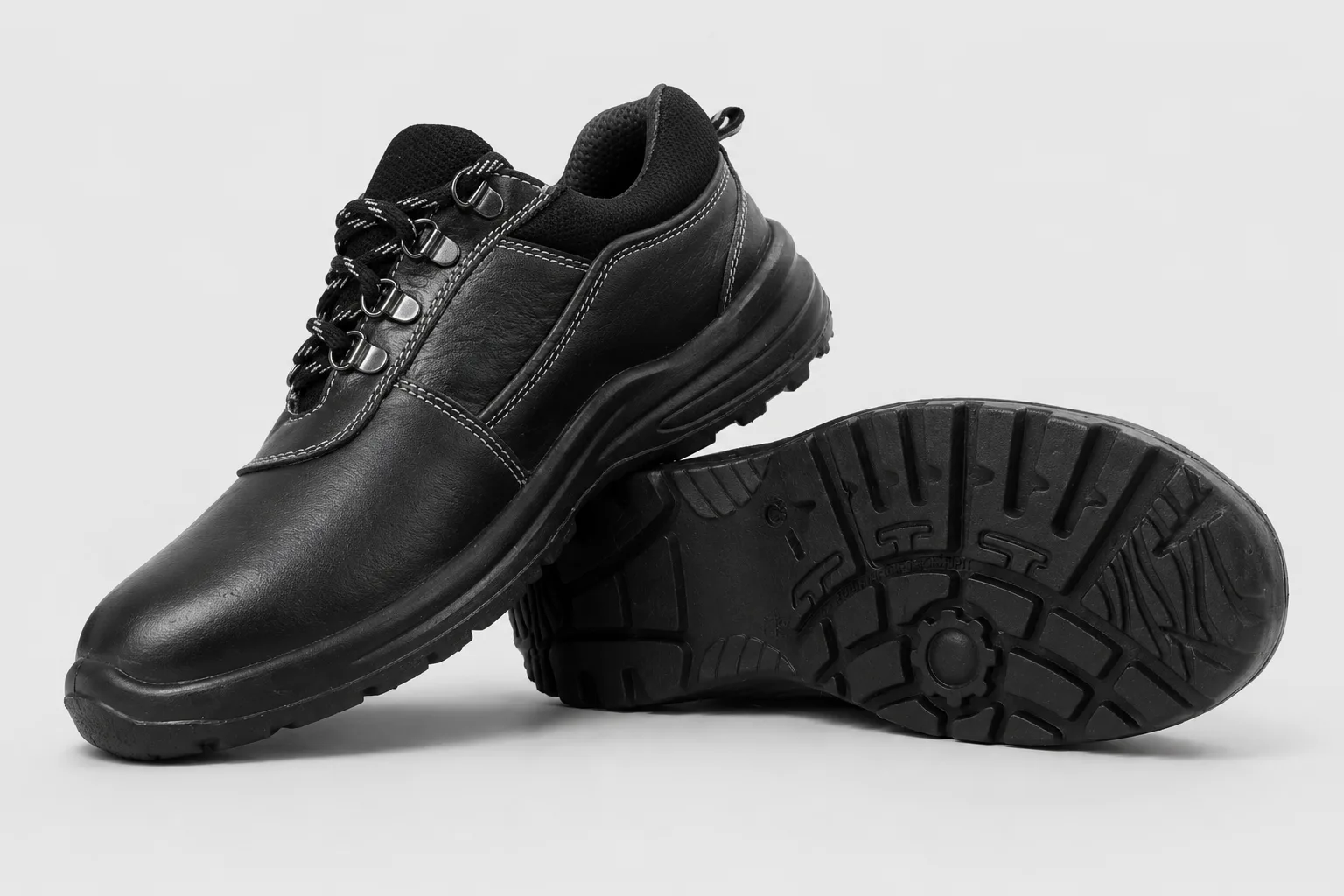
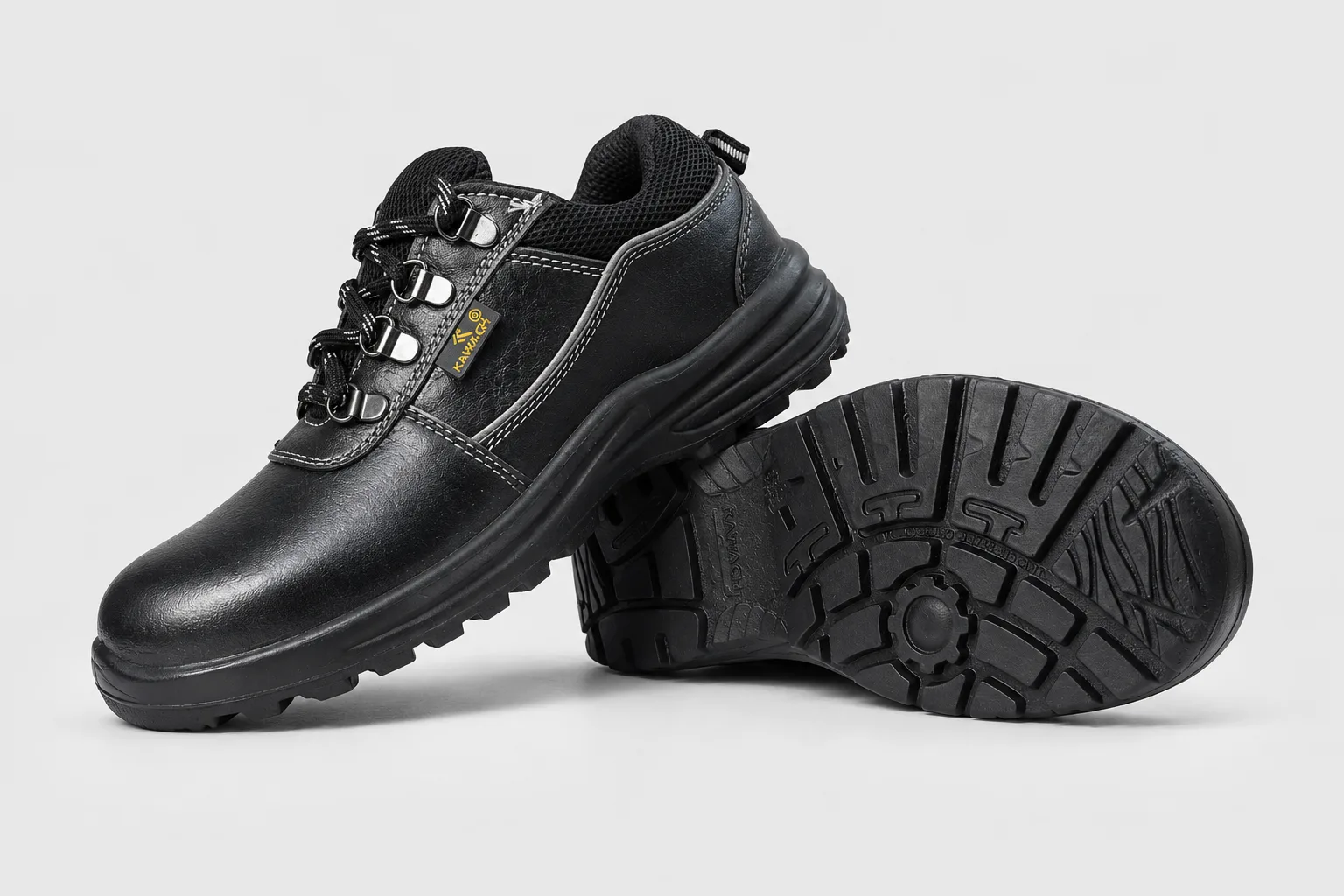
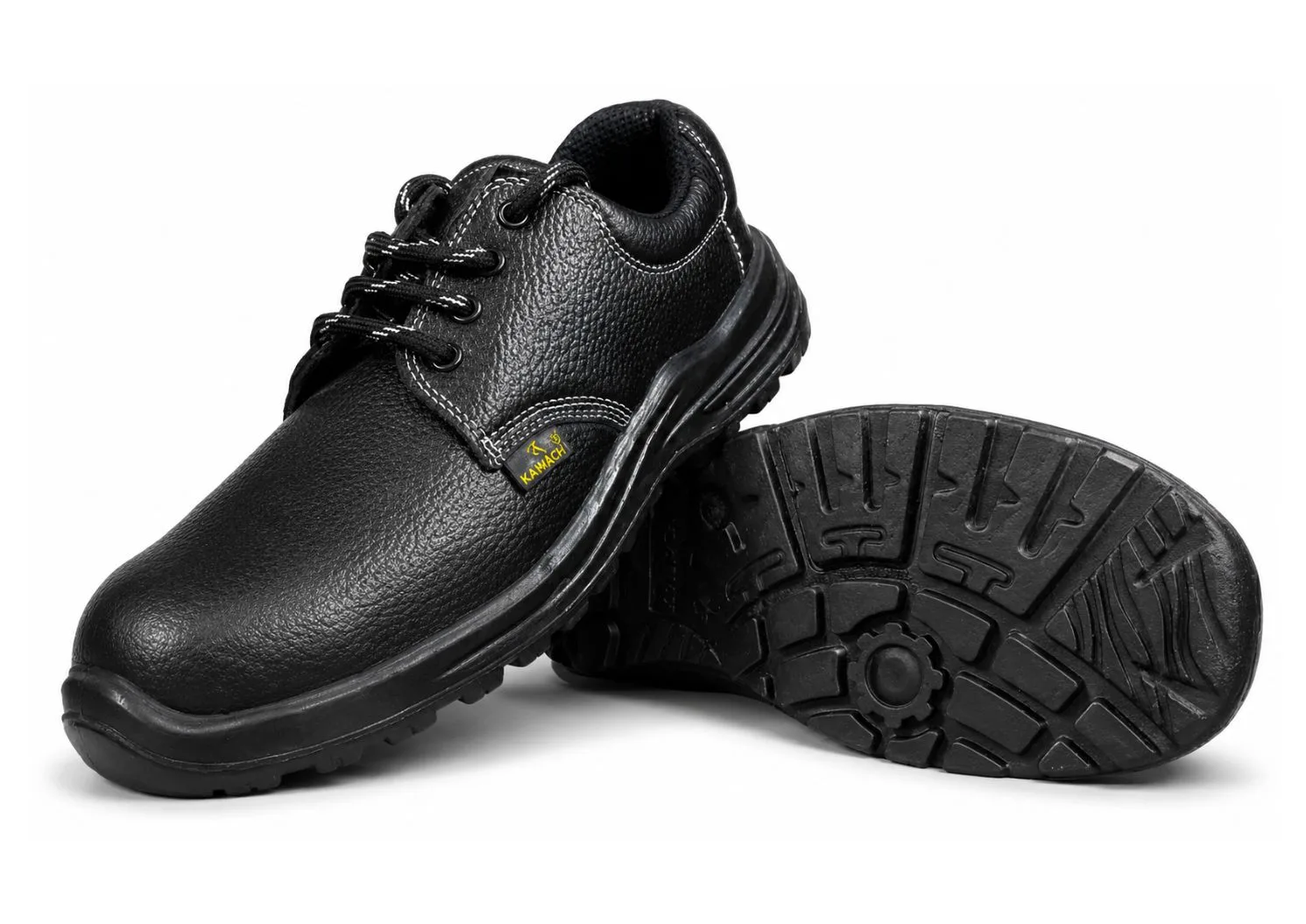
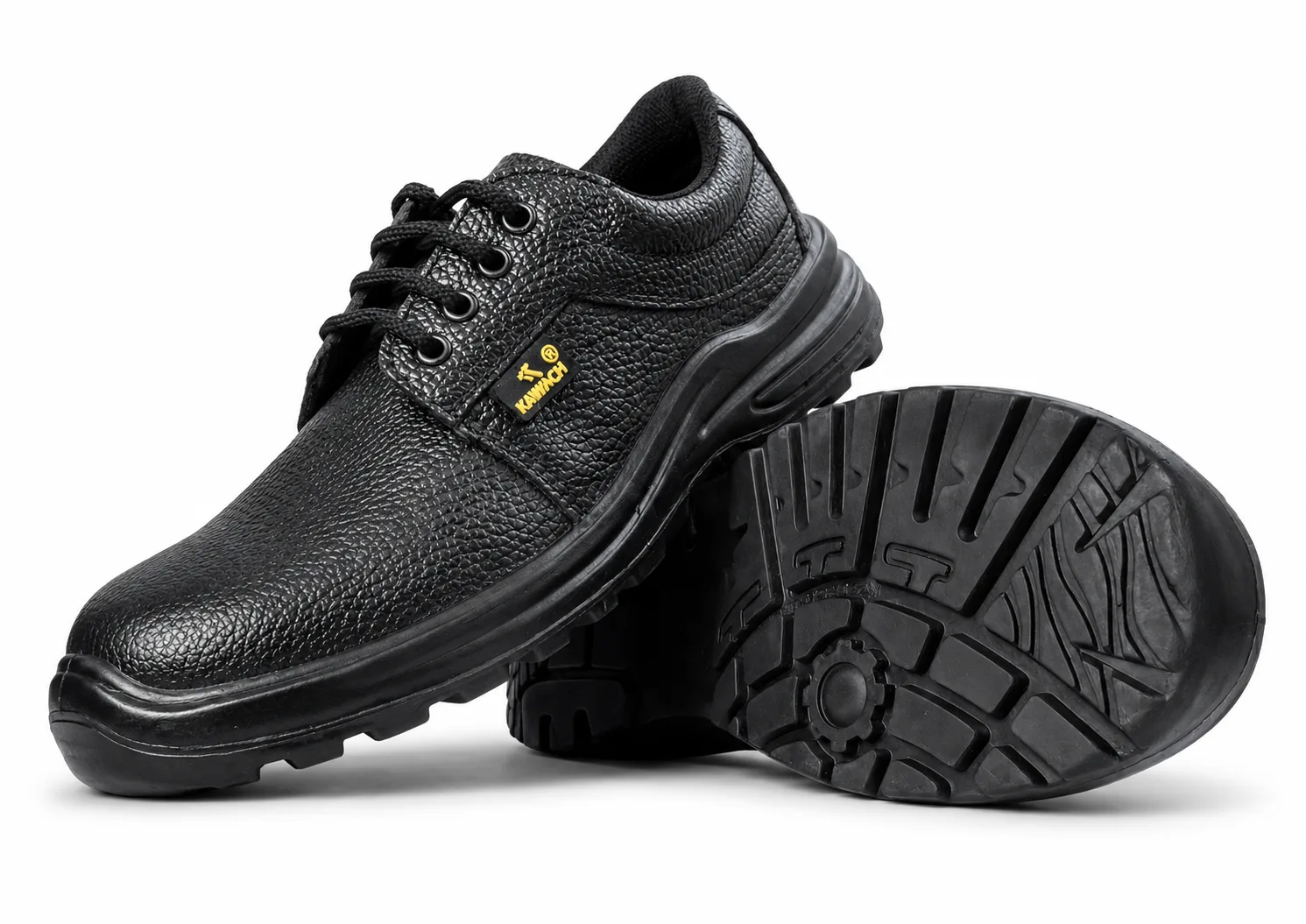
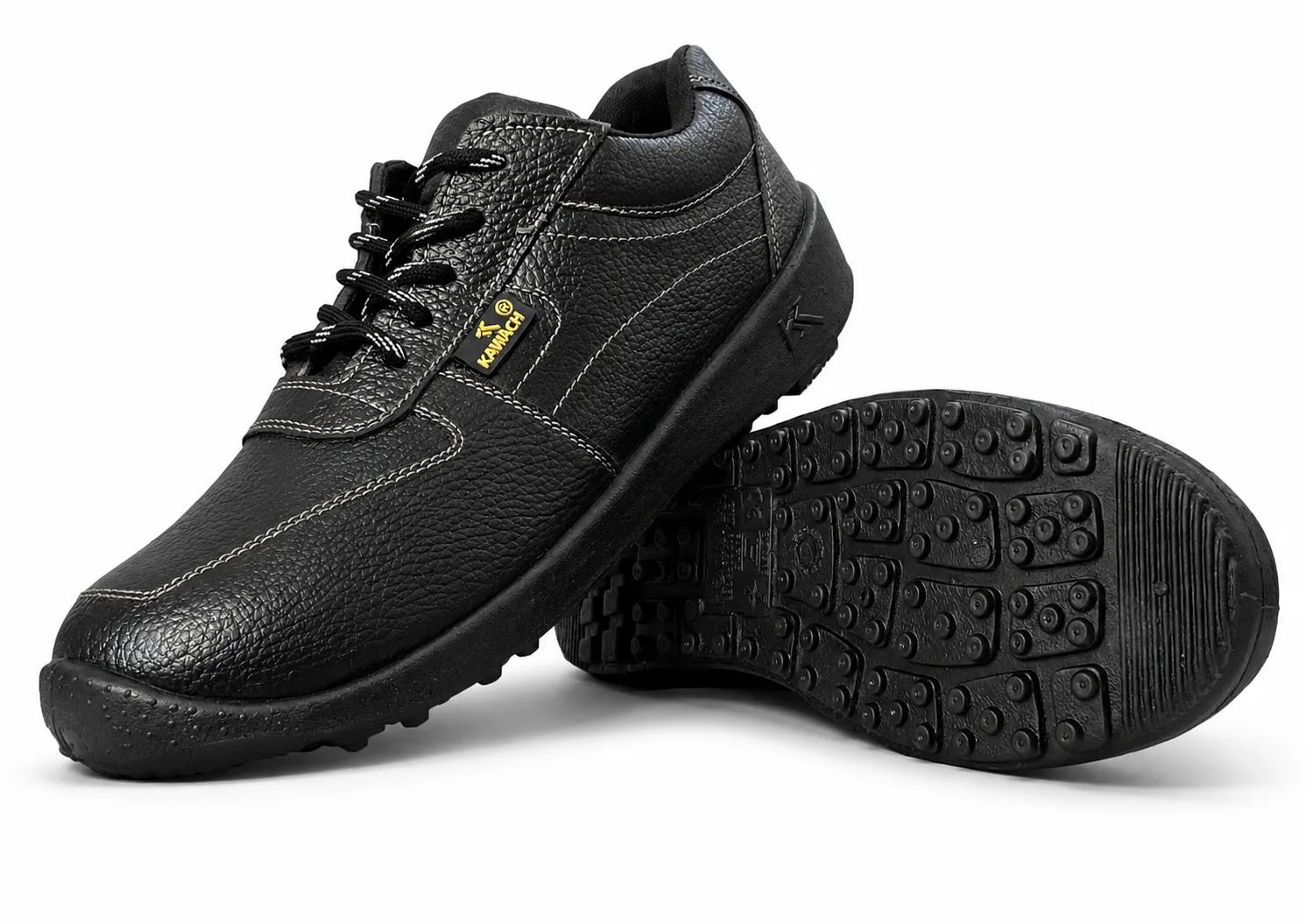
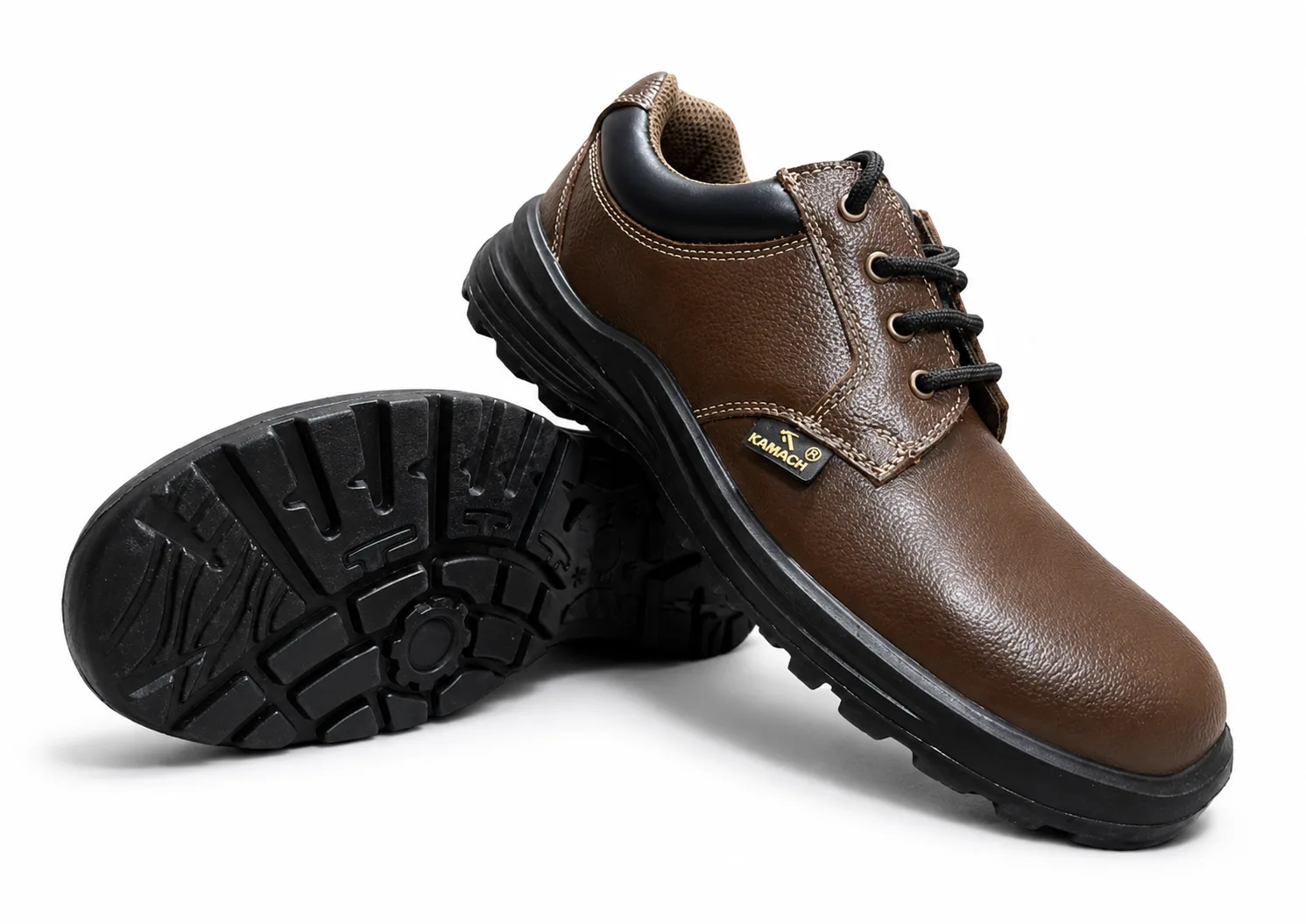
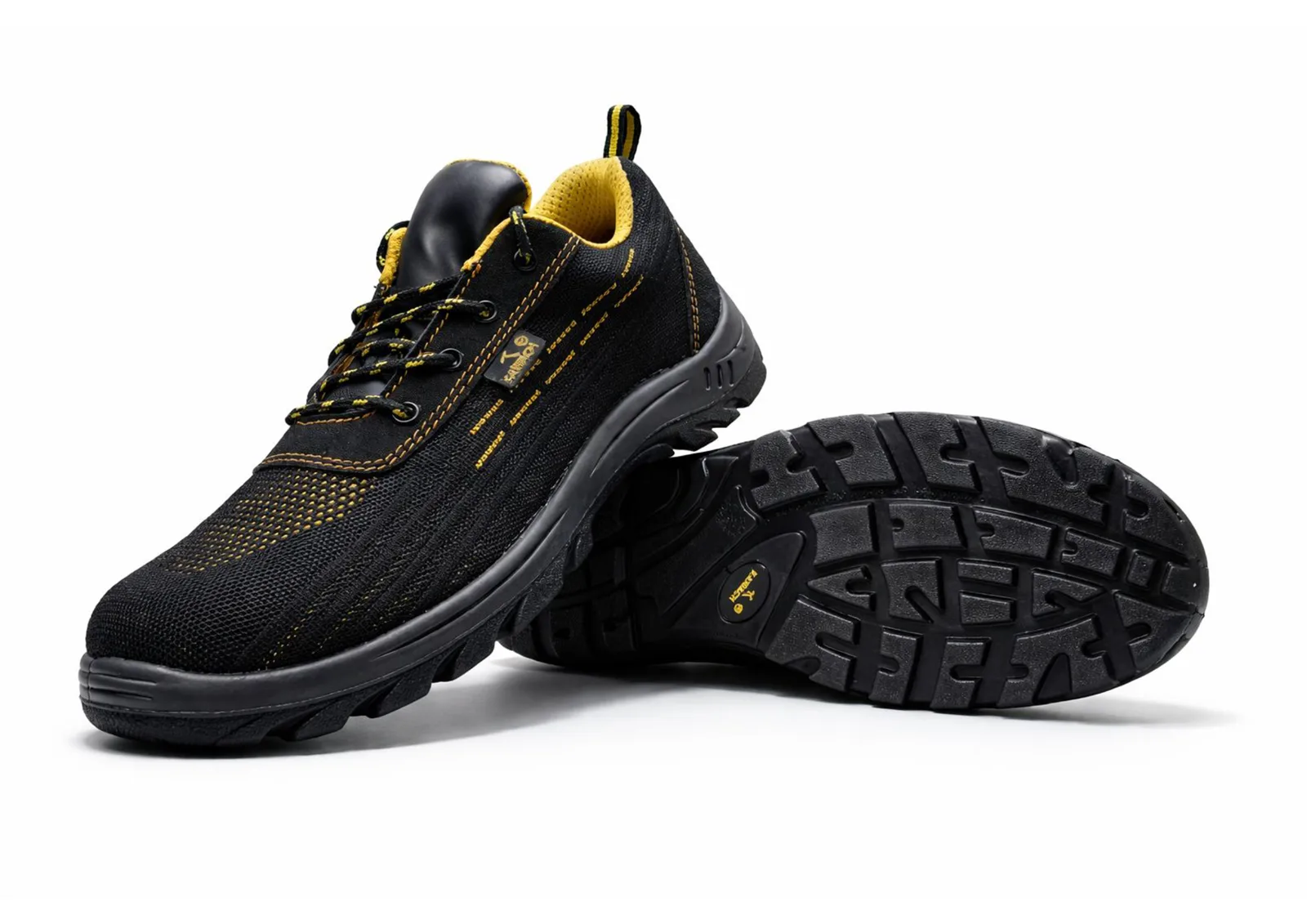
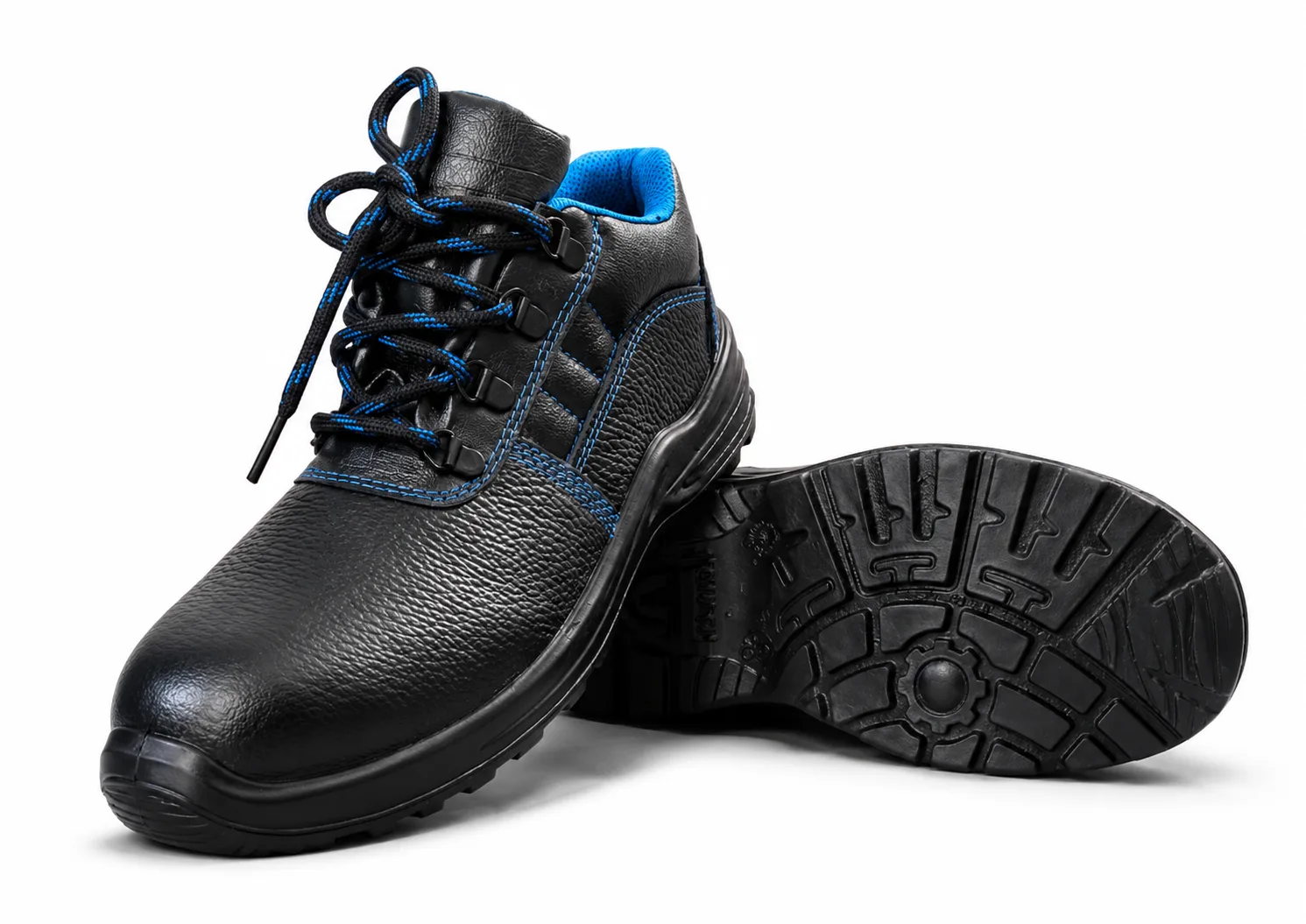
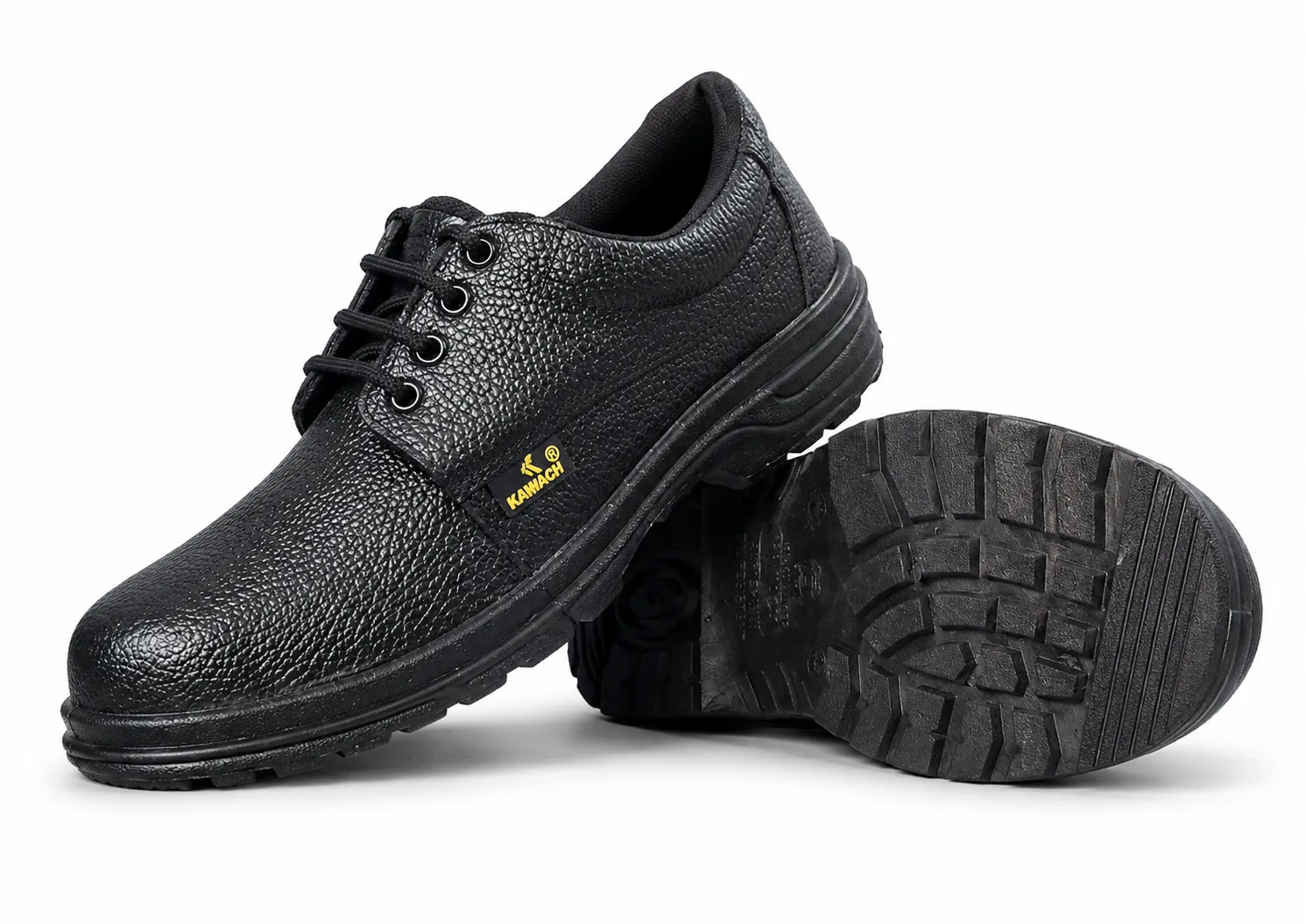
Kawach Safe Gears India Pvt. Ltd. K-111 is a steel-toe industrial safety-shoe model with a specified 200J protective toe cap, full-grain ALBAMA leather upper and single-density PU sole. It is designed for buyers evaluating protective footwear for everyday industrial tasks where impact protection, material construction, fit and worksite conditions matter.
The right footwear choice begins with a workplace risk assessment. Workers may face dropped components, oily floors, moisture, continuous standing or walking, and sharp objects. These hazards do not all require the same footwear features. K-111’s documented specifications should be matched to the task rather than treated as universal protection.
What Does a 200J Steel Toe Rating Mean?
K-111 incorporates a steel toe cap specified for 200 joules (200J) of impact energy. In the
safety-footwear context, 200J describes an impact energy level used during prescribed laboratory testing. A correctly selected protective toe cap can help reduce the severity of certain accidental toe-impact incidents involving handled materials, tools or equipment parts.
A 200J rating does not mean that the shoe can withstand any weight or all kinds of falling objects, and it should not be interpreted as a 200 kg load rating. Depending on the workplace, buyers may also need separately documented compression, puncture, metatarsal or other protective features. The actual classification and markings of the K-111 model must be checked against the current product documentation.
Why Is the Upper Made from Full-Grain ALBAMA Leather?
The K-111 upper is described as full-grain ALBAMA leather, with a stated thickness of 1.8-2.0 mm. It forms the shoe’s outer structure and is a practical material for selected industrial workwear applications. The thickness is a product specification rather than a guarantee of service life.
Leather condition depends on exposure to abrasive surfaces, dirt, water, cleaning agents and daily maintenance. Workers should inspect and care for the leather according to the product’s instructions. The K-111 listing also describes a water-repellent upper. This does not mean the footwear is fully waterproof or suitable for prolonged immersion.
What Is a Single-Density PU Sole?
K-111 is listed with a single-density polyurethane (PU) sole. The outsole is the surface that contacts the ground, so its condition and performance influence how the shoe behaves on different floors. PU can provide flexibility and cushioning depending on the formulation and construction, but no sole material should be assessed in isolation.
For buyers who need an exact manufacturing-process specification, the approved sole-attachment method should be confirmed from the latest K-111 technical datasheet.
Oil Resistance and Slip Resistance Are Different
K-111 lists an oil-resistant sole and slip resistance. Oil resistance concerns how the outsole material responds to specified exposure during testing. Slip resistance concerns traction on a tested surface under particular conditions.
An oil-resistant outsole is not automatically slip-proof on an oily factory floor. Surface contamination, tread wear, flooring material, cleaning and walking conditions all affect slip risk. Employers should combine properly selected footwear with effective floor housekeeping and spill management.
What Does Chemical Resistance Cover?
The published K-111 feature list includes chemical resistance, but does not identify a full list of chemicals, concentrations or contact times. Different substances affect leather, adhesives and outsole materials in different ways.
If workers may contact degreasers, solvents, acids, cleaning products or process chemicals, buyers should identify the substance and request the applicable compatibility or test documentation. A broad chemical-resistance statement should not be taken as protection against all hazardous chemicals or prolonged immersion.
Antistatic Does Not Mean Protection from Electric Shock
K-111 is listed as having antistatic properties. Antistatic footwear is intended to allow controlled dissipation of static charge when the required conditions are met. This may be relevant in work environments that identify static electricity as a specific hazard.
A steel toe cap does not itself provide electrical insulation. Antistatic footwear should not be treated as electrically insulating footwear. Electrical maintenance, live electrical hazards and special
ESD-control work require the exact tested electrical properties appropriate to those tasks.
Is K-111 Waterproof?
The upper is described as water repellent, which refers to resistance to limited moisture exposure. It does not establish waterproof performance of the entire shoe during prolonged rain, pooled water or immersion. Where water resistance is a mandatory PPE requirement, the relevant footwear classification and test evidence should be confirmed.
Built for Comfort During Routine Shifts
K-111 includes a moulded EVA insole with mesh, mesh lining and PU foam-padded collar and tongue. These features are intended to support cushioning, internal feel and everyday wear. The specification also lists high energy absorption, but no specific measured result is supplied in the public product table.
Comfort varies with foot shape, fit, sock thickness, activity, floor surface and length of the shift. For a team order, a representative fitting trial is a practical way to assess the sizing before buying large quantities.
When Should a Buyer Choose a Different Safety Shoe?
K-111 is not automatically suitable for every hazard. The available public specifications do not establish a tested puncture-resistant midsole, electrical insulation, specialist heat resistance, full waterproofing or a specific chemical-protection classification.
Where workers face sharp metal debris, electrical shock, hot contact, prolonged immersion or concentrated chemical exposure, select footwear with the relevant documented protective features. Ask for the exact test evidence rather than inferring protection from the product name or appearance.
K-111 Safety Shoes vs Ordinary Work Shoes
Ordinary work shoes may provide everyday foot coverage but do not necessarily include certified protective-toe construction. K-111 is designed as industrial protective footwear with a 200J steel toe cap and other listed features. The required protection for a particular job must nevertheless be confirmed with the product’s actual conformity documents and worksite assessment.
Choosing the Right K-111 Safety Shoes for Your Workplace
Before approving the model, the purchasing and safety teams should ask:
- Does the job require a tested 200J toe cap and a particular footwear classification?
- Are sharp objects present underfoot, and is puncture resistance required?
- Are floors wet, oily, dusty or otherwise slip-prone?
- Is there exposure to a named chemical, and is the resistance test relevant to it?
- Are electrical, heat or specialist static-control requirements present?
- Is the low-cut footwear form appropriate for the activity?
- Does the model fit the workers correctly in their usual work socks?
- Are current model-specific marking, certification and test documents available?
The K-111 listing references IS 15298 (Part 2), the Indian standard for safety footwear. The Bureau of Indian Standards revised the standard to IS 15298 (Part 2):2024, with implementation guidance effective in January 2025. This standards reference is not, by itself, evidence that a specific K-111 production variant currently holds a valid BIS licence.
BIS Product Certification
For a compliance-driven purchase, verify the applicable BIS licence, exact model or design in scope, footwear classification, marking and current supporting documents. Request the latest K-111-specific information before representing the supplied footwear as certified under a particular edition of the standard.
NABL Laboratory Testing
NABL accreditation concerns the competence of laboratories for particular testing activities. Where a NABL-accredited laboratory report is available, review which model, sample and safety properties it actually covers. A laboratory report is not automatically interchangeable with a BIS product licence.
ISO 9001 Quality Management
ISO 9001 certification relates to a quality-management system within a specified scope. It is not a stand-alone product safety certificate and does not prove that K-111 meets every claimed performance requirement.
What Documentation Can Industrial Buyers Request?
- Current technical datasheet and product marking information
- Applicable BIS licence and product scope
- Safety footwear classification under the relevant standard
- Toe-cap impact and compression performance where required
- Outsole oil and slip resistance test information
- Antistatic or other electrical-property test information where required
- Water, chemical and energy-absorption test evidence for relevant use cases
- Official size chart and available-size confirmation
For project and tender enquiries, contact Kawach Safe Gears India Pvt. Ltd. and specify the exact safety documents your organisation needs.
How to Choose the Right Size
The listed K-111 size range is 5-12. Measure both feet while standing, consult the official Kawach size chart, try the shoe with normal work socks and check both toe clearance and heel hold. Safety footwear should not press the toes against the protective toe cap. Walk briefly during fitting to identify rubbing or pressure points.
For workforce purchasing, send a size-wise quantity breakdown. Ask for confirmation of sizing units and availability rather than assuming conversion between brands.
Daily Care of Full-Grain Leather Safety Shoes
Remove dust and debris after work, clean the leather with methods suitable for its finish and allow damp footwear to dry naturally. Inspect stitching, laces, eyelets, the PU sole and the tread for damage or excessive wear. Follow the manufacturer-supplied care guidance and avoid aggressive cleaning chemicals unless they are approved for the materials.
When to Replace K-111 Safety Shoes
Withdraw footwear from use if there is significant upper damage, outsole separation, severely worn tread, visible toe-area deformation, chemical or heat damage, or a loss of secure fit. A significant toe impact may compromise protection even when damage is not obvious. There is no universal replacement interval for every worker; use condition, site exposure and manufacturer guidance to decide.
How Much Do K-111 Safety Shoes Cost?
For an accurate current price, request a quotation from Kawach Safe Gears India Pvt. Ltd. The commercial offer may depend on the quantity, size-wise requirements, delivery location and purchasing terms. A verified fixed online price for this model is not published in the product information reviewed here.
Buying K-111 Safety Shoes for a Workforce
Factories, contractors, engineering teams and industrial procurement departments can send the following information to receive an informed response:
- Company or organisation name and contact details
- Total number of pairs required
- Number of pairs in each shoe size
- Delivery city and state
- Worksite application and key footwear hazards
- Required compliance, testing or tender documents
- Expected purchase and delivery schedule
Please confirm current inventory, minimum order quantity, dispatch dates, freight, taxes and payment terms directly with the sales team.
K-111 Safety Shoes Supplier Enquiries Across India
Kawach Safe Gears India Pvt. Ltd.
welcomes enquiries for K-111 industrial safety shoes from businesses in Delhi-NCR and across India. Share your location so availability and delivery arrangements can be confirmed for the intended order.
Request a K-111 quotation: Contact Kawach, call +91 97118 70298 or email info@kawach.org.
A Practical Approach from Kawach Safe Gears India Pvt. Ltd.
At Kawach Safe Gears India Pvt. Ltd., we believe that selecting industrial protective footwear requires more than comparing a product name, appearance or price. The correct shoe needs to match the actual hazards workers face, fit correctly and be supported by the appropriate technical information.
Our approach to product guidance focuses on the details that help industrial customers make informed decisions: protective-toe ratings, upper material, outsole properties, comfort components, available sizes and the applicable documentation. Workers in construction, engineering, factory operations and maintenance may have different footwear requirements even when they work within the same organisation.
For the K-111 model, we have explained the published 200J steel toe rating, full-grain ALBAMA leather upper, PU sole and comfort-related construction. We also explain the limitations of broad statements such as antistatic, water repellent and chemical resistant, and we encourage customers to confirm any performance level required by their site.
We have prepared this page using our practical understanding of industrial safety-footwear requirements to help workers, EHS professionals, contractors and procurement teams make better-informed decisions. This page is product guidance, not a substitute for workplace risk assessment or current model-specific conformity documentation.
For current specifications, size information and bulk enquiries, please contact our team. Kawach Safe Gears India Pvt. Ltd.
Phone: +91 97118 70298 | Email: info@kawach.org
Enquire About K-111 Safety Shoes