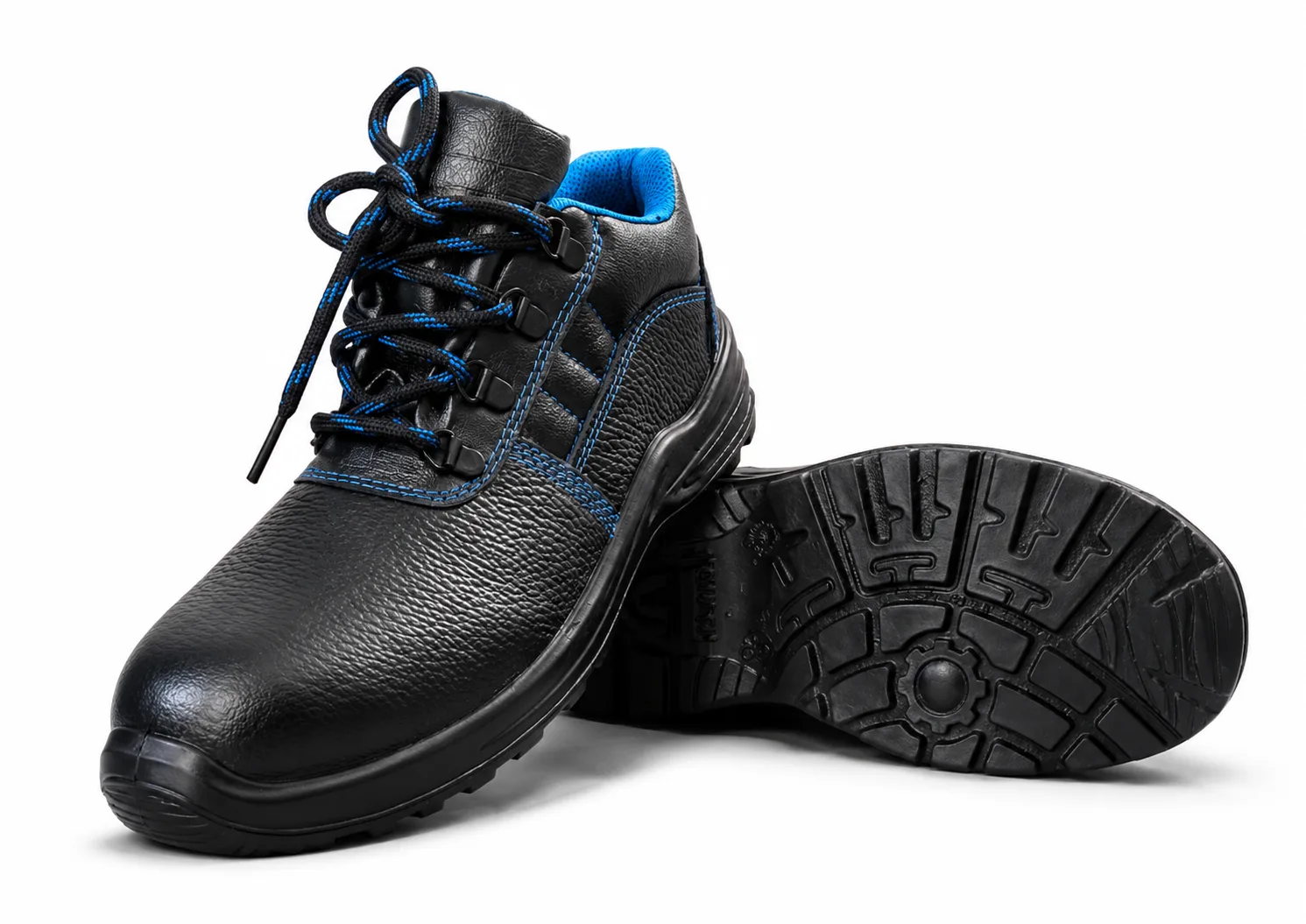
Force Safety Shoes Product Details
Force Safety Shoes - Detailed Guide to Industrial Foot Protection
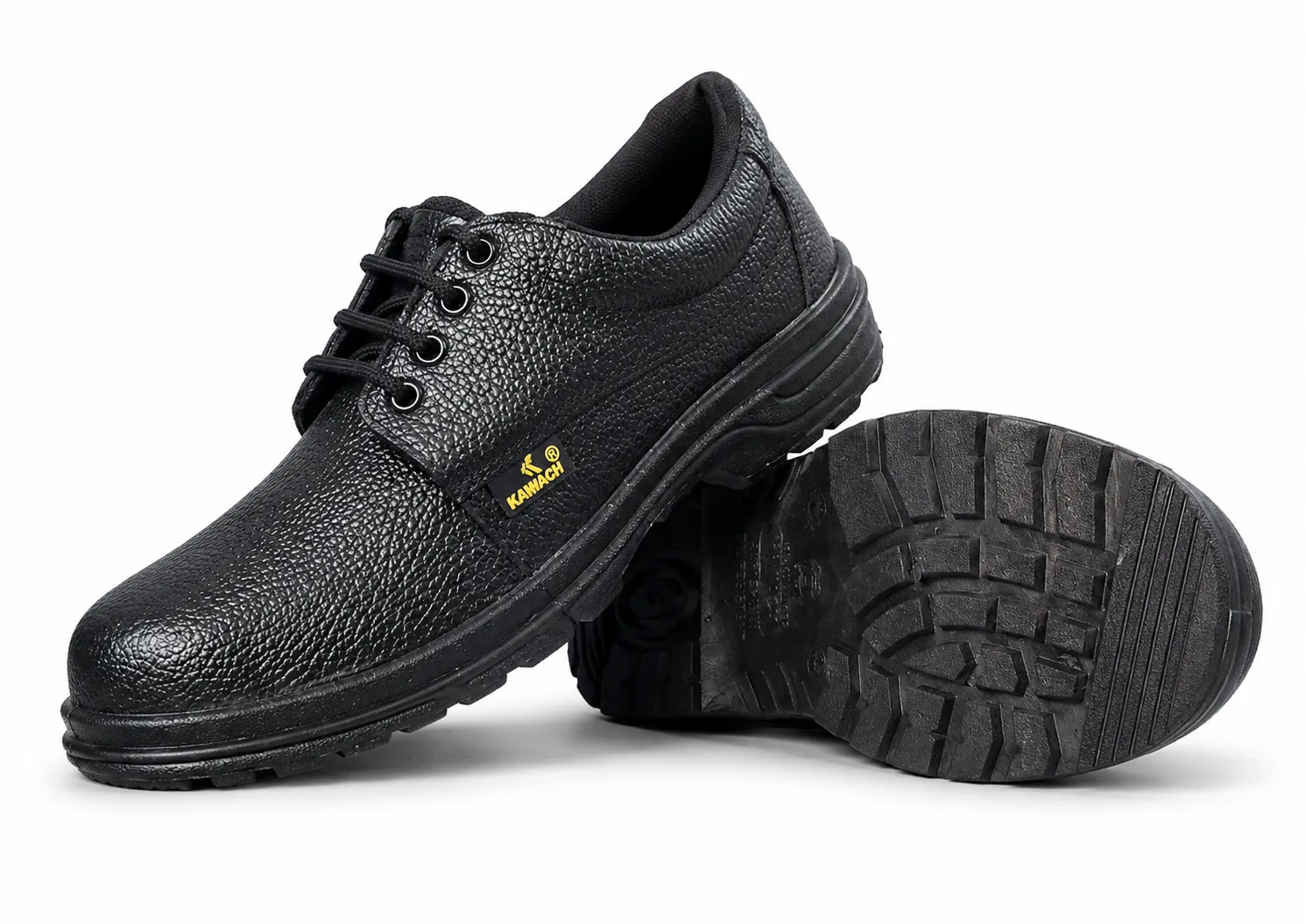
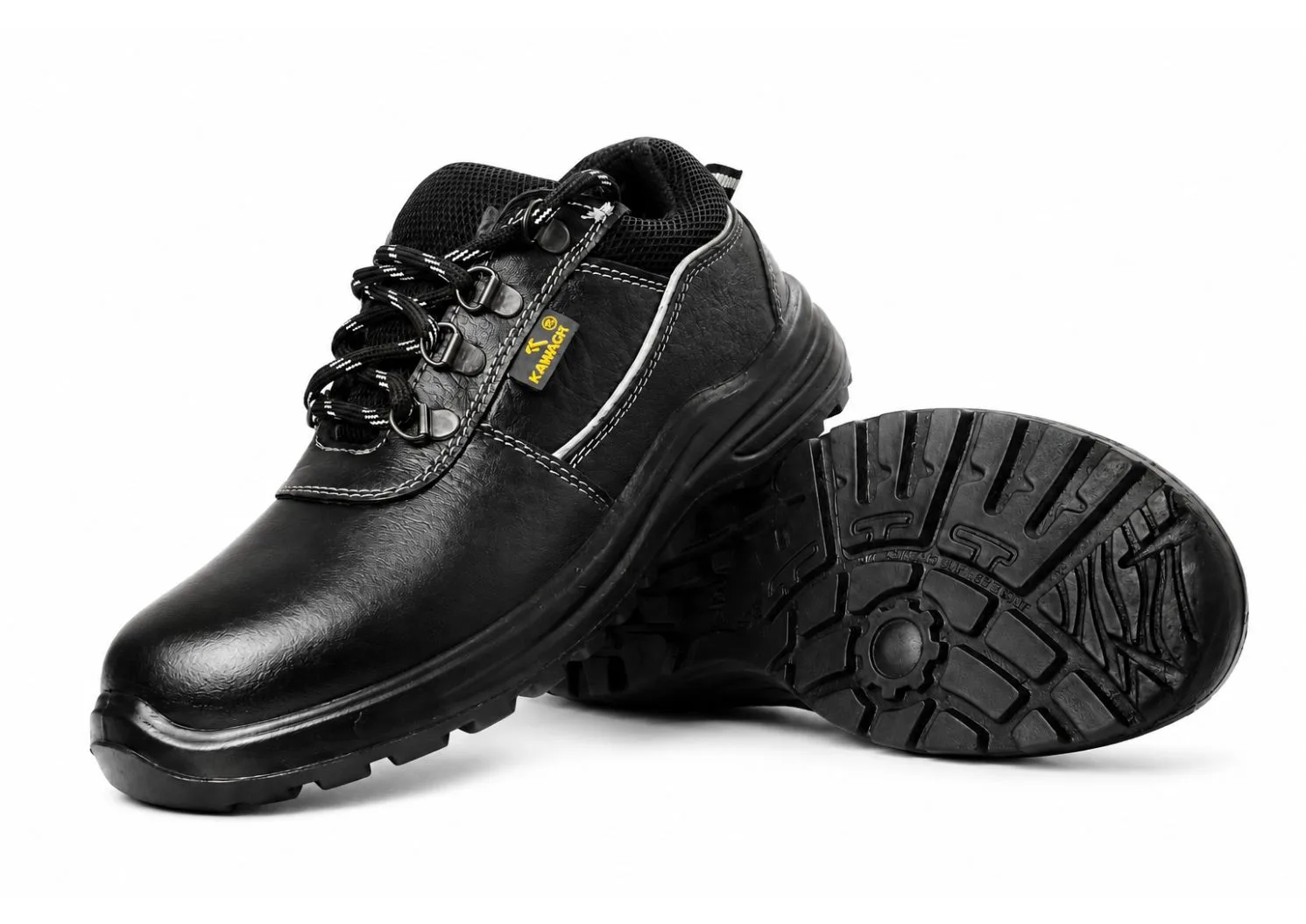
Industrial employees work in environments where machinery, handled materials, flooring conditions and routine workplace movement create different foot hazards. A factory worker may need protection against dropped components; a construction employee may also face dust, abrasive surfaces and uneven ground. Force combines a protective steel toe, a leather upper and a PVC outsole with comfort-focused interior materials. Its documented features should be compared with the hazards of the individual job.
What Does 200J Steel Toe Protection Mean?
The protective steel toe cap is an important feature of Force Safety Shoes. It is specified for 200 joules of impact energy (200J). Toe caps are intended to help reduce the severity of certain injuries caused by objects accidentally striking the front of the foot. Such risks may arise when handling tools, materials or equipment components in factories, warehouses and construction operations.
A 200J rating refers to the impact energy used in a prescribed laboratory test. It is not a promise that a shoe prevents every injury, and it should not be described as supporting a 200 kg load. Toe-impact protection, compression resistance and underfoot penetration protection are different safety considerations. Employers must establish which ones are required for each role.
Split-Dye Cross-Leather Upper (1.8-2.0 mm)
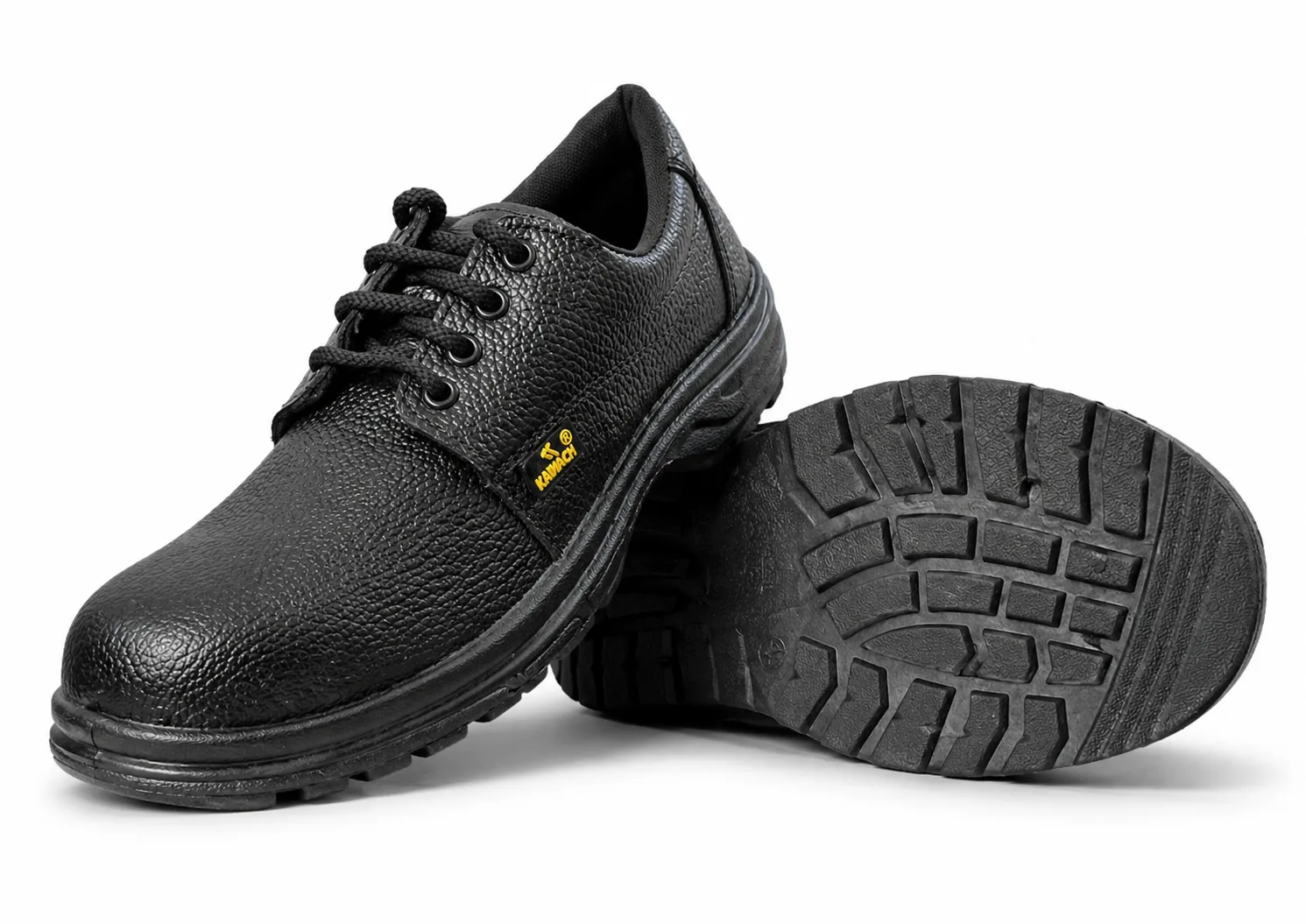
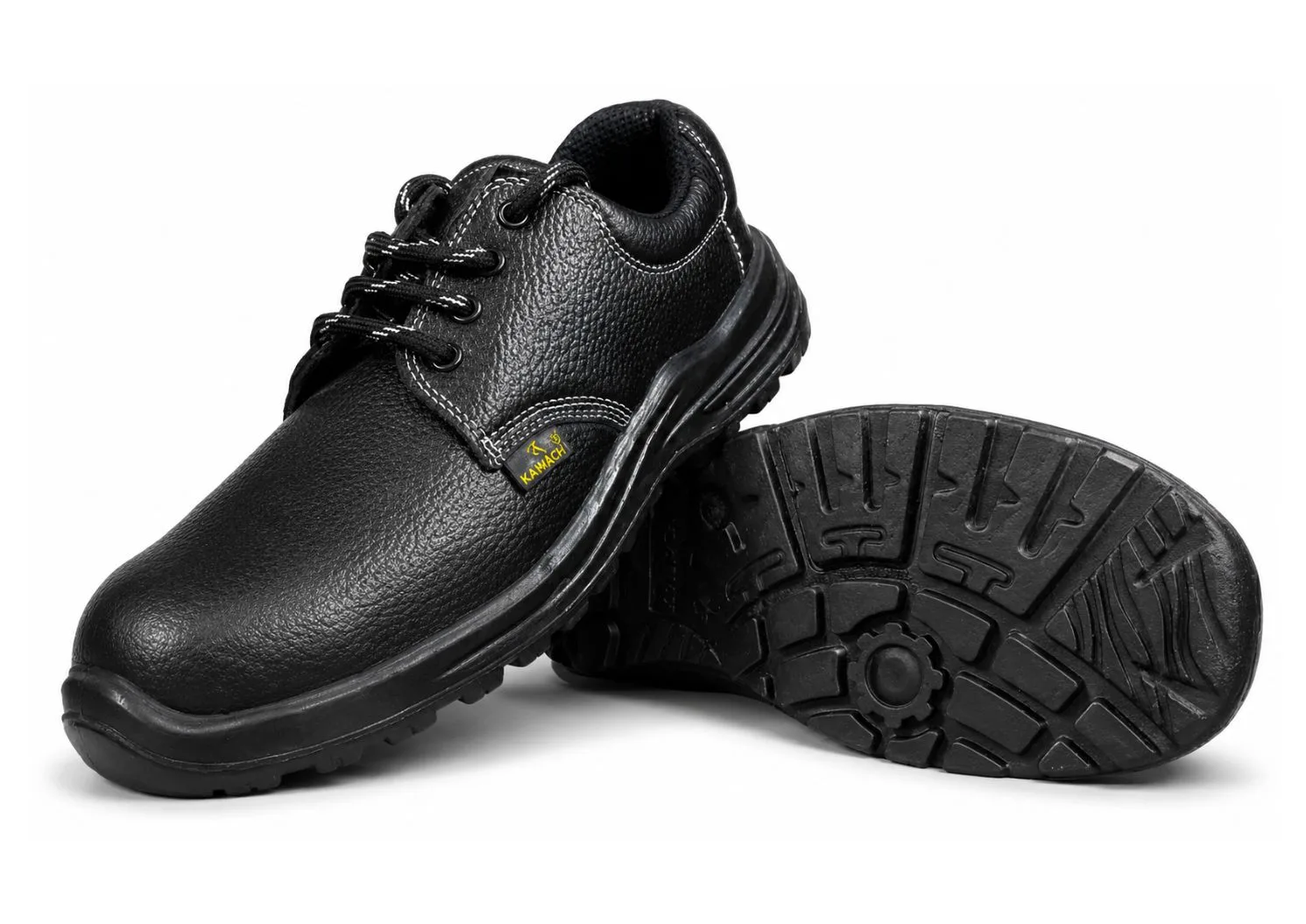
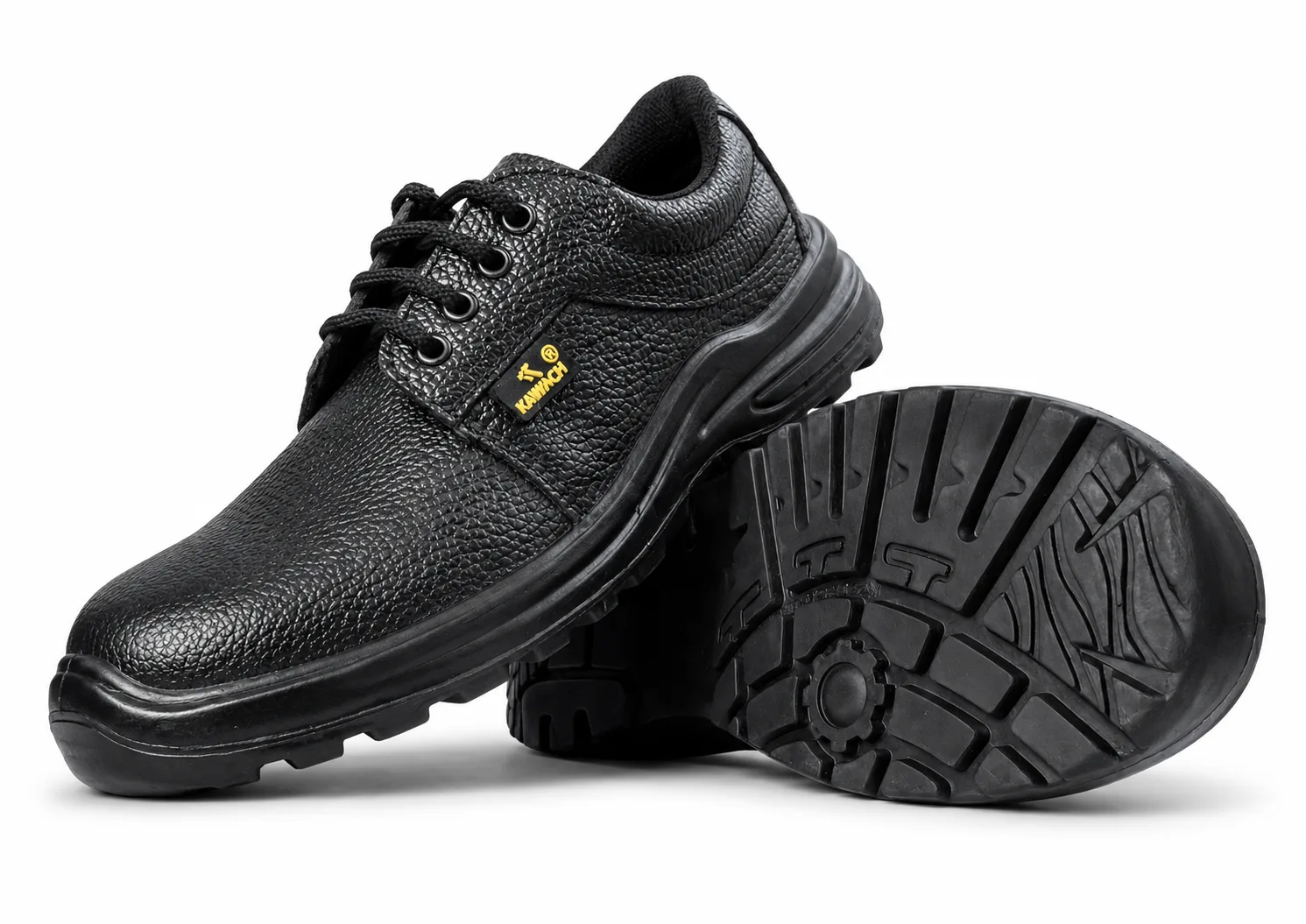
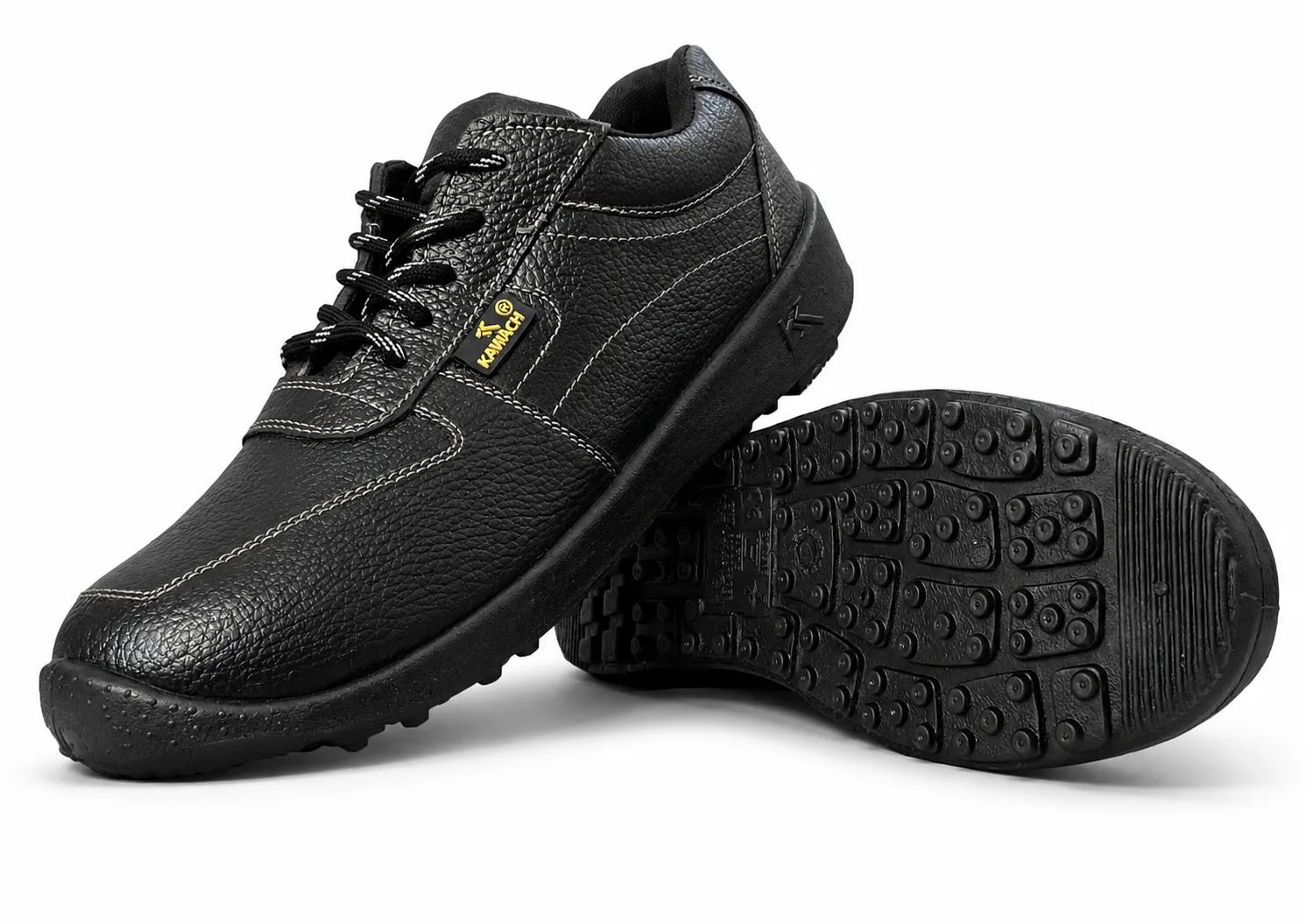
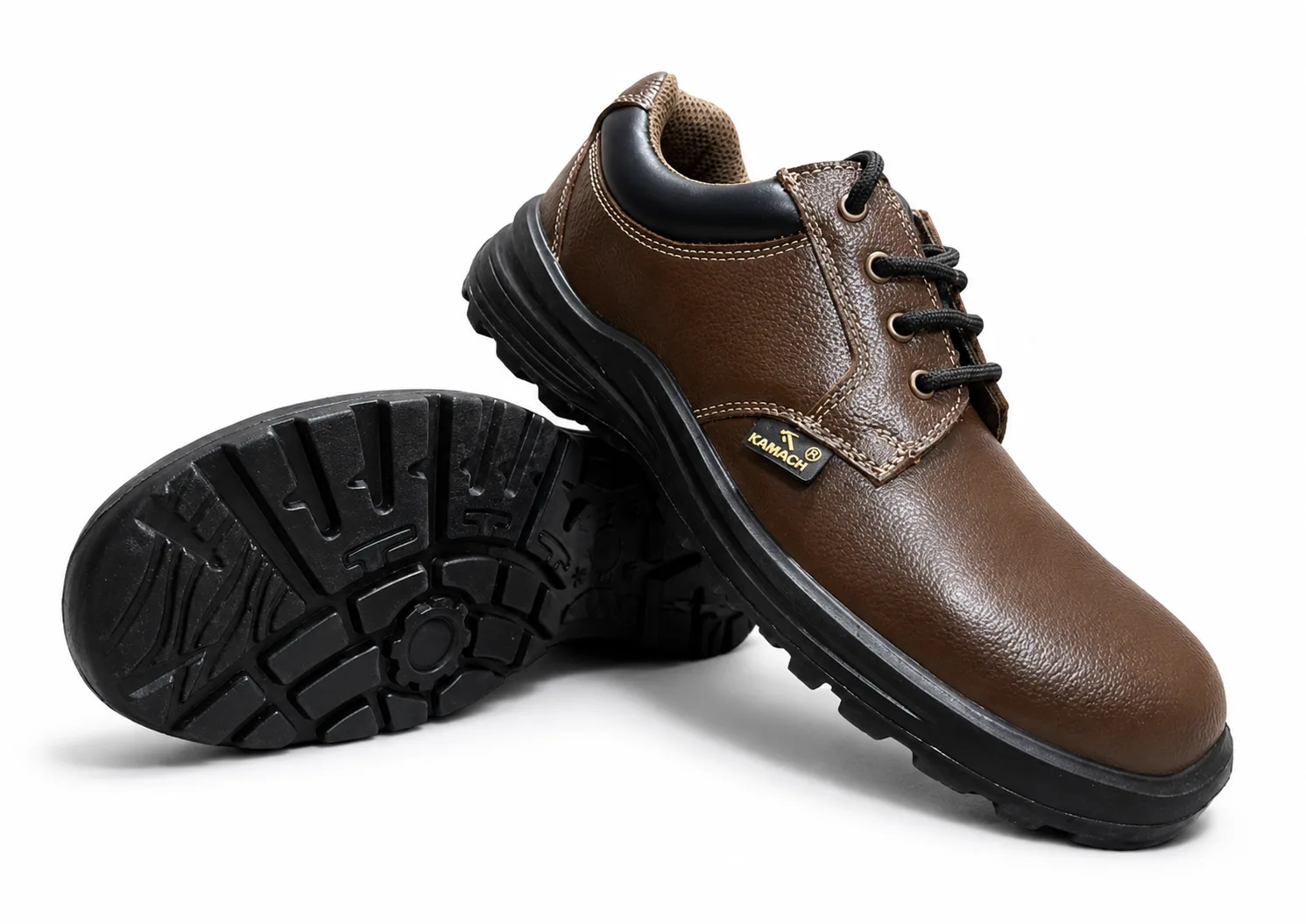
Force uses black split-dye cross leather with a stated thickness of 1.8-2.0 mm. The upper forms the outside structure of the shoe and contributes to fit and daily durability. Leather can be a practical material for selected industrial environments involving repeated movement, dust and routine contact with surrounding surfaces.
The upper is also listed as water repellent. This does not establish that the complete shoe is waterproof, or that it is suitable for prolonged standing in water. Material life and performance depend on construction, exposure and maintenance.
Why Does the Single-Density PVC Sole Matter?
A defining characteristic of Force is its single-density polyvinyl chloride (PVC) outsole. PVC is used in industrial shoes, and suitable formulations can provide durability and selected resistance properties. The outsole forms the primary contact surface between shoes and the working surface.
Its performance is influenced by material formulation, tread design, floor condition, contaminants, temperature and wear. The live Force page uses different descriptions for the method used to attach the sole. The term *single-density PVC outsole* is therefore used here until the exact attachment method is approved by the manufacturing team.
Oil Resistance Is Different from Slip Resistance
Force lists oil resistance and slip resistance among its features, but they address different questions. Oil resistance concerns how sole material responds to specified oil exposure. Slip resistance concerns traction under defined test conditions. An oil-resistant sole is not automatically slip-proof on an oil-contaminated floor.
The worksite’s floor type, cleaning procedures, contamination and outsole condition remain important. Where a specified slip-performance level is required, check the relevant model-specific test results rather than assuming protection on every surface.
Chemical-Resistant Sole Features
The product information lists chemical resistance. However, the effect of a chemical on shoes depends on the particular substance, concentration, duration of contact and exposed area. Cleaning solutions, lubricants, solvents, fuels and corrosive substances do not present the same hazard.
A general chemical-resistance statement should never be treated as universal protection. For chemical-risk work, share the actual substance and work conditions with the manufacturer and obtain relevant test or compatibility information. Specialist shoes may be necessary for substantial chemical splash or immersion hazards.
Antistatic Protection and Electrical Safety
Force lists antistatic properties intended to support controlled static dissipation under specified conditions. Antistatic shoes is not the same as electrically insulating shoes. The steel toe cap itself does not establish electrical-shock protection.
For electrical maintenance, power-related work or other tasks involving electrical shock hazards, select shoes with the specifically required and tested electrical properties. Do not use a general steel-toe or antistatic claim as evidence of electrical insulation.
Comfort for Daily Industrial Shifts
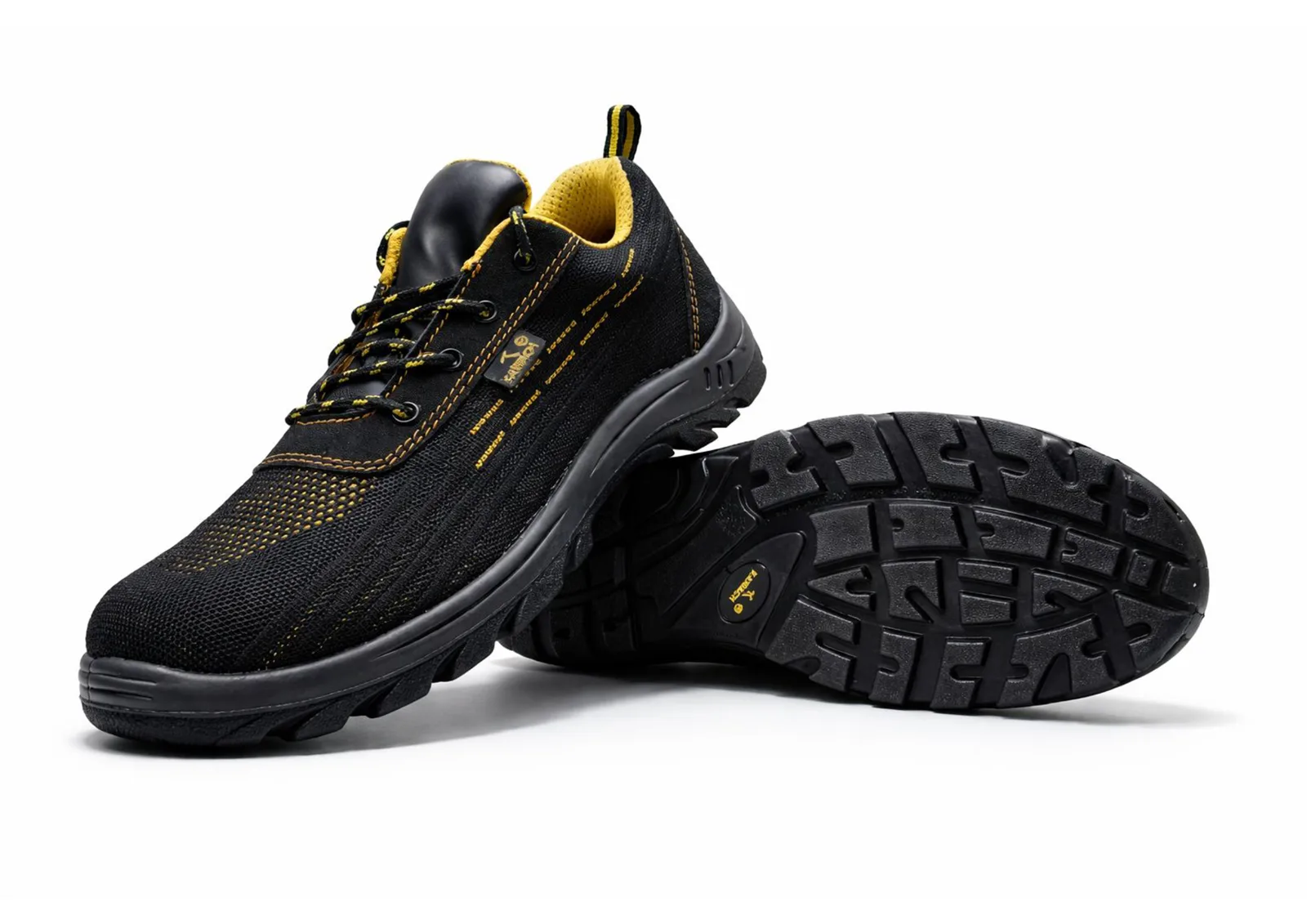
Force includes an EVA sheet insole, mesh lining and PU foam padding around the collar and tongue. These components are intended to contribute to comfort during routine standing and walking. The specification also lists high energy absorption, but any required energy-absorption performance should be checked against supporting testing.
Wearer comfort depends on shoe fit, foot shape, socks, workload and working surfaces. For an entire workforce, sample fitting with the socks workers normally use can help identify potential problems before large-scale ordering.
Force PVC Sole vs PU Sole Safety Shoes
Force uses PVC, while other shoes models may use polyurethane (PU). Neither material is universally better. Flexibility, cushioning, wear and resistance properties depend on the formulation and complete shoes design. Purchasers should compare tested performance and worksite needs rather than assuming one sole material is always safer.
Selection Factor | Force PVC Outsole | PU Outsole Safety Shoes |
Main material | Polyvinyl chloride (PVC) | Polyurethane (PU) |
Outsole construction | Force lists single-density PVC | Depends on model |
Cushioning and flexibility | Depends on formulation and design | Depends on formulation and design |
Oil / chemical performance | Listed for Force; verify test scope | Depends on product and testing |
Slip performance | Listed for Force; verify test scope | Depends on product and testing |
Correct choice | Match tested model to worksite | Match tested model to worksite |
For other constructions and models, explore the Kawach Safety Shoes collection.
Force Safety Shoes vs Ordinary Work Shoes
Ordinary work shoes are not necessarily manufactured or tested as industrial protective shoes. Force includes a 200J steel toe cap together with an industrial leather upper and PVC sole. A rugged appearance or thick sole alone does not establish that ordinary shoes meet workplace PPE requirements. Always select shoes by documented protection and the worksite risk assessment.
Is Force the Right Safety Shoe for Your Workplace?
Before purchasing Force Safety Shoes for employees, safety personnel and procurement teams should identify the actual hazards and check whether this model’s documented properties meet the necessary requirements.
Workplace Requirement | Force Feature | What Buyers Should Confirm |
Falling tools and materials | 200J steel toe | Required toe protection and actual test evidence |
Regular industrial wear | Leather upper | Suitability for specific working conditions |
Standing and walking | EVA insole / PVC outsole | Correct size and comfort |
Oil exposure | Listed oil resistance | Oil type and actual test conditions |
Slippery flooring | Listed slip resistance | Floor-specific traction performance |
Chemical exposure | Listed chemical resistance | Specific chemical compatibility |
Static-charge management | Antistatic feature | Applicable test classification |
Limited moisture | Water-repellent upper | Whether fully waterproof shoes is required |
Sharp debris underfoot | Puncture protection not established publicly | Whether a tested puncture-resistant insert is required |
Electrical shock hazards | Electrical insulation not established | Specialist electrical protective shoes |
Hot surfaces | Heat-resistance performance not established | Appropriate tested heat protection |
For EHS and procurement teams: If a required safety feature is not documented, do not assume that Force includes it. Ask for supporting evidence or evaluate another model.
How to Maintain Force Leather Safety Shoes
Regular cleaning and inspection are important for protective shoes. Remove accumulated dirt and dust, clean the leather by a method suitable for its finish, and let damp shoes dry naturally. Avoid excessive direct heat. Keep the outsole tread free of embedded debris and follow the care instructions supplied with the product.
Daily Inspection Checklist
- Inspect laces, eyelets and stitching for
- Check for cracks, tears, abrasion or heavy deterioration of the
- Look for cracks, excessive tread wear or separation at the
- Check for deformation or damage near the protective toe
- Check for chemical or heat damage, and ensure the shoes still fits
When Should Force Safety Shoes Be Replaced?
Withdraw shoes from use when its protection may have been compromised. Warning signs can include serious impact to the toe area, excessive tread wear, sole separation, substantial upper damage, chemical degradation or loss of secure fit. A significant toe impact may require replacement even if external damage is limited.
There is no universal replacement period suitable for every worker. The shoes’s condition, use intensity, workplace exposure and manufacturer’s instructions should guide the decision.
Force Safety Shoes - Safety Standards, Testing and Quality Documentation
Which Indian Standard Is Referenced?
The published Force product details reference IS 15298 (Part 2), the Indian standard for safety shoes. BIS revised IS 15298 (Part 2):2016 to IS 15298 (Part 2):2024. Buyers should verify the current model-specific licence, applicable safety classification, product marking and relevant test reports before relying on a certification claim.
BIS Certification, NABL Testing and ISO 9001 Are Different
BIS product certification concerns conformity with the applicable Indian standard under the relevant certification scheme and licence scope. A reference to a standard or general certification graphic does not independently establish current certification of the exact Force model.
NABL accreditation concerns a laboratory’s competence for specified tests in its accredited scope. A laboratory report should be checked for the tested sample, test method and results, and is not automatically equivalent to a BIS product licence.
ISO 9001 certification concerns a quality management system within its certified scope. It does not independently prove that a particular shoes model has passed every applicable safety test.
Documents to Request for Industrial Procurement
- Current, approved Force technical datasheet and product
- Applicable BIS licence details and current standard
- Exact shoes safety classification and model
- Toe impact and compression performance
- Relevant tested slip, oil, antistatic and energy-absorption
- Any water or chemical resistance evidence required for the
- Official size chart and manufacturer care
For safety audits, tenders and large workforce orders, buyers should verify documents that apply to the exact shoes supplied.
Force Safety Shoes Price in India and Bulk Orders
What Is the Price of Force Safety Shoes?
The current Force Safety Shoes price should be confirmed through a quotation from Kawach Safe Gears India Pvt. Ltd. The commercial offer may depend on quantity, size distribution, delivery location and purchasing conditions. Do not assume that prices or stock for another safety-shoe model apply to Force.
Bulk Force Safety Shoes for Industrial Buyers
We welcome enquiries from companies, contractors and industrial procurement teams assessing Force Safety Shoes for workers. To help us understand your requirements, please share:
- Company or organisation name and contact
- Total quantity and size-wise
- Delivery city and
- Intended industry and work
- Mandatory technical or certification
- Target order and delivery
Please confirm current stock, minimum order quantity, taxes, freight and commercial terms directly with our sales team.
Force Safety Shoes Supplier in India
Kawach Safe Gears India Pvt. Ltd. welcomes industrial shoes enquiries from customers across India. Buyers in Delhi-NCR, Noida, Gurugram, Faridabad, Mumbai, Pune, Ahmedabad, Bengaluru, Hyderabad, Chennai and other locations can share their requirements. Delivery capability and timelines should be confirmed for each order.
Request a Force Safety Shoes Quotation
Kawach Safe Gears India Pvt. Ltd. Phone: +91 97118 70298
Email: info@kawach.org
Contact Us for Force Safety Shoes
Frequently Asked Questions About Force Safety Shoes
Tougher Rock is a steel-toe safety shoe in the Kawach Safe Gears India Pvt. Ltd. range, specified with a 200J toe cap, full-grain leather upper and single-density PU sole. It is designed for buyers who need to assess protective shoes for routine industrial activities, including material handling, production, construction and selected maintenance roles.
An industrial shoe should be selected against the hazards at the worksite, not its appearance alone. The same job title can involve different risks in different facilities. The sections below explain what Tougher Rock provides, what the technical details mean and which additional facts a safety officer or procurement team should confirm before purchase.
How Does the 200J Steel Toe Cap Protect the Foot?
The steel toe cap is the principal impact-protection feature of Tougher Rock Safety Shoes. Its 200-joule (200J) rating refers to an impact energy used in protective-shoes testing. The cap is intended to help protect the toe area from certain accidental impact hazards encountered near handled materials, equipment and tools.
For buyers, the practical question is whether the shoes tested toe protection and other properties match the risk assessment. A 200J rating is not a statement that a shoe can withstand every dropped object or that it supports a 200 kg load. Shoes may also need additional protection for compression, underfoot penetration, metatarsal hazards or other risks, depending on the work.
What Does the 1.8-2.0 mm Full-Grain Leather Upper Offer?
Kawach Safe Gears India Pvt. Ltd. specifies a black full-grain leather upper with a thickness of 1.8-2.0 mm. Full-grain leather is a practical upper material for many industrial environments because it provides a substantial outer surface for daily workwear use. Regular cleaning, drying and inspection are necessary to maintain its condition.
The published feature list describes the upper as water repellent. That wording indicates limited resistance to moisture; it does not establish that the complete shoe is waterproof or suitable for prolonged standing in water. If a worksite involves continuous wet exposure, ask for the relevant water-resistance test results and assess whether a different shoes design is required.
What Are the Benefits of a Single-Density PU Sole?
Tougher Rock uses a single-density polyurethane (PU) sole. PU is commonly used in industrial shoes and can contribute to a useful balance of cushioning and flexibility, depending on the formulation and construction. The actual performance of a shoe depends on more than the sole material: tread, floor surface, wear, contaminants and the full shoes design matter as well.
For purchasing specifications that require the precise sole attachment method, ask Kawach for the approved manufacturing description and product datasheet.
Oil Resistance, Slip Resistance and Chemical Exposure
Kawach lists an oil-resistant and slip-resistant sole for Tougher Rock. These properties address different needs. Oil resistance concerns how a sole material responds to specified oil exposure, while slip resistance concerns friction under particular test conditions. Neither claim means the shoe is guaranteed not to slip on wet, dusty or oily flooring.
The public listing also includes chemical resistance, but does not identify the chemicals, concentrations or exposure durations covered. A general chemical-resistance label should never be treated as protection against every solvent, cleaning fluid or corrosive substance. If workers handle a specific chemical, provide its name and the likely exposure conditions to Kawach and request substance-relevant evidence before selection.
Understanding Antistatic Shoes
Tougher Rock is listed with antistatic properties. Antistatic shoes is intended to support controlled dissipation of static charge under specified conditions. This may be useful where the workplace risk assessment requires such a property.
Antistatic does not mean electrically insulating. Do not use this product for electric-shock protection without separate, appropriate model-specific documentation. Likewise, antistatic features alone do not establish suitability for every electronics ESD-control area or hazardous environment.
Comfort for Daily Industrial Wear
Shoes comfort is influenced by fit, standing time, walking distance, floor hardness and the user’s individual needs. Tougher Rock incorporates an EVA sheet insole, mesh lining and PU foam padding around the collar and tongue. These materials are intended to improve the wearing experience, while the sole contributes to the overall feel underfoot.
Kawach Safe Gears India Pvt. Ltd. also lists high energy absorption among the model’s features. Industrial buyers who need a specific energy-absorption performance should request the corresponding test information instead of relying on a general comfort claim. For team orders, checking sample sizes with typical work socks is often more useful than choosing sizes from an assumed conversion chart.
Which Workplaces Should Evaluate Tougher Rock?
Construction and infrastructure: Evaluate the model where a 200J protective toe, leather upper and suitable outsole properties match the job. Check separately for sharp underfoot debris, wet ground and specialist site requirements.
Manufacturing and engineering: Consider it for general production, workshop and material-handling tasks where the documented shoe features are appropriate. Electrical or chemical-processing roles may require other protective properties.
Mining: Kawach Safe Gears India Pvt. Ltd. identifies mining among its applications. Mine-specific rules may call for additional protection not described in the available Tougher Rock specification; do not assume this model meets every mining requirement.
Oil and gas: The listed sole properties may be relevant for certain support or maintenance activities, but hazardous-area suitability, chemical exposure and electrical requirements must be independently assessed.
Road construction and maintenance: Consider the shoes only after reviewing conditions such as hot surfaces, water exposure, sharp debris and the site’s prescribed PPE specification.
Buyer Checklist: Is Tougher Rock the Correct Safety Shoe?
Before approval for workers, confirm the following with the site safety team and Kawach Safe Gears India Pvt. Ltd.:
- Does the work require a 200J protective toe, and is the exact model’s toe protection documented?
- Is underfoot puncture protection required? It is not identified in the public product
- Are slip, oil, antistatic or water-resistance performance levels mandatory for the job?
- Could workers encounter chemicals, electricity, significant heat or prolonged water exposure?
- Does the applicable product marking and certification scope cover the supplied design and size range?
- Are the size chart, fit, delivery requirements and total pair count confirmed?
Where a required feature cannot be established from the available documentation, select shoes with appropriately verified protection instead of assuming the feature is present.
BIS Standards and Technical Documentation
The Kawach Safe Gears India Pvt. Ltd. Tougher Rock product page references IS 15298 (Part 2). The Bureau of Indian Standards has revised the safety-shoes standard to IS 15298 (Part 2):2024. Buyers should check the applicable, current model-specific BIS licence details, marking, classification and test documentation before treating the model as approved for a compliance-driven order.
BIS product certification, testing by a NABL-accredited laboratory and ISO 9001 quality-management certification are not interchangeable. A laboratory report must be checked for the particular test and sample covered, and an ISO 9001 certificate does not establish that this shoe has every claimed safety feature.
For tender or enterprise procurement, request the most recent relevant paperwork directly from Kawach Safe Gears India Pvt. Ltd. Do not use a generic certificate image as a substitute for verifying the product supplied.
Tougher Rock Safety Shoes Price and Bulk Enquiries
The price of Tougher Rock Safety Shoes should be confirmed through a current quotation. For a useful response, share your company name, total quantity, size-wise breakdown, delivery city and expected purchase date. Mention any project-specific documentation or testing requirements at the same time.
Kawach Safe Gears India Pvt. Ltd. can be contacted by phone, email or the website enquiry form. Confirm current stock, minimum order quantity, dispatch timeline, freight, applicable taxes and payment terms directly with the sales team; these details are not established in the published Tougher Rock specification.
Request a Tougher Rock quotation: Call +91 97118 70298, email info@kawach.org, or use the Kawach Safe Gears India Pvt. Ltd. Contact Us page.
How to Care for Tougher Rock Leather Safety Shoes
Remove dust and loose dirt after use, clean the leather with materials suited to its finish and let damp shoes dry naturally. Check that the tread is clear of debris and that the laces, upper and sole remain in safe condition. Follow any additional care guidance supplied with the product.
Do not continue using shoes with obvious outsole separation, serious upper damage, excessive tread wear, compromised fit or damage after a significant toe impact. Even where damage is not visible, a major impact may affect continued protection. A replacement decision should be based on inspection, worksite conditions and the manufacturer’s instructions, not an invented fixed lifespan.
Explore More Kawach Safety Shoes
Need a different safety-shoe construction or protection feature? Compare products in the Kawach Safe Gears India Pvt. Ltd. Safety Shoes category and share your requirements with the team. The best model is the one whose documented protection matches the hazards of the job.
Our Experience in Industrial Safety Shoes
Practical Shoes Guidance from Kawach Safe Gears India Pvt. Ltd.
At Kawach Safe Gears India Pvt. Ltd., we believe that selecting industrial safety shoes requires more than comparing product photographs, prices or basic catalogue descriptions. Our approach to safety shoes focuses on understanding workplace hazards, protective components, materials and the conditions in which people wear their shoes.
We recognise that workers in construction, manufacturing, engineering and maintenance may face different risks. A factory employee handling parts on an indoor floor may need different shoes properties from a construction worker walking across uneven ground. Employees who work near oils, chemicals or electrical equipment can have additional requirements that must be assessed independently.
From our experience with industrial safety requirements, we believe buyers should evaluate the protective toe rating, upper construction, outsole material, wearer fit and documented resistance properties before placing an order. That is why we explain Force in practical terms: its specified 200J steel toe, split-dye cross-leather upper, single-density PVC sole, EVA insole and listed resistance features.
We also explain important limitations. Oil resistance is not the same as slip resistance; water repellency is not the same as waterproofing; and antistatic properties do not establish electric-shock protection.
We have prepared this product information using our practical understanding and experience of industrial safety shoes requirements to help workers, safety officers, EHS professionals, contractors and procurement teams make informed decisions.
Our objective is to provide clear product information, explain relevant safety considerations and help customers evaluate shoes suitable for their working environments. We encourage customers to review current technical documentation, confirm the required protective properties and select the correct sizes before ordering.
Kawach Safe Gears India Pvt. Ltd. Phone: +91 97118 70298
Email: info@kawach.org
Enquire About Force Safety Shoes