Industrial environments expose workers to different types of foot hazards. Handled materials, machinery components, abrasive floors, accidental impacts and extended working hours all influence the choice of protective shoes.
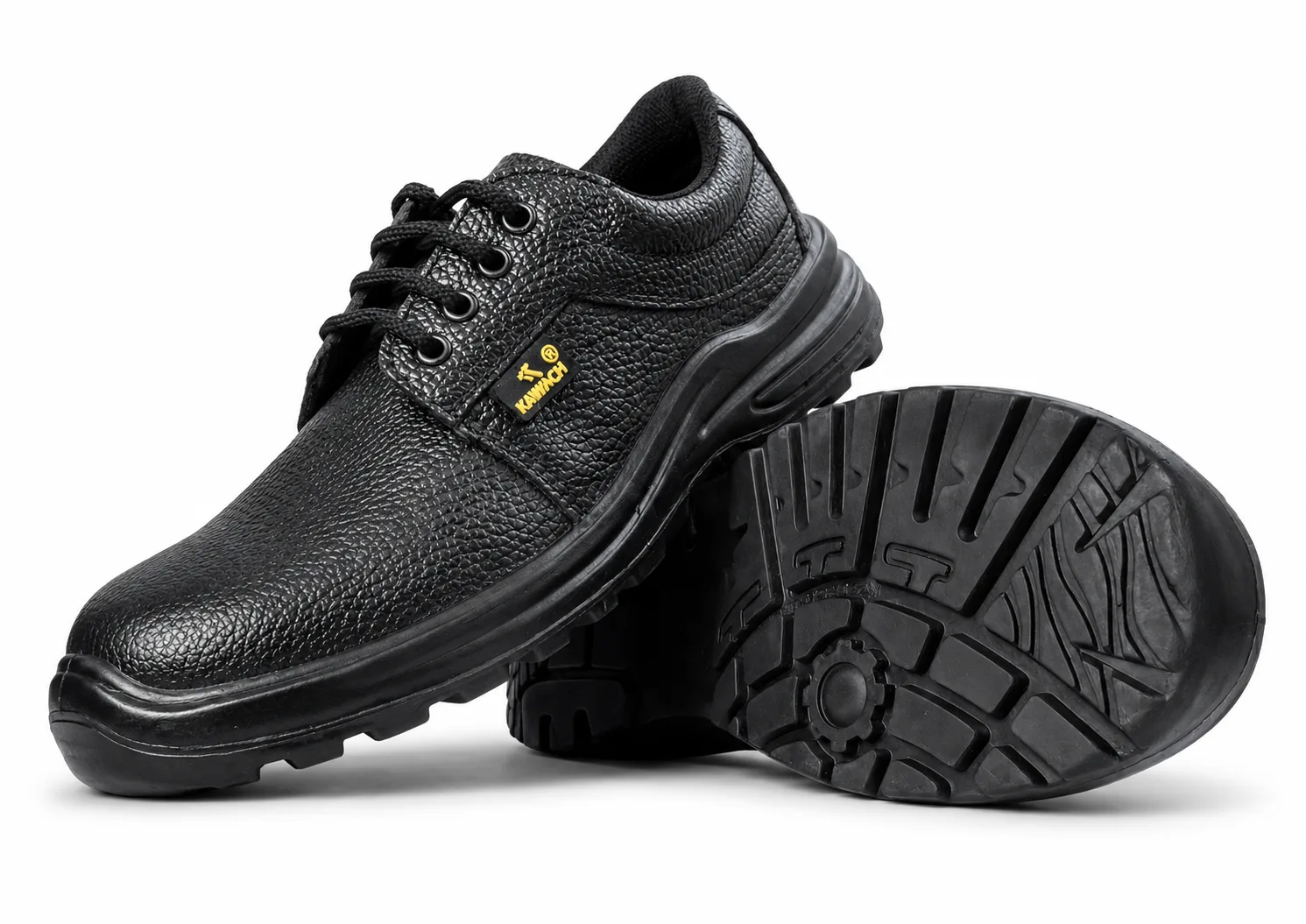
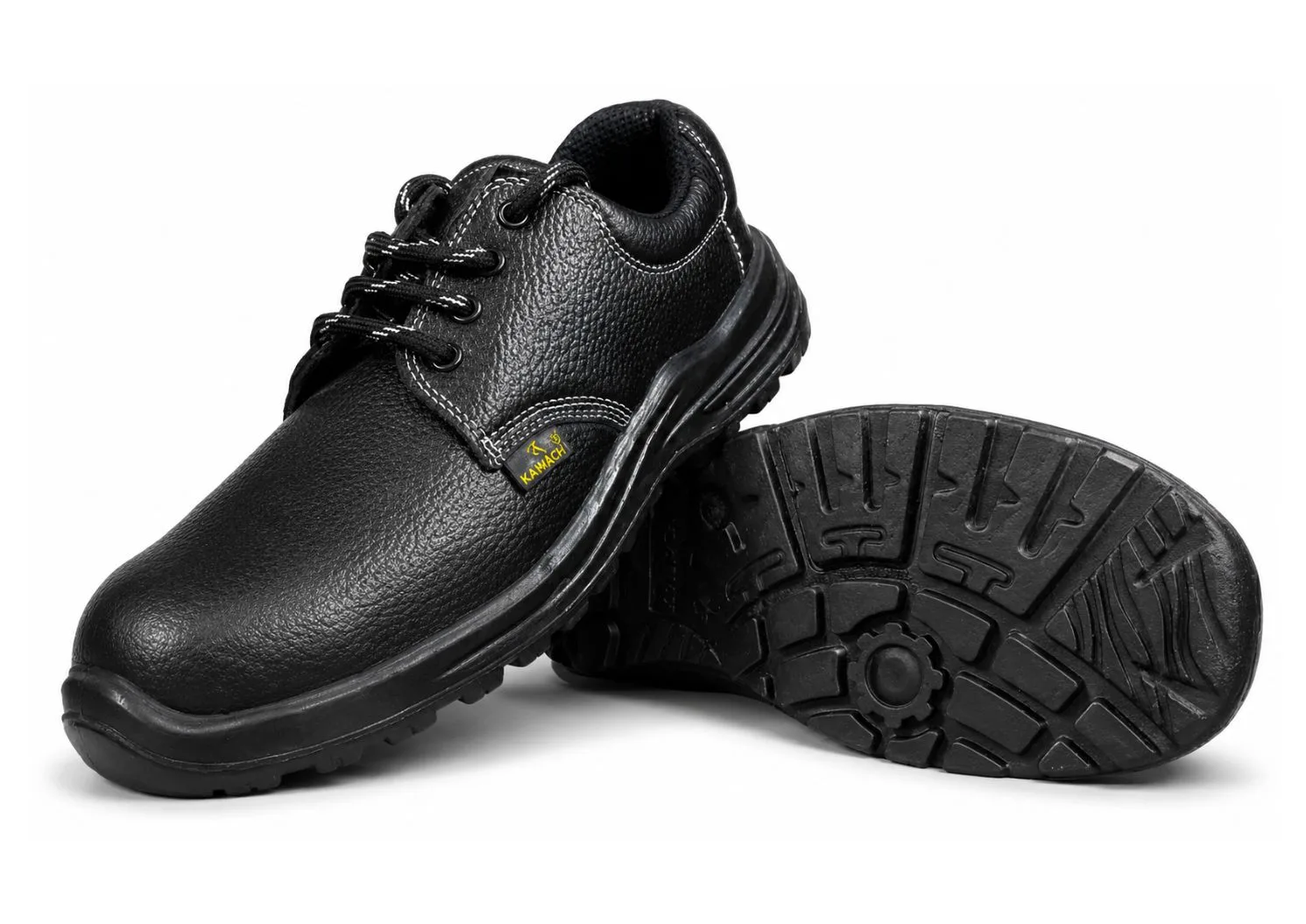
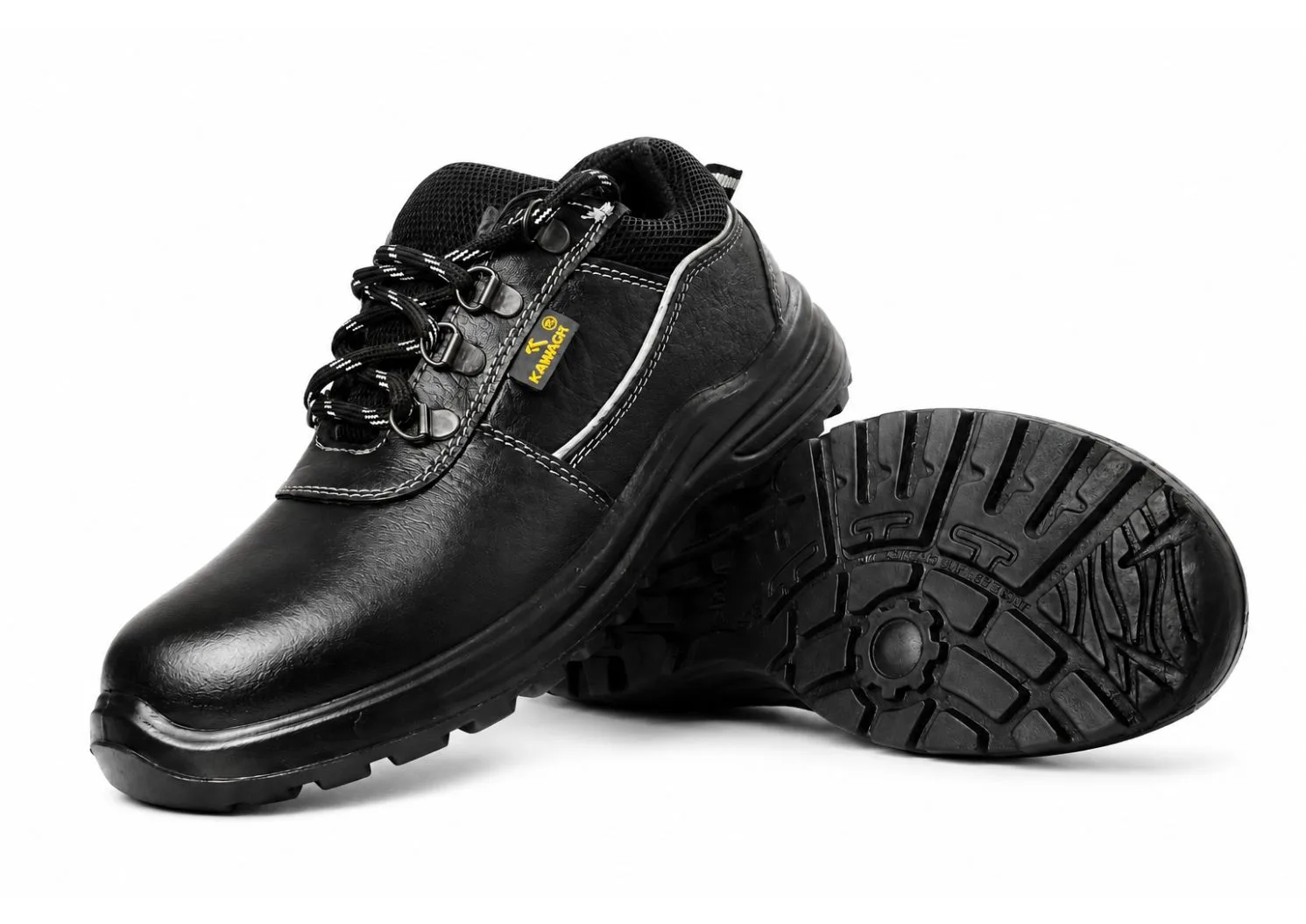
Kawach Tougher Safety Shoes combine a 200J steel toe cap, split-dye cross-leather upper and single-density PU sole in a design intended for selected industrial applications.
The model is suitable for evaluation by workers, contractors, EHS managers, safety officers and procurement teams selecting shoes for construction, manufacturing, engineering and other industrial operations.
Understanding the specifications is important because protective shoes must match the actual risks of a particular workplace.
What Does 200J Steel Toe Protection Mean?
The reinforced steel toe cap is a principal protective component of Tougher Safety Shoes.
A 200-joule rating refers to the impact energy used in prescribed safety-shoes testing.
This protection can be relevant in workplaces where tools, materials or equipment components may accidentally strike the toe area.
However, 200J protection does not mean the shoe can withstand every falling object, and it should not be interpreted as a 200 kg load rating.
Employers must also consider whether compression protection, puncture resistance or other protective properties are required for the specific work activity.
Why Does Tougher Use a Leather Upper?
Tougher uses split-dye cross leather with a specified thickness of 1.8-2.0 mm.
Leather is widely used in industrial shoes because it offers a substantial upper material for everyday wear. The actual durability of shoes depends on leather quality, construction, working conditions and appropriate care.
Workers in manufacturing, engineering and construction environments may encounter dust, abrasive surroundings and repeated movement.
Regular cleaning and inspection help maintain the condition of the upper.
How Does the PU Sole Support Industrial Use?
Tougher incorporates a single-density polyurethane outsole.
PU is commonly used in industrial shoes because it can provide a practical combination of cushioning and flexibility, depending on the formulation and manufacturing process.
The outsole also affects how the shoe interacts with the floor.
Actual performance depends on tread design, contamination, wear and the applicable tests.
For workplaces where specific grip performance is required, buyers should review the relevant slip-resistance documentation rather than relying on outsole material alone.
What Is the Difference Between Oil Resistance and Slip Resistance?
Although these features are often mentioned together, they describe different aspects of shoes performance.
Oil resistance concerns the reaction of outsole material to specified oil exposure.
Slip resistance concerns traction under defined surface and testing conditions.
An oil-resistant sole does not automatically prevent slipping on an oily floor.
Good housekeeping, spill management and suitable shoes selection remain important parts of workplace safety.
Are Tougher Safety Shoes Suitable for Long Working Hours?
Tougher includes an EVA sheet insole, mesh lining and padded collar and tongue.
These components are intended to provide cushioning and improve the wearing experience.
Comfort also depends on shoe size, foot shape, socks, shift activities and working conditions.
For businesses purchasing shoes for an entire workforce, sample fitting and employee feedback can help identify potential fit problems before placing a larger order.
When Might a Different Safety Shoe Be Required?
Tougher should not automatically be selected for every industrial task.
Some working conditions may require additional protective features, including:
- Tested puncture-resistant midsoles
- Specialised electrical insulation
- Increased ankle coverage
- Heat-resistant outsoles
- Fully waterproof shoes
- Specific chemical protection
Where these properties are required, the exact model’s test documentation should be reviewed before purchase.
Tougher Safety Shoes vs Ordinary Work Shoes
Ordinary work shoes are not necessarily designed to meet industrial protective-shoes requirements.
Tougher incorporates a steel toe cap specified for 200J impact protection, along with listed industrial resistance and comfort features.
A normal non-safety shoe may not include a tested protective toe cap or the required properties for industrial PPE.
For workers exposed to occupational foot hazards, the choice should be based on the workplace risk assessment and applicable shoes standards.
Exploring Other Kawach Safety Shoe Models
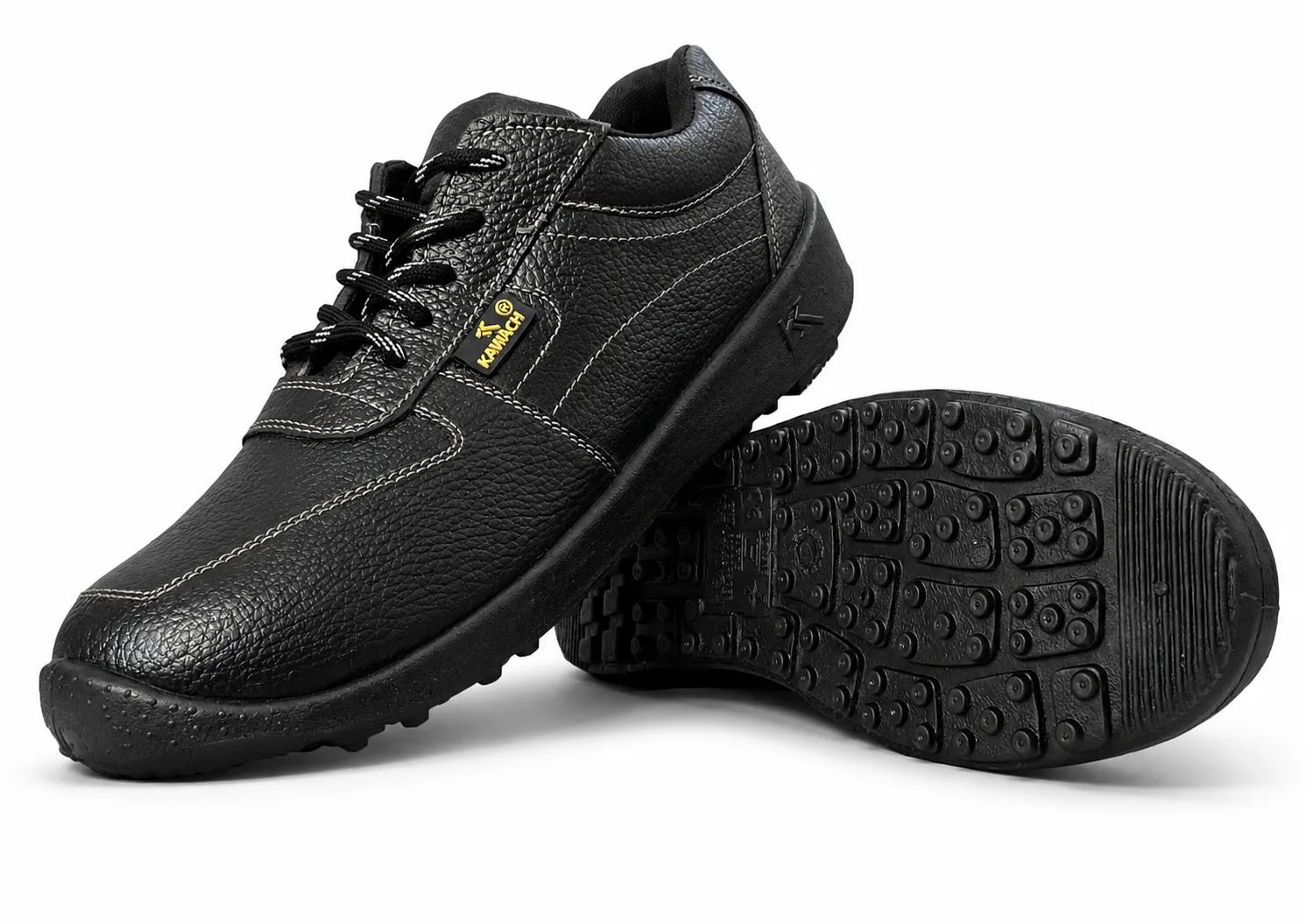
For buyers comparing different upper materials, outsole constructions or fit preferences, browse the Kawach Industrial Safety Shoes collection. The best choice depends on the exact worksite requirements and documented product specifications.
How to Maintain Tougher Safety Shoes
Regular inspection and proper care are important for industrial shoes.
Remove dirt and dust after use and clean the upper with products suitable for the leather finish.
Allow damp shoes to dry naturally rather than exposing them to excessive direct heat.
Check the shoe for damaged stitching, worn tread, loose soles, damaged laces and visible upper deterioration.
Shoes should be withdrawn from use if its protective performance may have been compromised, including after significant impact or severe damage.
The replacement interval depends on the condition of the shoes, its exposure and the manufacturer’s guidance.
Need help selecting Tougher Safety Shoes for your workplace? Contact Kawach Safe Gears India Pvt. Ltd. with your industry, job requirements, number of pairs and size breakdown.
Tougher Safety Shoes reference IS 15298 (Part 2), the Indian standard for safety shoes.
The revised standard is IS 15298 (Part 2):2024. Industrial buyers should verify the model’s applicable certification, marking and classification using current documentation.
Understanding BIS Certification
BIS product certification relates to compliance with the applicable Indian standard under the relevant certification scheme.
For procurement and workplace compliance requirements, customers should check the licence details, product scope and applicable standard edition.
NABL Laboratory Testing
NABL accreditation concerns the technical competence of a laboratory within its accredited testing scope.
Where a laboratory report is supplied, buyers should confirm that it covers the Tougher model and the specific performance being claimed.
ISO 9001 Quality Management
ISO 9001 concerns quality-management systems and does not independently certify every protective feature of a safety shoe.
Documentation for Industrial Procurement
Depending on the project requirements, customers may request:
- Current product technical datasheet
- Applicable BIS licence and product marking information
- Model-specific laboratory test records
- Relevant safety classification
- Details of tested outsole and electrical properties
- Manufacturer-approved sizing information
Kawach Safe Gears India Pvt. Ltd. can be contacted to discuss the documentation required for an industrial safety-shoes enquiry.
Practical Product Knowledge from Kawach Safe Gears India Pvt. Ltd.
At Kawach Safe Gears India Pvt. Ltd., we believe that selecting industrial safety shoes requires more than comparing product names or appearance. The right safety shoe should be chosen according to the actual conditions in which it will be worn.
Our approach to industrial shoes focuses on understanding material construction, protective components, wearer comfort and the safety requirements of different work environments.
In our experience with industrial safety requirements, construction workers, manufacturing employees, engineers and maintenance teams can face very different hazards even when they are working at the same project site.
That is why we encourage customers to review the shoes specifications, consider the applicable test documentation and assess correct fit before making a purchasing decision.
For the Tougher model, we have explained the steel toe rating, leather upper, PU sole, comfort components, listed resistance features and the circumstances where additional safety protection may be required.
We have prepared this product information using our practical understanding of industrial shoes requirements to help workers, EHS professionals, contractors and procurement teams make informed decisions.
Our aim is to provide clear product information, transparent safety guidance and practical support so customers can select shoes appropriate for their workplace.
For technical specifications, documentation requirements or bulk-order enquiries, please contact our team.
Kawach Safe Gears India Pvt. Ltd.
Email: info@kawach.org
Phone: +91 97118 70298
Contact Our Team