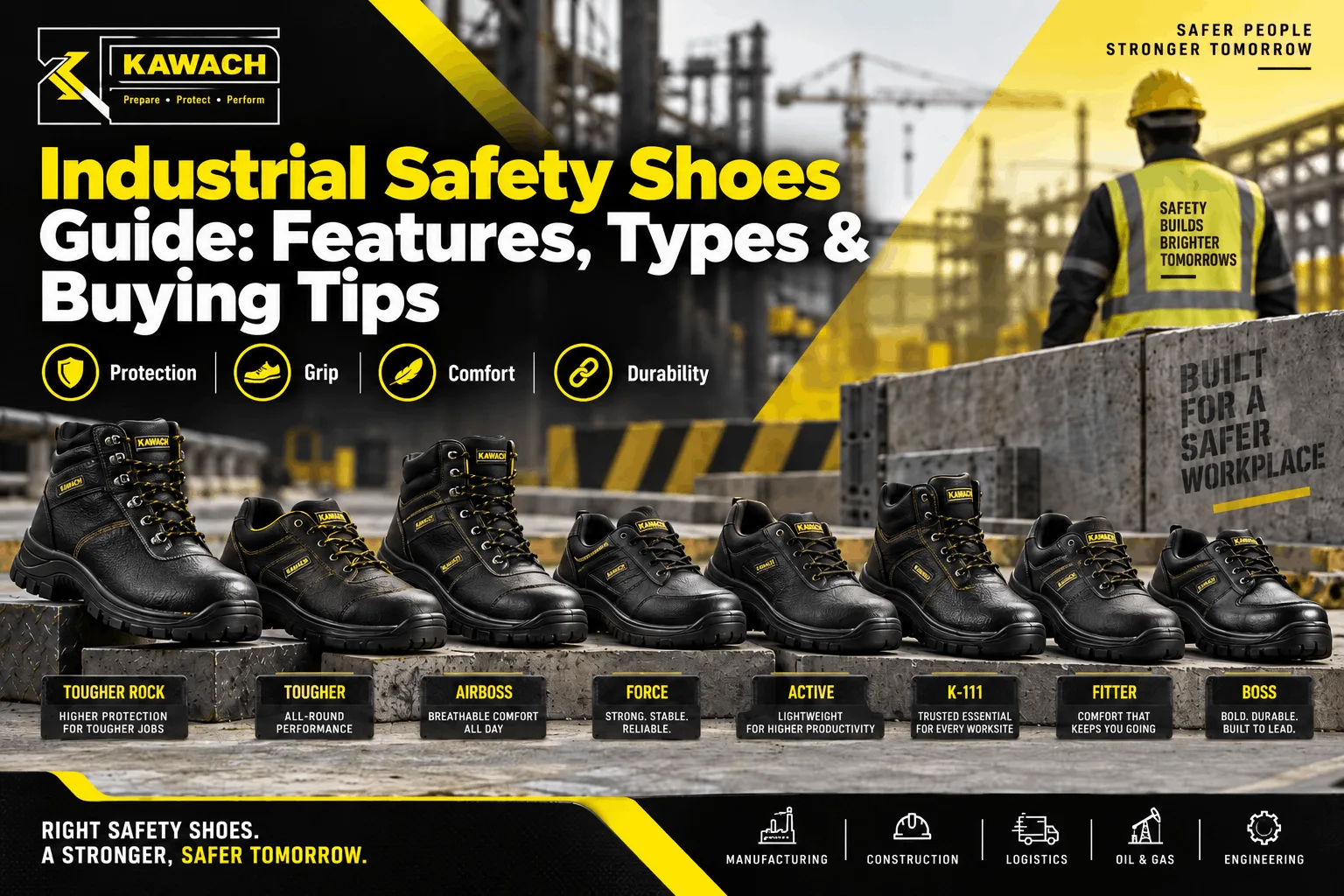
Industrial Safety Shoes: Features, Types and Buying Tips
Industrial safety shoes contain several components that influence their protective performance and fit. The toe cap, upper, lining, insole and outsole each serve a different purpose.
A steel toe cap and a fibre toe cap may both form part of tested safety footwear, while PU and PVC soles can differ in their material characteristics. The correct combination depends on workplace hazards and applicable test requirements.
This guide explains the main components and technical features to review before comparing models in the Kawach Industrial Safety Shoes range.
Why Industrial Safety Shoes Are Important for Workplace Safety
Feet are among the most exposed parts of the body during industrial operations. Unlike normal footwear, industrial protective footwear is specifically designed to reduce the risk of injury from workplace hazards.
A suitable pair of Safety Shoes for Men helps protect against:
- Falling heavy objects
- Compression injuries
- Sharp materials
- Slippery surfaces
- Workplace fatigue
- Industrial floor hazards
A worker who feels comfortable and protected is more likely to follow safety practices consistently.
This is why selecting the right safety footwear is not only a safety decision but also a productivity decision.
Expert Advice: What Should You Check Before Buying Safety Shoes?
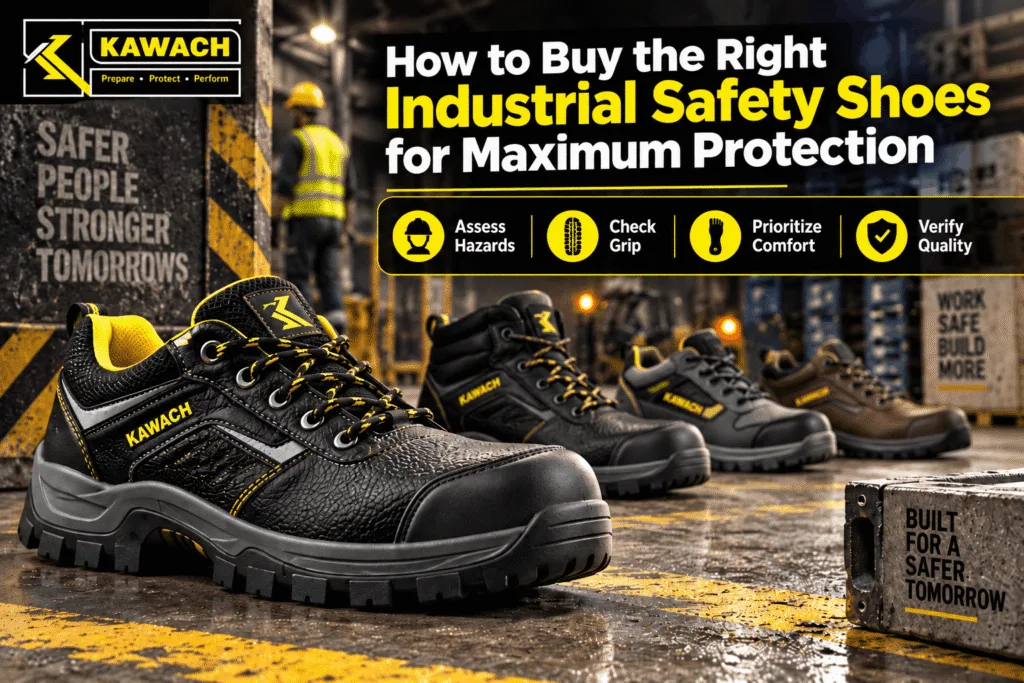
Choosing the right footwear requires more than selecting a popular model. Safety managers and industrial buyers should evaluate the following factors.
1. Identify Workplace Hazards First
Before purchasing safety shoes, understand the actual working environment.
A construction worker, warehouse employee, electrician and factory operator may have completely different safety requirements.
For example:
| Workplace | Common Risks | Recommended Features |
| Construction Site | Falling materials, uneven surfaces | Steel toe, strong sole |
| Manufacturing Plant | Machinery, metal components | Impact protection, anti-slip sole |
| Warehouse | Long walking hours | Lightweight design, cushioning |
| Engineering Industry | Tools and equipment | Durable toe protection |
| Electrical Work | Electrical risks | Suitable non-metallic options |
The best safety footwear is always the one that matches the workplace requirement.
Understanding Different Types of Industrial Safety Shoes
Modern safety footwear comes in various designs depending on the level of protection required.
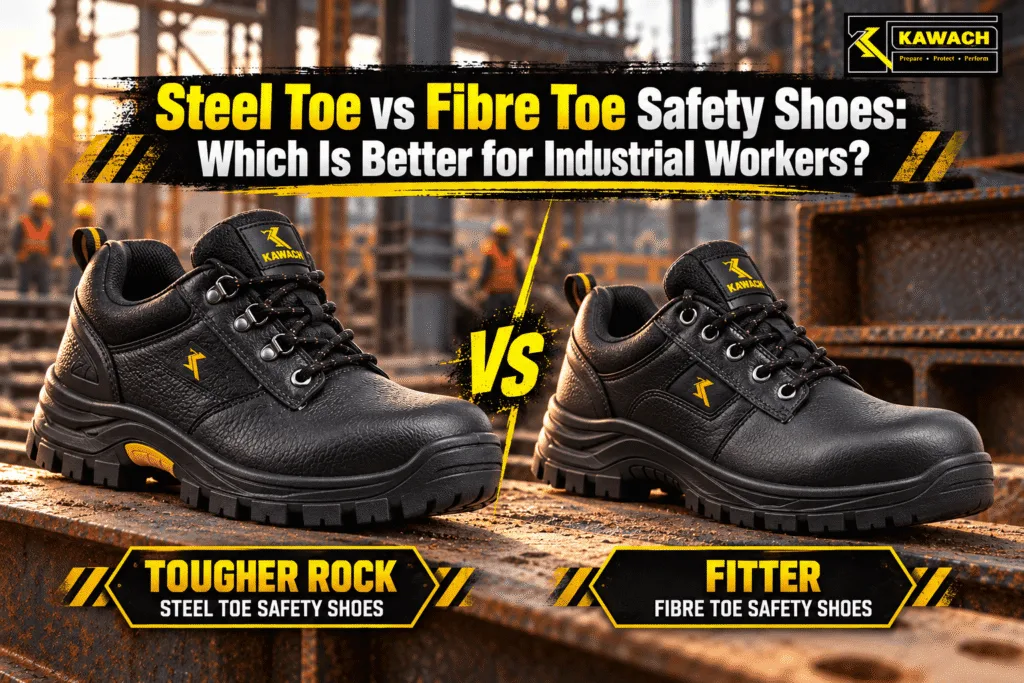
1. Steel-Toe Safety Shoes
Steel-toe safety shoes are among the most commonly used industrial footwear options.
They include a reinforced toe area designed to protect against:
- Heavy object impact
- Compression pressure
- Industrial accidents
These shoes are commonly preferred in:
- Manufacturing industries
- Construction companies
- Automobile plants
- Engineering units
- Heavy industries
Steel-toe protection provides strong impact resistance, making it suitable for demanding workplace conditions.
2. Lightweight Safety Shoes for Long Working Hours
Traditional safety footwear was often considered heavy and uncomfortable. Modern safety shoe designs focus on reducing weight while maintaining protection.
Lightweight Safety Shoes are ideal for professionals who:
- Stand for long hours
- Walk frequently during shifts
- Work in warehouses
- Manage production floors
Benefits include:
Reduced Foot Fatigue
Lightweight construction reduces pressure on feet during long working hours.
Better Mobility
Workers can move comfortably without feeling restricted.
Improved Daily Comfort
Breathable materials and cushioning support longer usage.
For industries where employees remain active throughout the day, lightweight designs can improve both comfort and compliance. Kawach Safety highlights lightweight designs, breathable materials and cushioning as important factors in modern industrial footwear.
3. Fibre Toe Safety Shoes
Some workplaces require protective footwear with fewer metallic components.
Fibre toe safety shoes provide:
- Lightweight protection
- Comfortable movement
- Non-metallic construction advantages
They are commonly considered for:
- Maintenance work
- Technical applications
- Specific industrial environments
4. PU Sole Safety Shoes
The outsole plays a major role in the performance of safety shoes.
PU sole safety shoes are popular because they provide:
- Shock absorption
- Flexibility
- Lightweight performance
- Walking comfort
They are suitable for:
- Factories
- Warehouses
- Production facilities
- General industrial applications
Understanding Safety Shoe Construction
A professional buyer should understand how a safety shoe is built.
| Safety Shoe Component | Purpose |
| Toe Cap | Protects toes from impact and compression |
| Upper Material | Provides durability and protection |
| Insole | Improves comfort and cushioning |
| Midsole | Supports flexibility and stability |
| Outsole | Provides grip and slip resistance |
Each component contributes to overall workplace protection.
Anti-Slip Safety Shoes: Why Grip Matters
Slips and falls are among the most common workplace accidents.
A good pair of Anti-Slip Safety Shoes helps workers maintain stability on challenging surfaces.
Anti-slip footwear is especially important in environments with:
- Oil exposure
- Wet floors
- Smooth industrial surfaces
- Outdoor working conditions
A reliable outsole should provide:
- Strong traction
- Surface stability
- Long-term durability
How to Choose Safety Shoes Based on Industry
Manufacturing Industry
Manufacturing workers often operate around:
- Heavy machinery
- Metal parts
- Production equipment
- Industrial tools
Recommended features:
✓ Steel toe protection
✓ Anti-slip outsole
✓ Comfortable cushioning
✓ Durable upper material
Construction Industry
Construction workers face constantly changing environments.
Common risks include:
- Falling materials
- Sharp objects
- Uneven surfaces
- Dust and debris
Recommended footwear features:
✓ Strong toe protection
✓ Durable sole
✓ High grip
✓ Long-lasting construction
Warehouse and Logistics Industry
Warehouse professionals spend significant time walking and standing.
The ideal footwear should provide:
- Lightweight construction
- Comfortable support
- Breathability
- Slip resistance
This is where Lightweight Safety Shoes become highly beneficial.
What Makes the Best Safety Shoes in India?
When companies search for the Best Safety Shoes in India, they should look beyond appearance and pricing.
A reliable industrial safety shoe should provide:
1. Protection
The shoe should match workplace hazards.
2. Comfort
Workers should be able to wear them throughout their shift.
3. Durability
Quality materials reduce replacement costs.
4. Grip
A strong outsole improves workplace stability.
5. Proper Fit
Correct sizing prevents discomfort and fatigue.
The best safety shoe is not always the most expensive one. It is the one that provides the right protection for the actual working environment.
Common Mistakes Companies Make While Purchasing Safety Shoes
Selecting Only Based on Price
Low-cost footwear may compromise durability and worker comfort.
Using the Same Shoe for Every Department
Different departments have different safety requirements.
Ignoring Worker Feedback
Workers who use safety shoes daily can provide valuable insights about comfort and performance.
Buying the Wrong Size
Incorrect fitting can create discomfort and reduce effectiveness.
How Kawach Safety Helps Businesses Select the Right Safety Footwear
Kawach Safety focuses on providing industrial footwear solutions designed according to workplace requirements. The company offers different categories, including steel-toe safety shoes, lightweight safety shoes, fibre-toe options and PU- and PVC-sole industrial footwear.
The selection process should consider:
- Workplace environment
- Hazard level
- Working duration
- Floor conditions
- Employee comfort requirements
Popular safety footwear applications include:
Manufacturing Plants
For workers handling machinery and industrial safety equipment.
Construction Projects
For protection against impact and rough surfaces.
Warehouses
For employees requiring comfort during long shifts.
Engineering Units
For professionals working around tools and components.
How to Maintain Safety Shoes for Longer Life
Proper maintenance improves footwear performance.
Clean Regularly
Remove:
- Dust
- Oil
- Dirt
- Industrial residue
Inspect Frequently
Check:
- Sole condition
- Toe protection
- Stitching
- Surface damage
Store Properly
Avoid:
- Excess moisture
- Chemical exposure
- Extreme temperatures
Industrial Safety Shoes Buying Checklist
Before purchasing, check:
✅ Workplace hazards identified
✅ Correct toe protection selected
✅ Sole type matches the environment
✅ Proper size available
✅ Comfortable design selected
✅ Durable materials verified
✅ Supplier reliability checked
Frequently Asked Questions About Industrial Safety Shoes
1. What are Industrial Safety Shoes?
Industrial Safety Shoes are protective footwear designed to protect workers from workplace hazards such as falling objects, impact, compression, sharp materials and slippery surfaces.
2. Which safety shoes are best for factory workers?
Factory workers should choose footwear based on their environment. Steel-toe safety shoes with anti-slip soles and comfortable cushioning are commonly preferred for industrial applications.
3. Are Lightweight Safety Shoes safe?
Yes. Lightweight Safety Shoes can provide excellent protection when they include proper safety features such as reinforced toe protection and durable soles.
4. How long do industrial safety shoes last?
The lifespan depends on usage conditions, maintenance, workplace environment and material quality.
5. Why should companies invest in quality safety footwear?
Quality safety footwear reduces workplace risks, improves worker comfort and supports better safety compliance.
Final Thoughts
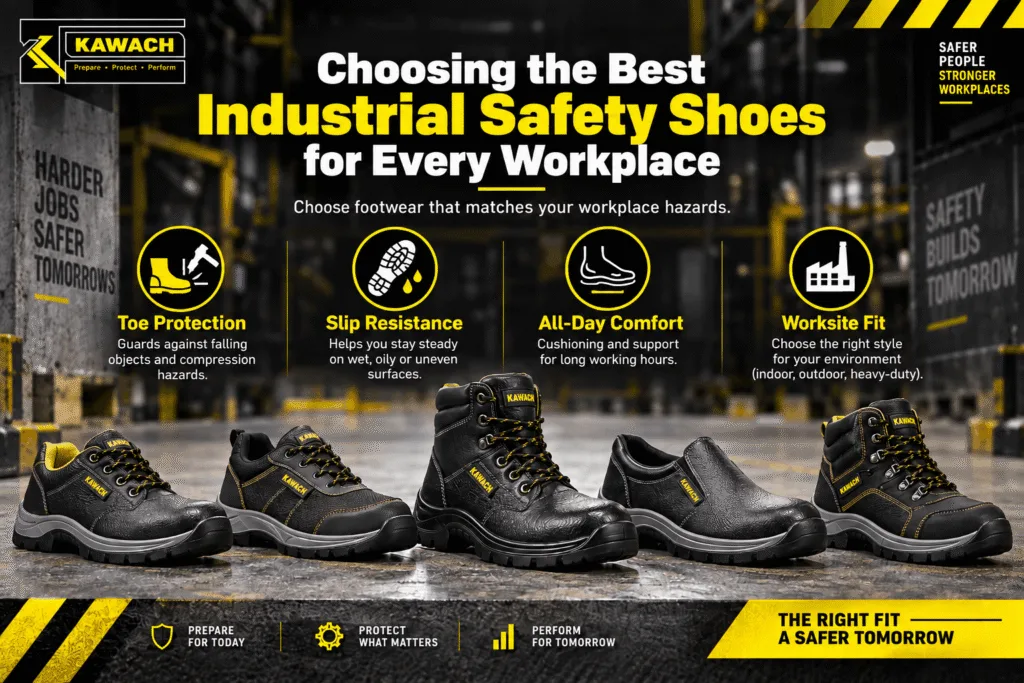
Choosing the right Industrial Safety Shoes is an important decision for every workplace. The ideal footwear should provide the perfect combination of protection, comfort, durability and performance.
Whether your requirement is for construction safety shoes, factory safety footwear, warehouse protection, or long-hour industrial use, selecting the correct pair helps create a safer working environment.
Kawach Safety continues to support businesses with reliable industrial safety footwear solutions designed for real workplace challenges. With the right safety shoes, companies can protect their workforce while improving comfort, confidence and productivity.
Because workplace safety begins with every step.